What it means
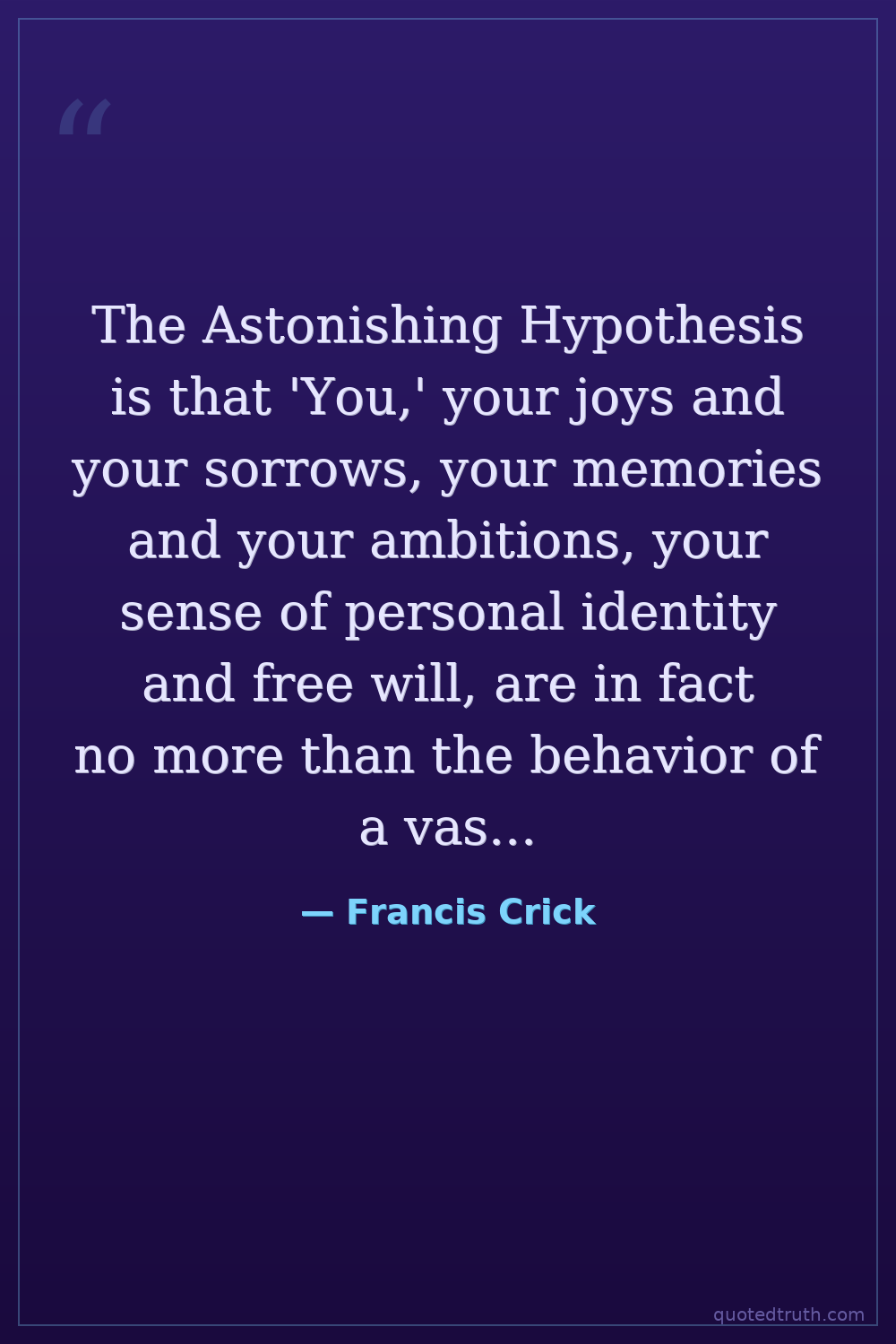
Everything you experience as 'yourself' — emotions, memories, desires, even the feeling of making free choices — is entirely produced by physical activity in the brain. There is no separate soul or non-material self. Consciousness emerges from neurons firing and molecules interacting. What feels most intimate and human is, at its foundation, biological machinery operating according to physical laws. This is strict scientific materialism applied to identity itself.
Relevance to Francis Crick
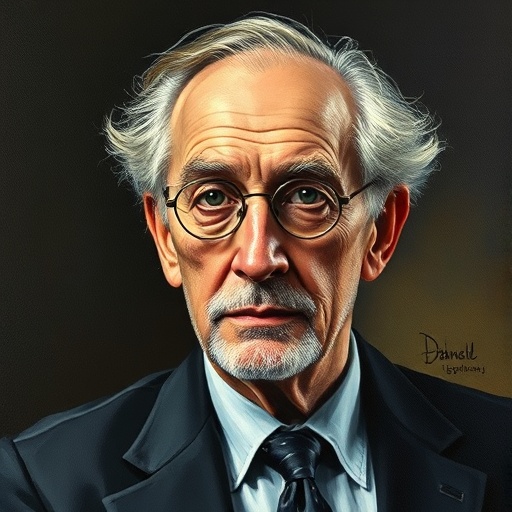
Crick spent his post-DNA career obsessively studying consciousness, viewing it as biology's final frontier. Having already reduced heredity to chemistry, he sought to reduce the mind the same way. His 1994 book gave this hypothesis its name. Working alongside neuroscientist Christof Koch, he pursued neural correlates of consciousness until his death in 2004 — a lifelong reductionist committed to demolishing vitalism and dualism wherever they hid, including inside the human skull.
The era
President George H.W. Bush declared the 1990s the 'Decade of the Brain,' unlocking major neuroscience funding. fMRI technology was making consciousness scientifically measurable for the first time. Simultaneously, the Human Genome Project was completing, reinforcing biological determinism. Culture wars over creationism, bioethics, and AI personhood were escalating. Crick's explicit denial of a non-material soul landed in this charged moment as both scientific provocation and philosophical grenade.
AI-generated insights based on extensive research and information for context. Factual errors? Email [email protected].