What it means
Before theorizing, gather hard evidence. Carefully observe and test what things actually do, then build explanations from those results rather than starting with grand theories and forcing facts to fit them. Speculation without prior experimental grounding leads to error. Knowledge built on verified properties is durable; knowledge built on untested assumptions collapses under scrutiny.
Relevance to Isaac Newton
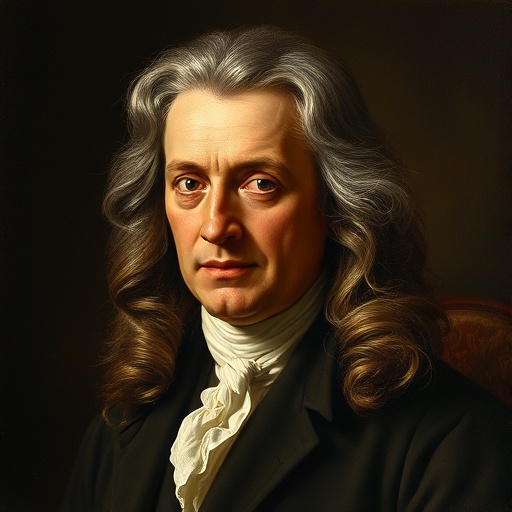
Newton embodied this principle throughout his career. His laws of motion and universal gravitation emerged from painstaking observation and mathematical analysis of real phenomena—falling objects, planetary orbits, prism experiments with light. He famously refused to speculate on the mechanism behind gravity, writing 'hypotheses non fingo,' insisting his role was to describe what nature demonstrably does, not invent causes.
The era
The early modern period witnessed the Scientific Revolution's battle against scholastic Aristotelianism, which derived natural knowledge from philosophical first principles rather than observation. Bacon had called for empiricism; Descartes built elaborate mechanical hypotheses. Newton's insistence on experiment-first represented a decisive methodological break, establishing the inductive-experimental approach that became the foundation of modern science and displaced centuries of armchair natural philosophy.
AI-generated insights based on extensive research and information for context. Factual errors? Email [email protected].