What it means
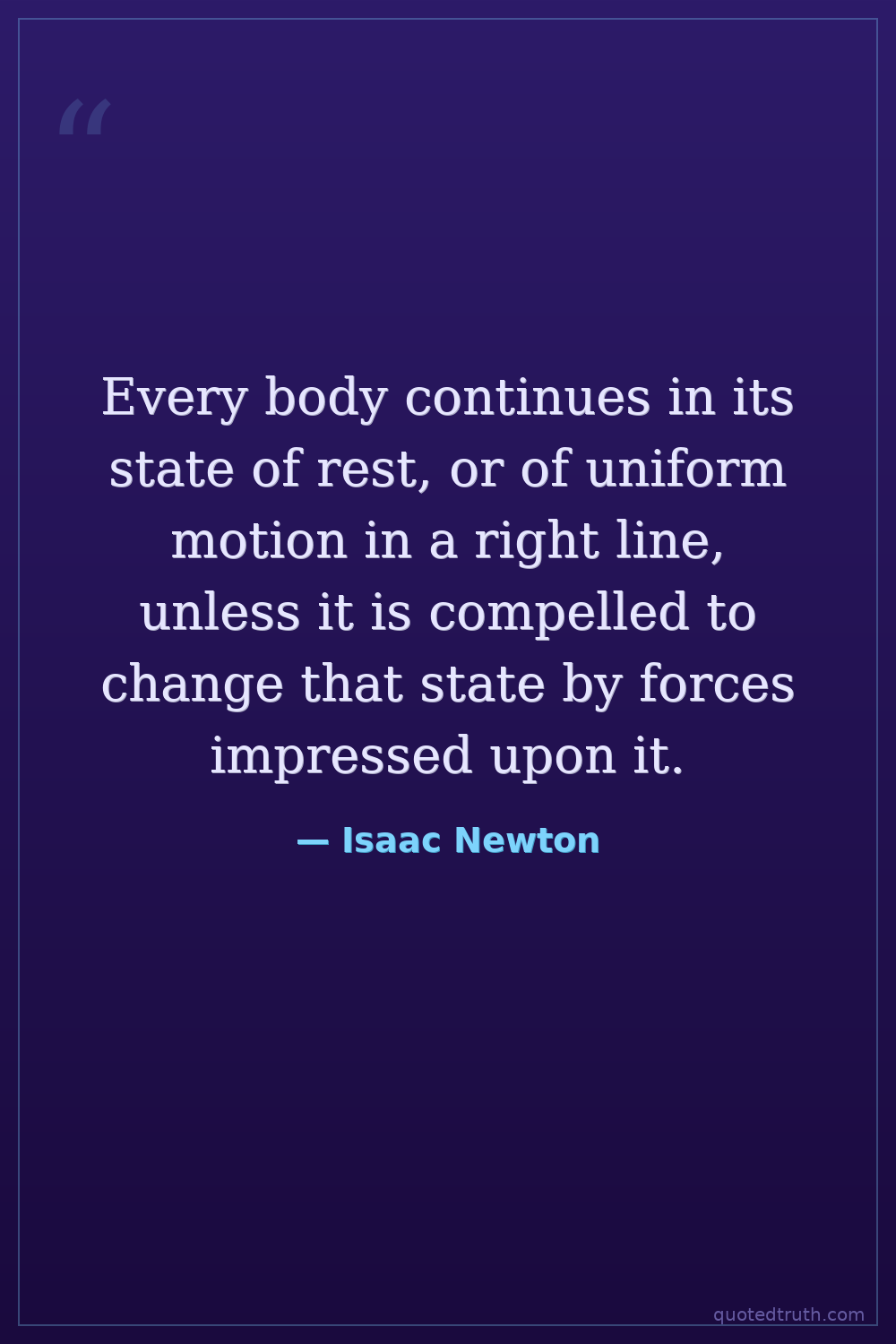
Objects stay still or keep moving in a straight line at constant speed unless something pushes or pulls on them. Change requires an outside force — nothing shifts on its own. This principle, called inertia, explains why a rolling ball eventually stops due to friction, why passengers lurch forward when a car brakes, and why planets orbit rather than flying off in straight lines. Rest and motion are equally natural states; only force disrupts either.
Relevance to Isaac Newton
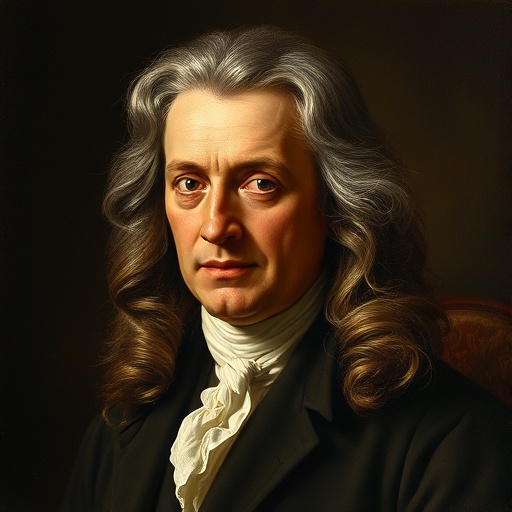
This is Newton's First Law of Motion, published in his Principia Mathematica in 1687, the work that defined physics for over two centuries. Newton synthesized Galileo's earlier inertia observations into a precise mathematical framework through years of solitary, obsessive study. His own character embodied the principle — he remained in sustained intellectual motion for decades, deflected only when external forces like academic disputes or his Royal Mint appointment finally intervened.
The era
The 17th century was the Scientific Revolution, when Europe dismantled Aristotelian physics that held objects naturally seek rest and require continuous force to move. Newton's law directly contradicted that ancient dogma. The era saw Galileo's house arrest, the founding of the Royal Society, and fierce rivalry among European natural philosophers. Newton's Principia appeared in 1687, just one year before England's Glorious Revolution, anchoring science to mathematics precisely as political order itself was being renegotiated.
AI-generated insights based on extensive research and information for context. Factual errors? Email [email protected].