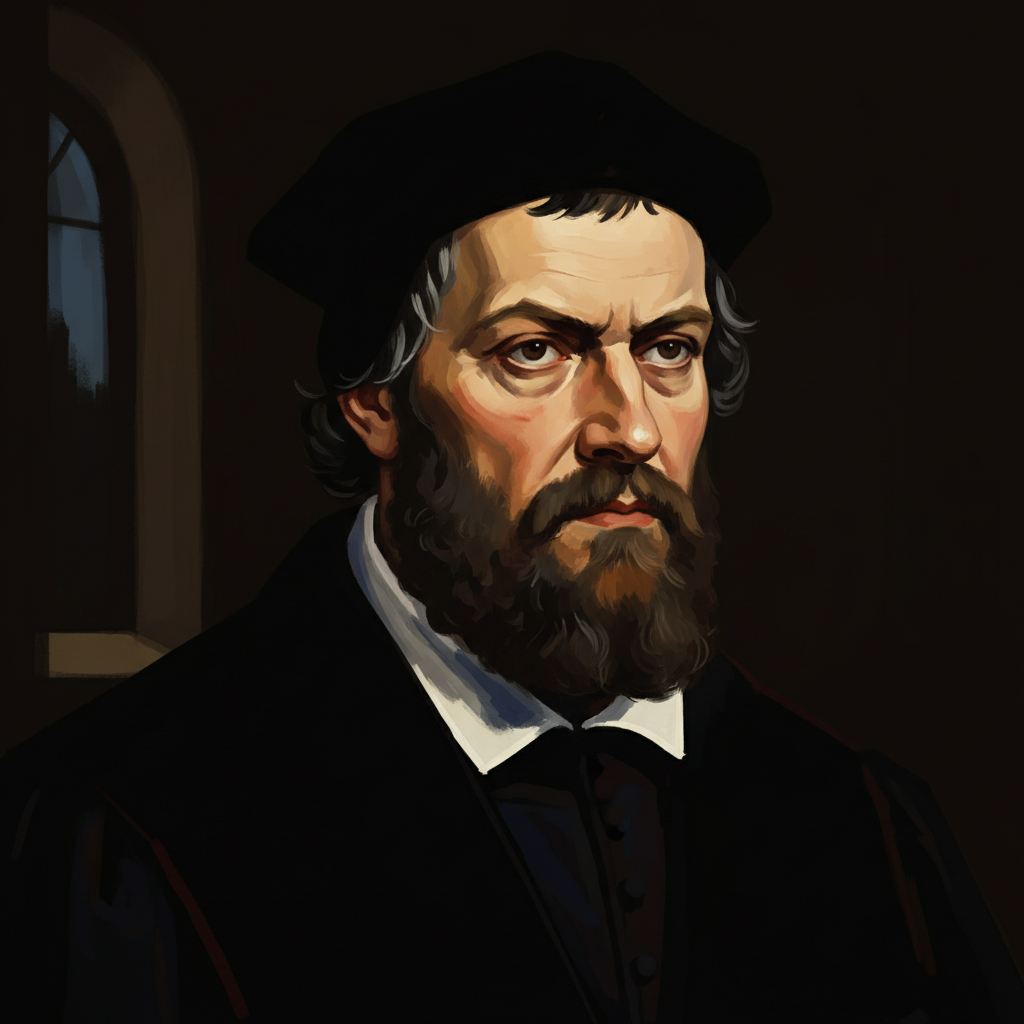
Martin Luther — "The best way to preach is to get down to the level of the people."
The best way to preach is to get down to the level of the people.
The best way to preach is to get down to the level of the people.
Click any product to generate a realistic preview. Up to 3 at a time.
* Initial load can take up to 90 seconds — revising the preview in another color is nearly instant.
"The commandments are not given inappropriately or pointlessly; but in order that through them the proud, blind man may learn the plague of his impotence, should he try to do as he is commanded."
"I am more afraid of my own heart than of the pope and all his cardinals."
"The world is a great book, of which they who never stir from home read only one page."
"I cannot pray without cursing."
"Safe-conduct on the highways should be abolished completely for the Jews."
German theologian whose 95 Theses (1517) launched the Protestant Reformation and broke the Catholic Church's monopoly on Western Christianity. Closely associated with Philipp Melanchthon (Lutheran systematizer) and John Calvin (later Reformer who built on Luther's break). For an intellectual contrast, see Pope Leo X, Renaissance pope (1513-1521) — Leo X's indulgence sales triggered Luther's break and Leo excommunicated him in 1521 — Luther's entire Reformation is structured as a direct answer to the indulgence-funded Vatican Leo represented.
Found in 1 providers: grok
1 source checked
Effective communication means meeting your audience where they are rather than speaking above them. Instead of using complex language, abstract concepts, or elevated rhetoric to impress listeners, a good speaker uses everyday words, relatable examples, and familiar ideas. The goal is genuine understanding, not displaying the speaker's knowledge. True teaching happens when the message connects with ordinary people in ways they can grasp and apply to their own lives.
Luther famously translated the Bible into vernacular German in 1522, breaking the Catholic Church's Latin monopoly on scripture. As a professor-turned-pastor, he preached thousands of sermons using barnyard metaphors, plain speech, and humor his German peasant audiences understood. His Small Catechism was deliberately written for household instruction. This commitment to accessibility defined his pastoral identity and fundamentally reshaped how Christianity was communicated to ordinary believers across Europe.
In early 16th-century Europe, Catholic Mass was conducted in Latin, a language illiterate peasants could not understand. Clergy often preached in scholastic jargon disconnected from daily life. The Gutenberg printing press (1440s) had recently enabled mass literacy, and Luther's Reformation weaponized vernacular printing to democratize religion. His insistence on plain preaching was revolutionary, challenging centuries of ecclesiastical gatekeeping and empowering laypeople to engage scripture directly for the first time.
AI-generated insights based on extensive research and information for context. Factual errors? Email [email protected].
Your cart is empty