William Harvey — "The body is a microcosm of the universe."
The body is a microcosm of the universe.
The body is a microcosm of the universe.
Click any product to generate a realistic preview. Up to 3 at a time.
* Initial load can take up to 90 seconds — revising the preview in another color is nearly instant.
"The blood in the veins moves towards the heart, not away from it."
"The whole world is a theatre, and all the men and women merely players."
"The senses are the primary source of all knowledge."
"The circulation of the blood is a new doctrine, and I doubt not but it will meet with its opponents."
"I profess both to learn and to teach anatomy not from books but from dissections; not from the tenets of philosophers but from the fabric of nature."
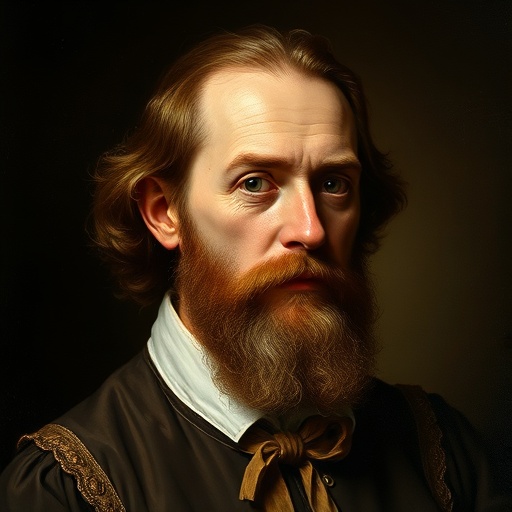
English physician whose On the Motion of the Heart and Blood in Animals (1628) demonstrated blood circulation, overturning 1,400 years of Galenic medicine. Closely associated with Francis Bacon (his contemporary in the new English empiricism). For an intellectual contrast, see Galenic medicine, the 2nd-century Greek medical tradition (humors, blood-as-consumed-fuel) — Harvey calculated that the heart pumps more blood per hour than the body could possibly produce as fuel — a single quantitative observation that demolished the entire Galenic-Aristotelian medical worldview. The cleanest example in medical history of arithmetic disproving 14 centuries of authority.
A philosophical statement reflecting the macrocosm-microcosm analogy.
Date: Uncertain (attributed)
WisdomFound in 1 providers: gemini
1 source checked
The human body functions as a small-scale replica of the universe — its systems, cycles, and interdependencies mirror those governing the cosmos. Blood circulates as planets orbit; the heart beats with the regularity of celestial motion. Underlying patterns repeat at every scale, from the astronomical to the anatomical. The body is not separate from nature but an expression of the same organizing principles that govern everything beyond it.
Harvey explicitly framed the heart as the body's sun — the central engine driving all life — borrowing directly from Copernican astronomy. His 1628 De Motu Cordis described circulation as an ordered, closed system echoing the mechanical regularity he observed in celestial motion. Trained in Padua under anatomists who blended Aristotelian philosophy with empirical observation, Harvey believed living bodies operated by the same rational principles governing the natural world. Microcosm-macrocosm thinking was not metaphor for him; it was method.
Early modern Europe was mid-Scientific Revolution: Galileo mapped celestial mechanics, Kepler published planetary laws, and Paracelsus had made microcosm-macrocosm the cornerstone of Renaissance medicine. Physicians routinely mapped body systems onto planetary influences. Harvey published in 1628, when natural philosophers sought unified laws across all of nature. The idea that body and universe share deep structural principles was not poetic license but serious scientific hypothesis — the era's framework for understanding why the body worked at all.
AI-generated insights based on extensive research and information for context. Factual errors? Email [email protected].
Your cart is empty