Zoroaster — "The choice between the two spirits, the better and the bad, is to be made by eac…"
The choice between the two spirits, the better and the bad, is to be made by each individually.
The choice between the two spirits, the better and the bad, is to be made by each individually.
Click any product to generate a realistic preview. Up to 3 at a time.
* Initial load can take up to 90 seconds — revising the preview in another color is nearly instant.
"The wise man, O Mazda, is he who continually keeps in mind Thy precepts and strives to establish Thy Kingdom on earth."
"Good thoughts, good words, good deeds. And a good nap. Don't forget the good nap."
"The path of truth is the only path to lasting happiness."
"In the beginning there were two primal spirits, Twins spontaneously active, These are the Good and the Evil, in thought, and in word, and in deed. Between these two, let the wise choose aright. Be goo…"
"Show me, O Mazda, through Good Mind, how to fulfill this teaching, for which I ask Thee, and through Thy Righteousness, to approach Thee, O Ahura, and to offer praise to Thee."
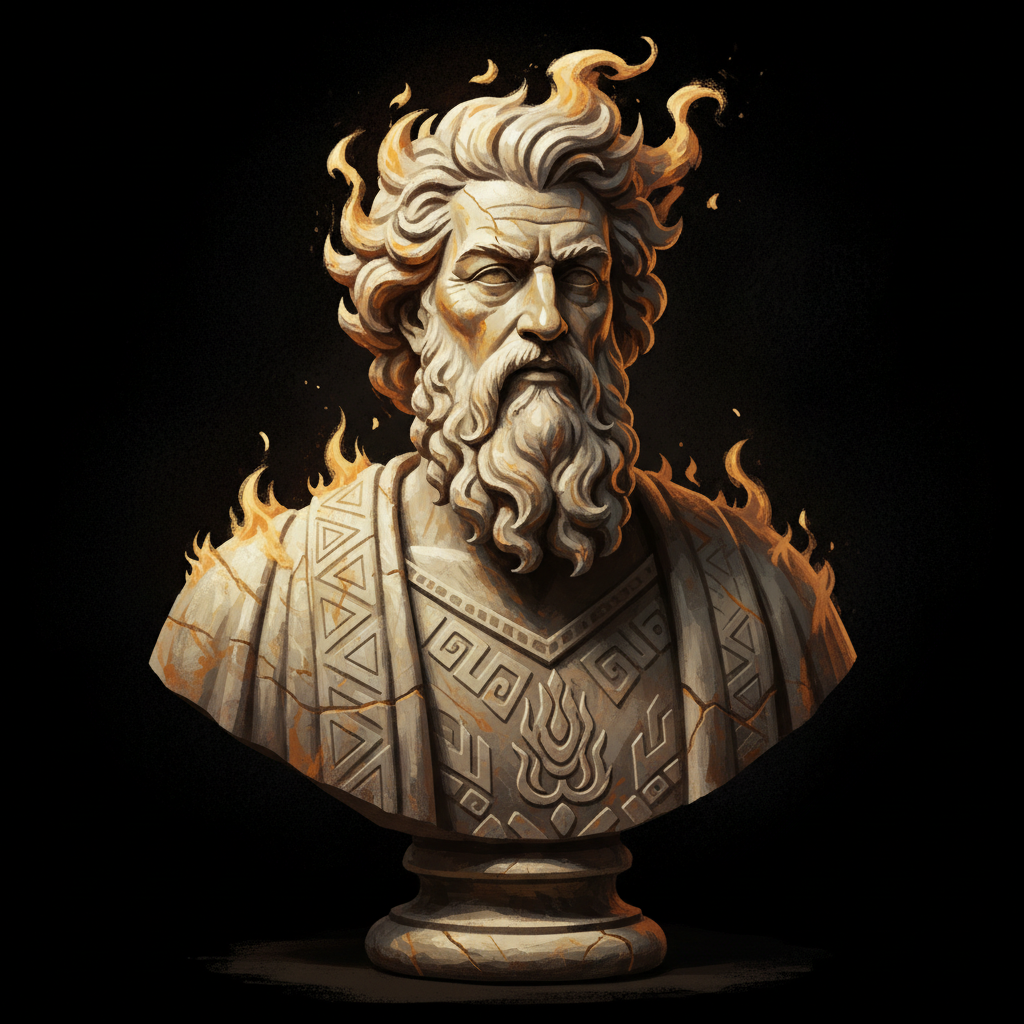
Iranian prophet who founded Zoroastrianism, the first major religion of cosmic dualism between good (Ahura Mazda) and evil (Angra Mainyu). Closely associated with The Buddha (near-contemporary Eastern moral-cosmological revolutionary). For an intellectual contrast, see Friedrich Nietzsche, German philosopher of 'beyond good and evil' — Nietzsche appropriated Zarathustra's name for Thus Spoke Zarathustra (1883) precisely to invert the original's moral cosmology — the historical Zoroaster founded the good-versus-evil framework Nietzsche's character announces the end of.
Found in 1 providers: gemini
1 source checked
Every person faces a personal decision between good and evil, and nobody else can make that call for them. You are not born into righteousness or wickedness; you create your moral standing through the choices you make. Ethics is an active, ongoing responsibility rather than something inherited from family, tribe, priest, or fate. The weight of that decision rests entirely on the individual conscience.
Zoroaster built his entire religion around this very idea, teaching that the cosmos is a battleground between Ahura Mazda, the wise good spirit, and Angra Mainyu, the destructive one. As a reforming priest, he rejected the ritualistic polytheism of his culture and insisted each worshipper align with Asha (truth) through personal good thoughts, good words, and good deeds. Free moral agency was his signature theological innovation.
Zoroaster lived in Bronze Age eastern Iran, likely around 1500-1000 BCE, among pastoral tribes practicing blood sacrifice and priest-mediated polytheism where fate and clan ritual dictated destiny. Emphasizing individual moral choice was radical in a world where identity was collective and divine favor was purchased through offerings. His teachings later shaped Achaemenid Persia and influenced Judaism, Christianity, and Islam's concepts of heaven, hell, and judgment.
AI-generated insights based on extensive research and information for context. Factual errors? Email [email protected].
Your cart is empty