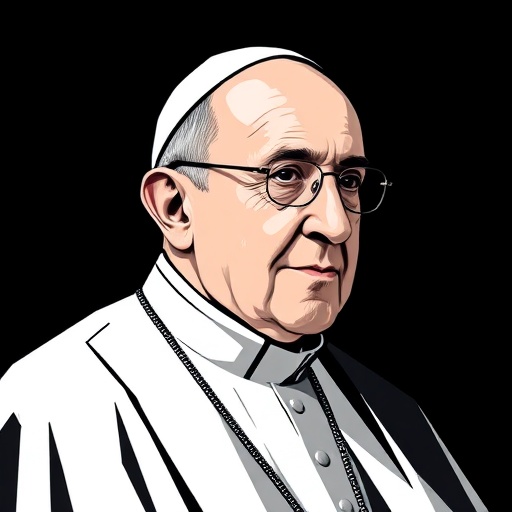
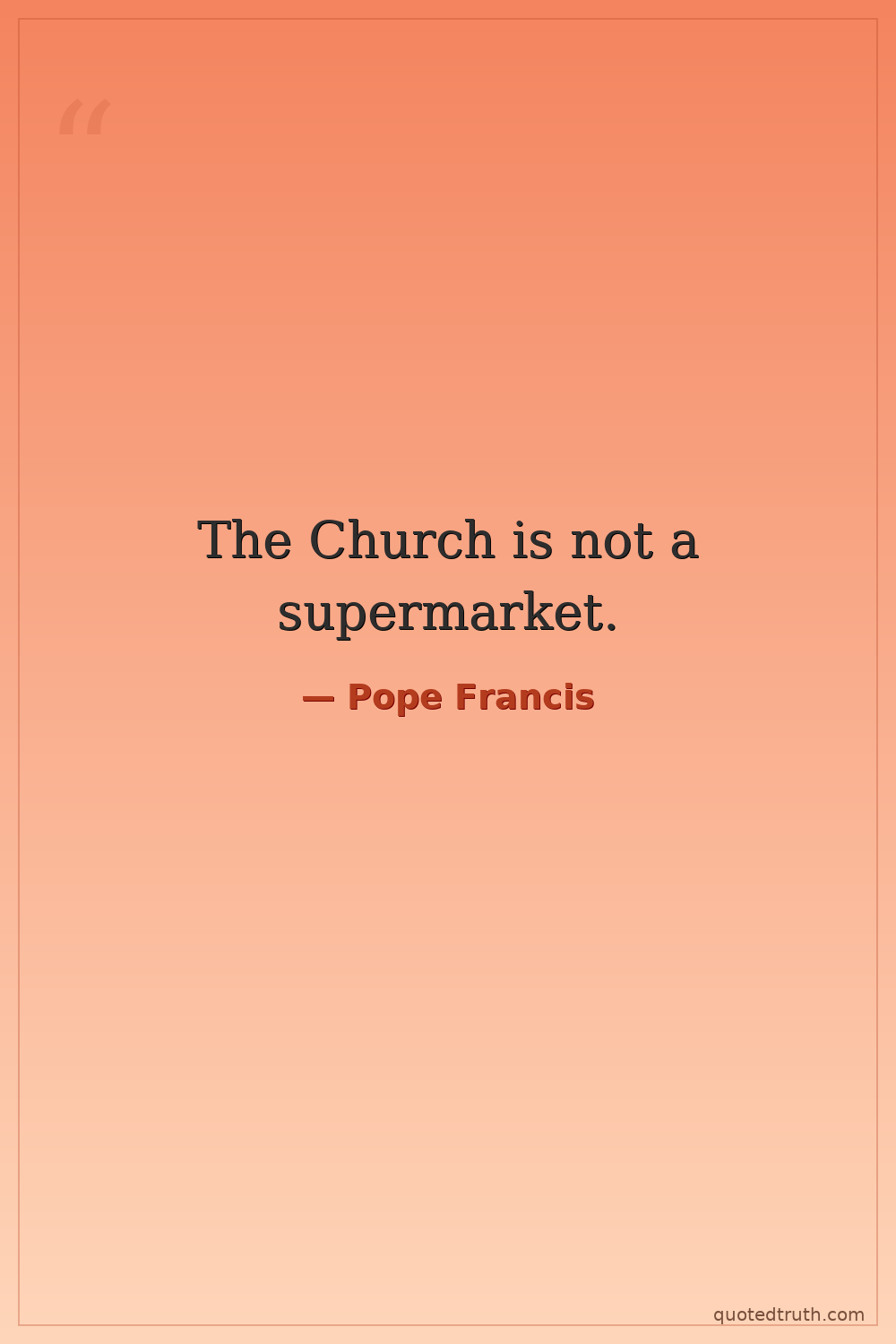
Pope Francis — "The Church is not a supermarket."
The Church is not a supermarket.
The Church is not a supermarket.
Click any product to generate a realistic preview. Up to 3 at a time.
* Initial load can take up to 90 seconds — revising the preview in another color is nearly instant.
"A Christian who is too attached to riches is an idolater."
"It is not possible to resolve the problems of the poor by ignoring their existence."
"Priests who are rigid are sick. They are sick inside."
"The Church sometimes has locked itself up in small things, in small-minded rules."
"It’s true that I’m a bit of a daredevil, but I’m a bit of a daredevil because I’m old, and I don’t have much to lose."
First Latin American and Jesuit pope (2013-), who has steered the Catholic Church toward pastoral inclusion on LGBTQ pastoral care, divorced Catholics, and climate. Closely associated with Pope John XXIII (the Vatican II reformer pope) and Cardinal Walter Kasper (his theological ally on pastoral reform). For an intellectual contrast, see Cardinal Raymond Burke, American traditionalist cardinal, former head of the Vatican Apostolic Signatura — Burke is the public face of Catholic traditionalism that views Francis's pastoral approach as doctrinally dangerous — he has formally challenged Amoris Laetitia and other Francis reforms.
Found in 1 providers: grok
1 source checked
The quote rejects treating religion as consumer choice — picking comfortable beliefs while discarding demanding ones. Faith isn't a transaction where you select what suits you and leave the rest. The Church asks for full commitment, not convenience. It pushes back against cafeteria Christianity, where individuals curate their own religion from a menu of doctrines, ignoring obligations like sacrifice, community accountability, and moral challenge that define genuine spiritual belonging.
Jorge Bergoglio grew up in working-class Buenos Aires, witnessed poverty firsthand as a Jesuit priest in Argentina, and took the papal name Francis after St. Francis of Assisi — a saint who rejected wealth entirely. He has consistently attacked consumerism as a spiritual disease, calling an economy that discards the poor a throwaway culture. His humility — refusing the papal apartments, riding public transit — embodies his conviction that faith requires sacrifice, not self-service.
Francis became pope in 2013 during peak digital consumerism — Amazon, streaming, and social media had normalized on-demand personalization of everything. Simultaneously, Western church attendance was collapsing and spiritual but not religious became mainstream identity. The prosperity gospel was expanding, effectively marketing salvation. Vatican banking and abuse scandals had eroded institutional trust. The quote directly confronted pressure on churches to compete for congregants by softening doctrine to match consumer preferences.
AI-generated insights based on extensive research and information for context. Factual errors? Email [email protected].
Your cart is empty