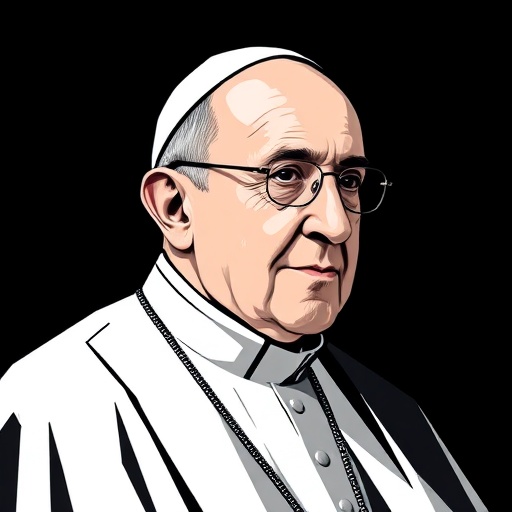
Pope Francis — "The confessional is not a torture chamber."
The confessional is not a torture chamber.
The confessional is not a torture chamber.
Click any product to generate a realistic preview. Up to 3 at a time.
* Initial load can take up to 90 seconds — revising the preview in another color is nearly instant.
"The culture of waste has made us insensitive to waste and to the disposed of."
"Ideologies divide, faith unites."
"If a person is gay and seeks God and has good will, who am I to judge them?"
"Sometimes I have to take a tranquilizer to sleep. I keep calm. If I have a problem, I write it down on a piece of paper and give it to St. Joseph. Now he sleeps on it! And I sleep too. It’s a good way…"
"Don’t forget the smile. The smile is important."
First Latin American and Jesuit pope (2013-), who has steered the Catholic Church toward pastoral inclusion on LGBTQ pastoral care, divorced Catholics, and climate. Closely associated with Pope John XXIII (the Vatican II reformer pope) and Cardinal Walter Kasper (his theological ally on pastoral reform). For an intellectual contrast, see Cardinal Raymond Burke, American traditionalist cardinal, former head of the Vatican Apostolic Signatura — Burke is the public face of Catholic traditionalism that views Francis's pastoral approach as doctrinally dangerous — he has formally challenged Amoris Laetitia and other Francis reforms.
Found in 1 providers: deepseek
1 source checked
The quote urges that Catholic confession should feel like a refuge, not an interrogation. Francis is saying priests must approach the sacrament with gentleness and mercy, never making penitents feel shamed, interrogated, or punished for their sins. Confession exists to offer healing and reconciliation, not to condemn. The priest's role is that of a compassionate witness, welcoming the person seeking forgiveness rather than acting as a harsh judge.
Francis built his entire papacy on mercy as the Church's defining characteristic, declaring a Jubilee of Mercy in 2015 and choosing the motto "Miserando atque eligendo." As a Jesuit trained in Ignatian discernment, he consistently warned priests against rigidity and harshness. His "Who am I to judge?" remark and his image of the Church as a "field hospital" rather than a courthouse directly parallel this call to make confession a place of welcome, not fear.
Francis became Pope in 2013 amid widespread clergy sexual abuse scandals that had devastated trust in Catholic institutions worldwide. Millions of Catholics, especially in the West, had abandoned the Church feeling judged or hurt by institutional rigidity. Millennial and Gen Z disaffiliation was accelerating rapidly. In that climate, recasting the confessional as compassionate rather than punitive addressed both the pastoral crisis and the Church's damaged credibility, signaling a deliberate shift toward encounter and healing.
AI-generated insights based on extensive research and information for context. Factual errors? Email [email protected].
Your cart is empty