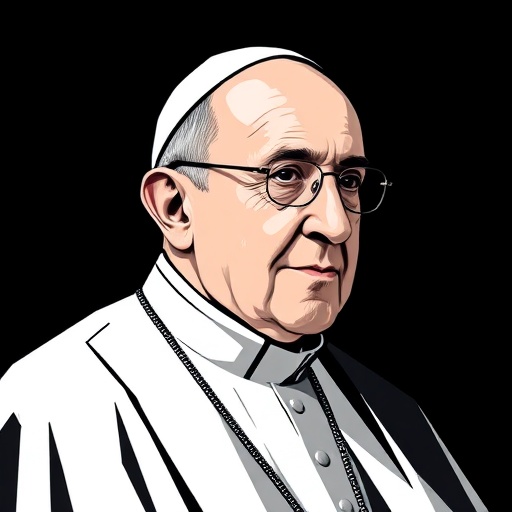
Pope Francis — "If a person is gay and seeks God and has good will, who am I to judge them?"
If a person is gay and seeks God and has good will, who am I to judge them?
If a person is gay and seeks God and has good will, who am I to judge them?
Click any product to generate a realistic preview. Up to 3 at a time.
* Initial load can take up to 90 seconds — revising the preview in another color is nearly instant.
"The greatest evil that can happen in the Church is spiritual worldliness."
"A Christian who is too attached to riches is an idolater."
"The Holy Spirit is a troublemaker."
"It is not necessary to believe in God to be a good person."
"It’s true that I’m a bit of a daredevil, but I’m a bit of a daredevil because I’m old, and I don’t have much to lose."
First Latin American and Jesuit pope (2013-), who has steered the Catholic Church toward pastoral inclusion on LGBTQ pastoral care, divorced Catholics, and climate. Closely associated with Pope John XXIII (the Vatican II reformer pope) and Cardinal Walter Kasper (his theological ally on pastoral reform). For an intellectual contrast, see Cardinal Raymond Burke, American traditionalist cardinal, former head of the Vatican Apostolic Signatura — Burke is the public face of Catholic traditionalism that views Francis's pastoral approach as doctrinally dangerous — he has formally challenged Amoris Laetitia and other Francis reforms.
Found in 2 providers: grok,deepseek
2 sources checked
A person's sexual orientation should not determine their standing before God or within a faith community. What matters spiritually is sincere seeking of the divine and genuine goodwill. This challenges religious leaders who position themselves as moral gatekeepers over others' worthiness. It subordinates doctrinal conformity on identity to the deeper criteria of honest spiritual intent, arguing humility — not condemnation — should define how religious institutions engage people who differ from traditional teaching.
Pope Francis, born Jorge Mario Bergoglio in Buenos Aires, built his papacy around mercy as Christianity's defining ethic over rule enforcement. Elected March 2013 as the first Jesuit and first Latin American pope, he consistently rejected clericalism and authoritarian moral policing. This statement, delivered aboard a papal flight in July 2013, embodied his core Ignatian pastoral approach: individual encounter and compassionate discernment over institutional condemnation, while still technically maintaining Church doctrine on homosexuality.
In June 2013, the U.S. Supreme Court struck down the Defense of Marriage Act, and same-sex marriage debates were reshaping Western democracies. Pope Benedict XVI had resigned just months earlier amid Vatican banking scandals and internal crises. Global Catholic credibility was fragile. Against this backdrop, a sitting pope publicly refusing to condemn gay people who seek God was seismic — it repositioned Catholic public tone in real time and became one of the most quoted religious statements of the decade.
AI-generated insights based on extensive research and information for context. Factual errors? Email [email protected].
Your cart is empty