What it means
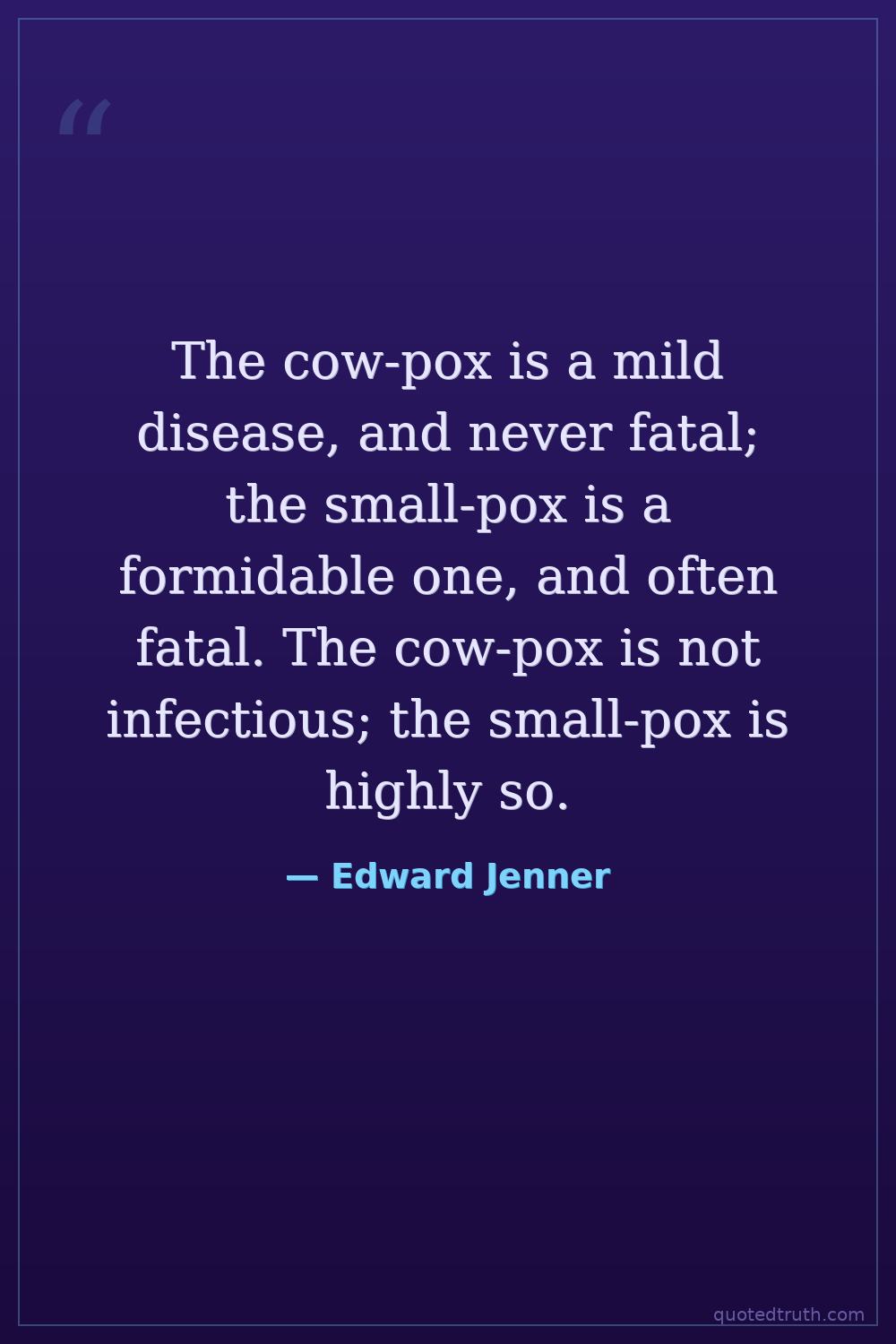
Cow-pox and smallpox are fundamentally different diseases: one mild and contained, the other deadly and highly contagious. This contrast justifies using cow-pox deliberately to protect against smallpox. The observation that cow-pox never spreads person-to-person made it a uniquely safe tool—you could expose someone to it without risking an epidemic, making controlled immunity possible for the first time.
Relevance to Edward Jenner
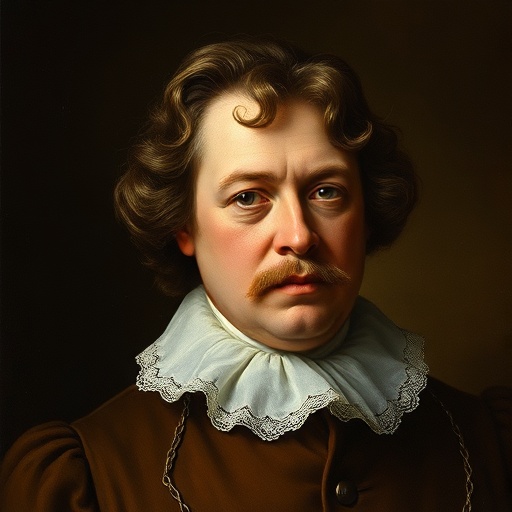
Jenner's entire career pivoted on this clinical comparison. As a country physician in Gloucestershire, he systematically observed milkmaids who contracted cow-pox and subsequently resisted smallpox. His 1798 treatise on vaccination rested on precisely this logical foundation: cow-pox's mildness and non-infectiousness made it the perfect prophylactic agent, vindicating his controversial decision to inoculate James Phipps in 1796.
The era
Smallpox killed roughly 400,000 Europeans annually in the late 18th century, blinding survivors and disfiguring those it spared. Variolation—deliberate smallpox inoculation—already existed but carried real mortality risk and spread disease. Jenner's era had no germ theory, so his empirical case for cow-pox rested entirely on comparative clinical observation, making this plainly stated contrast between the two diseases the scientific argument that launched modern immunology.
AI-generated insights based on extensive research and information for context. Factual errors? Email [email protected].