What it means
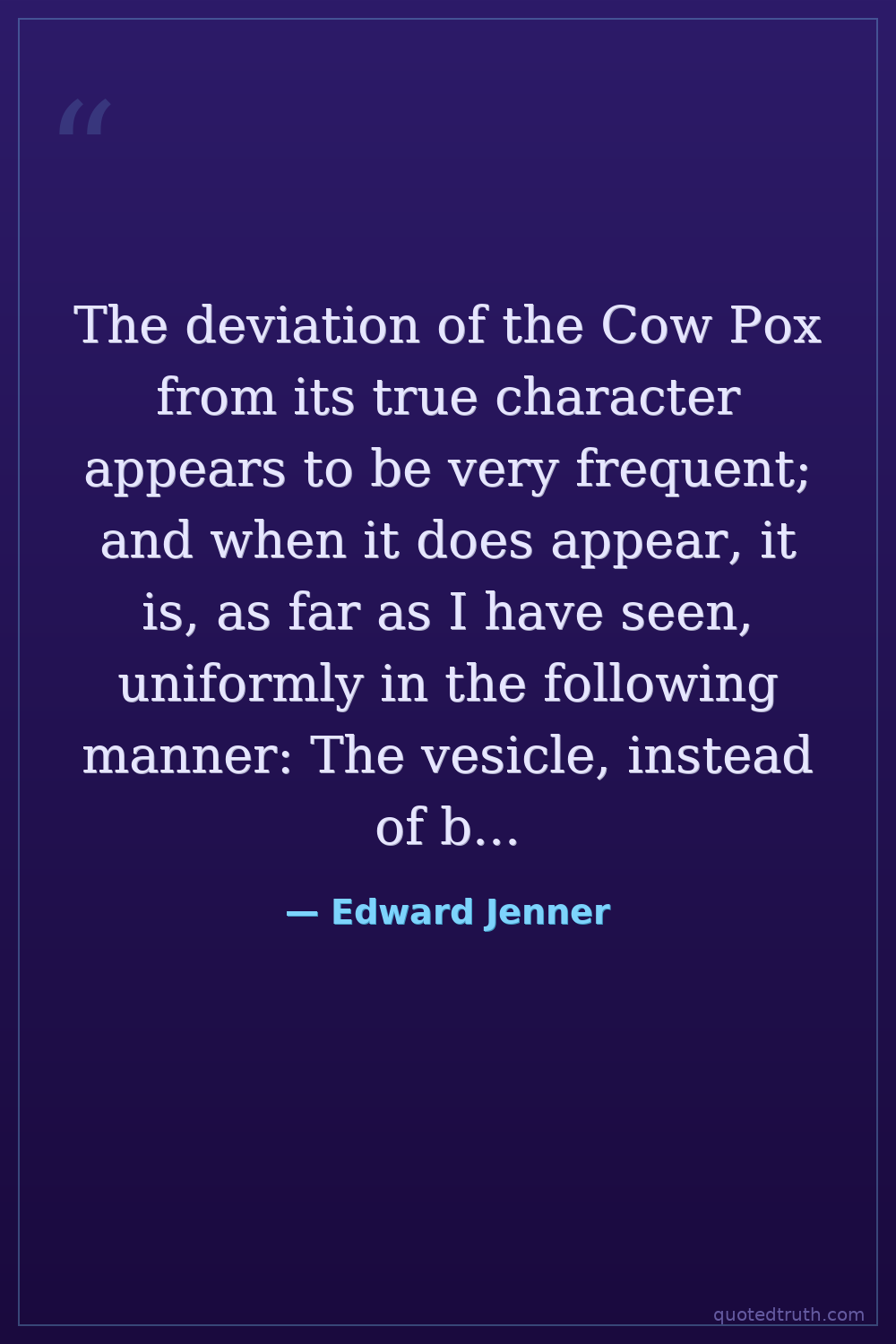
When cowpox infection doesn't follow its normal, reliable course, it produces a distinctly different sore: cloudy and white rather than clear, with sunken edges instead of raised ones, resembling a small pearl. This abnormal form may also be surrounded by inflamed, reddened skin. Jenner is documenting that not all cowpox cases are valid — only the true form confers protection against smallpox.
Relevance to Edward Jenner
Jenner's meticulous clinical observation defined modern vaccinology. His entire smallpox vaccine theory depended on cowpox behaving consistently, so identifying deviations was critical — a failed vaccination could leave someone falsely believing they were protected. This obsessive precision reflects Jenner's empirical, evidence-first approach that separated genuine scientific inquiry from the folk wisdom he built upon.
The era
In the late 18th century, smallpox killed roughly 10% of the population and left survivors scarred or blind. Jenner worked before germ theory, without microscopes capable of visualizing pathogens, relying entirely on careful clinical description. Distinguishing true from false cowpox was life-or-death — imprecision meant unprotected people facing a disease that killed 400,000 Europeans annually.
AI-generated insights based on extensive research and information for context. Factual errors? Email [email protected].