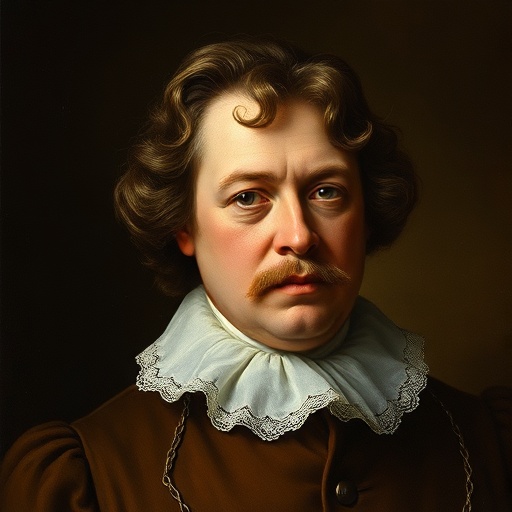
Edward Jenner — "The pursuit of knowledge is an endless one; but it is also a most delightful one…"
The pursuit of knowledge is an endless one; but it is also a most delightful one.
The pursuit of knowledge is an endless one; but it is also a most delightful one.
Click any product to generate a realistic preview. Up to 3 at a time.
* Initial load can take up to 90 seconds — revising the preview in another color is nearly instant.
"Did you make a convert of the obstinate antivaxinist at Lello?"
"It seems to be the determination of some of the jealous members of the ****** (R. *** Soc. y), not to suffer the Institution to sink, but on the / Other hand to master up a force, & support it with al…"
"I have often found that the most simple remedies are the most efficacious."
"I have often been surprised at the credulity of mankind; but I have also been surprised at their obstinacy."
"I have always been a lover of nature, and I have always found great pleasure in studying her works."
Found in 1 providers: grok
1 source checked
Learning never stops — there's always more to discover — but that's not a burden, it's a joy. The quote rejects the idea that knowledge has a finish line and instead frames the infinite nature of discovery as something to embrace. Curiosity itself is the reward, not any final destination. The more you learn, the more you want to know, and that restless desire is pleasurable rather than exhausting.
Jenner spent decades observing milkmaids, studying cowpox, and testing hypotheses before proving vaccination worked — driven entirely by curiosity, not certainty. He faced fierce professional ridicule yet kept pushing. His career embodied this quote: he didn't stop at the smallpox vaccine but continued researching natural history, bird migration, and hibernation until his death. Knowledge as delight, not mere duty, explains his stubborn, lifelong scientific curiosity.
Jenner lived during the Enlightenment's peak and the early Industrial Revolution, when scientific societies were proliferating and empirical inquiry was displacing superstition. Smallpox killed roughly 400,000 Europeans annually, making the stakes of discovery viscerally real. In this climate — where knowledge could literally end plagues — framing endless inquiry as delightful rather than daunting was a radical, hopeful declaration about human progress and the promise of reason.
AI-generated insights based on extensive research and information for context. Factual errors? Email [email protected].
Your cart is empty