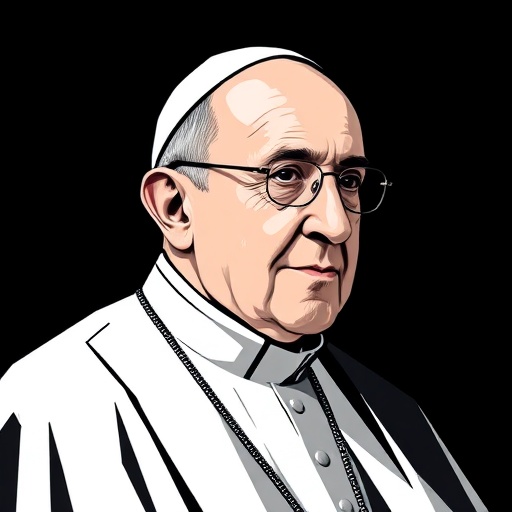
Pope Francis — "The devil exists. He is not a myth, nor a concept, nor an idea. He is a person."
The devil exists. He is not a myth, nor a concept, nor an idea. He is a person.
The devil exists. He is not a myth, nor a concept, nor an idea. He is a person.
Click any product to generate a realistic preview. Up to 3 at a time.
* Initial load can take up to 90 seconds — revising the preview in another color is nearly instant.
"God always surprises us."
"The world tells us to seek success, power, and money; God tells us to seek humility, service, and love."
"I'm a bit allergic to airports."
"It is not necessary to believe in God to be a good person."
"The Church is not a museum of saints, but a hospital for sinners."
First Latin American and Jesuit pope (2013-), who has steered the Catholic Church toward pastoral inclusion on LGBTQ pastoral care, divorced Catholics, and climate. Closely associated with Pope John XXIII (the Vatican II reformer pope) and Cardinal Walter Kasper (his theological ally on pastoral reform). For an intellectual contrast, see Cardinal Raymond Burke, American traditionalist cardinal, former head of the Vatican Apostolic Signatura — Burke is the public face of Catholic traditionalism that views Francis's pastoral approach as doctrinally dangerous — he has formally challenged Amoris Laetitia and other Francis reforms.
Found in 1 providers: grok
1 source checked
This quote asserts that evil has a real, personal agent behind it — not a metaphor or abstract force. Francis insists the devil is a genuine individual being with will and purpose. The statement pushes back against modern tendencies to reduce Satan to a cultural symbol or psychological construct, maintaining that understanding evil as personified and intentional is essential to authentic Christian faith and moral responsibility.
Francis is a Jesuit, and Ignatian spirituality — the order's foundation — centers on discernment of spirits, including direct combat with evil. His Spiritual Exercises formation means he treats the devil as a concrete adversary, not a symbol. As Pope, he has explicitly connected clerical abuse and institutional corruption to diabolical influence, showing his reformist agenda is grounded in orthodox supernatural theology rather than liberal demythologizing.
Francis became Pope in 2013 amid the Church's abuse crisis and a Western culture increasingly secular and skeptical of supernatural claims. Post-modern theology often reframes the devil as metaphor for systemic evil or psychological trauma. Simultaneously, exorcism requests surged globally and spiritual warfare language re-emerged in evangelical and Catholic movements. His blunt assertion of the devil's literal personhood defied both secular dismissal and liberal theological trends reshaping contemporary Christianity.
AI-generated insights based on extensive research and information for context. Factual errors? Email [email protected].
Your cart is empty