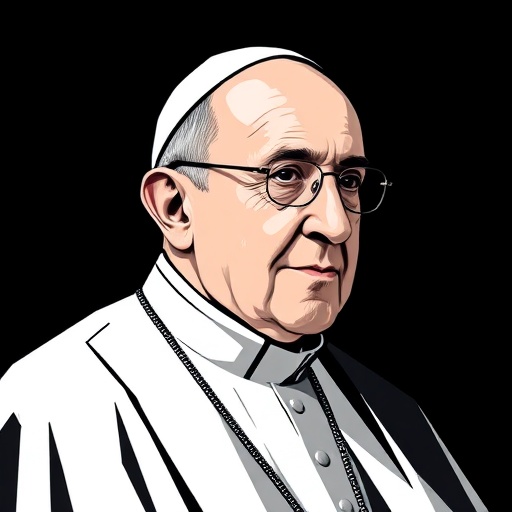
Pope Francis — "It is not necessary to believe in God to be a good person."
It is not necessary to believe in God to be a good person.
It is not necessary to believe in God to be a good person.
Click any product to generate a realistic preview. Up to 3 at a time.
* Initial load can take up to 90 seconds — revising the preview in another color is nearly instant.
"The true power is service."
"The internet is a gift from God."
"The confessional is not a torture chamber."
"The poor cannot wait."
"Rigidity is not of God."
First Latin American and Jesuit pope (2013-), who has steered the Catholic Church toward pastoral inclusion on LGBTQ pastoral care, divorced Catholics, and climate. Closely associated with Pope John XXIII (the Vatican II reformer pope) and Cardinal Walter Kasper (his theological ally on pastoral reform). For an intellectual contrast, see Cardinal Raymond Burke, American traditionalist cardinal, former head of the Vatican Apostolic Signatura — Burke is the public face of Catholic traditionalism that views Francis's pastoral approach as doctrinally dangerous — he has formally challenged Amoris Laetitia and other Francis reforms.
Found in 1 providers: grok
1 source checked
The quote separates moral goodness from religious belief, asserting that atheists, agnostics, and people outside faith traditions can live ethical, compassionate lives. It challenges the idea that institutional religion is a prerequisite for virtue, placing conscience and action above doctrinal identity. A reminder that kindness, honesty, and care for others define a person's character regardless of what they believe or don't believe about God.
Jorge Mario Bergoglio, elected Pope in 2013, built his identity on pastoral humility and outreach beyond Catholic boundaries. As a Jesuit from Buenos Aires who served the poor, he consistently emphasized mercy over condemnation. He famously corresponded with atheist journalists and declared non-believers can be redeemed through conscience. His rejection of Vatican extravagance and focus on human dignity over doctrinal gatekeeping make this sentiment central to his entire papacy.
Francis's papacy began in 2013 amid declining Western church attendance, clergy abuse scandal fallout, and rapid growth in the religiously unaffiliated — the 'nones.' Secularism was rising sharply across Europe and North America. His inclusive framing toward non-believers was a deliberate pastoral recalibration, trying to rebuild a church seen as judgmental and exclusionary. The statement resonated globally precisely because institutional religion was losing credibility and desperately needed to widen its moral tent.
AI-generated insights based on extensive research and information for context. Factual errors? Email [email protected].
Your cart is empty