What it means
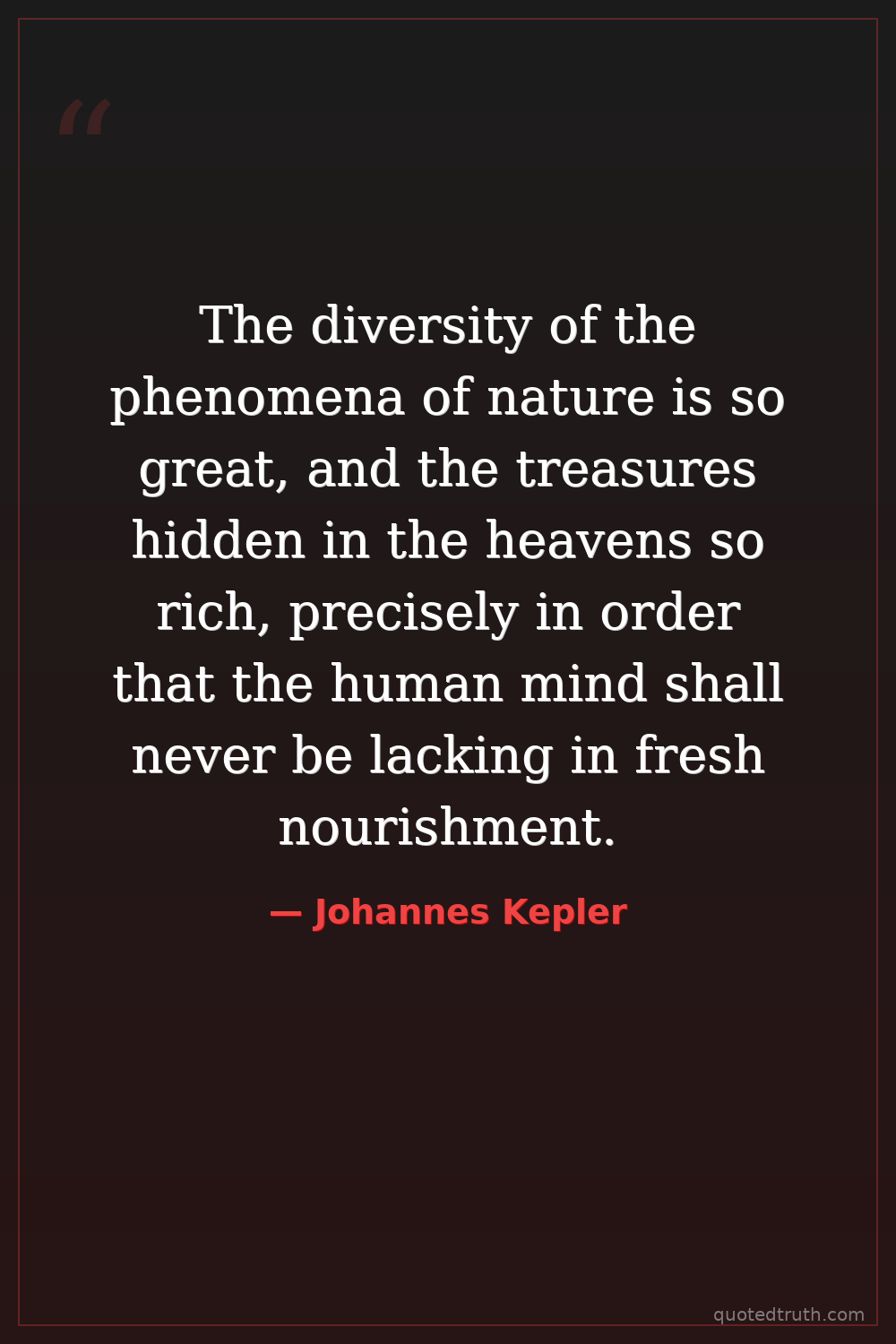
Nature and the cosmos contain endless variety and hidden wonders, and this abundance exists so that human curiosity will always have something new to explore. No matter how much we discover, there will always be more to learn. The universe is deliberately rich enough to keep the thinking mind perpetually engaged, fed, and challenged by fresh questions and undiscovered phenomena worth investigating.
Relevance to Johannes Kepler
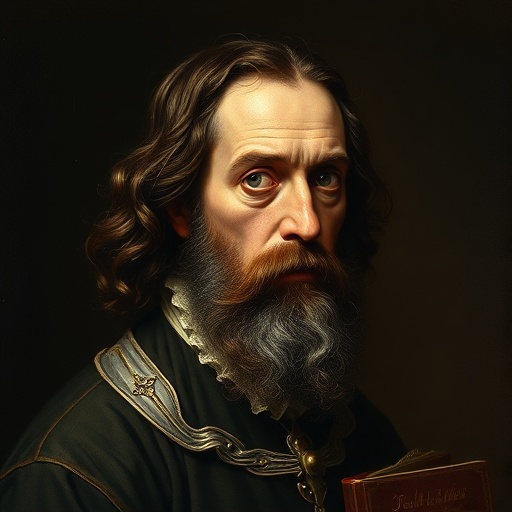
Kepler spent decades deciphering planetary motion, uncovering three laws that revealed the solar system's hidden mathematical structure. A devout Lutheran, he saw astronomy as reading God's handiwork, and each discovery only deepened his sense of how much remained. His work on elliptical orbits, harmonic ratios, and optics reflects a mind that treated the heavens as an inexhaustible text, exactly the 'fresh nourishment' this quote celebrates.
The era
Kepler worked during the Scientific Revolution (late 1500s–early 1600s), when Copernican heliocentrism was contested, Galileo's telescope was revealing moons and sunspots, and the Thirty Years' War disrupted Europe. Scholars were breaking from Aristotelian cosmology and discovering that the heavens were physical, changeable, and measurable. The sense of an expanding, knowable universe, combined with religious conviction that creation was orderly, made nature feel like an endless frontier for inquiry.
AI-generated insights based on extensive research and information for context. Factual errors? Email [email protected].