Benjamin Franklin — "The doors of wisdom are never shut."
The doors of wisdom are never shut.
The doors of wisdom are never shut.
Click any product to generate a realistic preview. Up to 3 at a time.
* Initial load can take up to 90 seconds — revising the preview in another color is nearly instant.
"To err is human, to repent divine, to persist devilish."
"Better slip with foot than tongue."
"Three things are men most apt to be cheated in, a horse, a wig, and a wife."
"We are all born ignorant, but one must work hard to remain stupid."
"One today is worth two tomorrows."
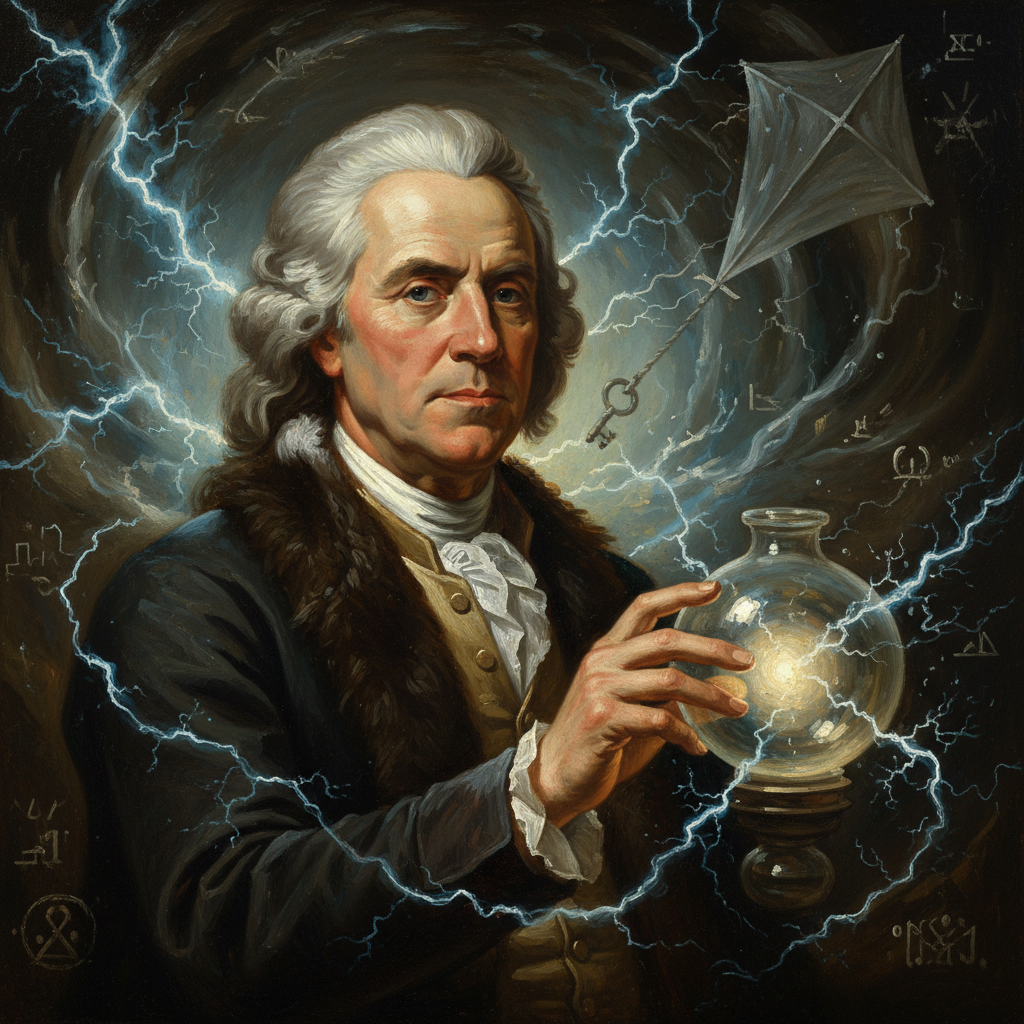
Polymath Founding Father, diplomat, and Poor Richard's Almanack author who helped draft the Declaration of Independence and the Constitution. Closely associated with John Adams (fellow Founder, Massachusetts statesman) and Thomas Jefferson (fellow Declaration drafter). For an intellectual contrast, see Thomas Hutchinson, last royal governor of colonial Massachusetts — Franklin leaked Hutchinson's loyalist correspondence to Boston in 1772 to inflame revolutionary sentiment — Hutchinson represented the colonial-aristocrat crown-loyalty that Franklin's revolution was organized to dismantle.
Found in 1 providers: deepseek
1 source checked
Wisdom and learning are always available to anyone who seeks them. There is no point in life where growth stops being possible, no moment too late to gain understanding, no person too old or unqualified to pursue knowledge. The pursuit of insight has no closing time or gatekeepers — curiosity and effort are all that's required to keep advancing in understanding.
Franklin had only two years of formal schooling yet became a scientist, statesman, diplomat, and philosopher through relentless self-education. He founded America's first public library and the American Philosophical Society, institutions built on the belief that knowledge should be widely shared. Still conducting experiments and negotiating treaties into his seventies, Franklin personally embodied the principle that learning never closes — his entire life was proof of its truth.
Franklin lived during the Enlightenment, when European and American thinkers were challenging centuries of religious authority with reason and science. Formal education remained scarce — most people never attended school, and universities served only the elite. Yet printing presses were spreading ideas faster than ever. Franklin's assertion that wisdom's doors stay open was a democratic challenge to intellectual gatekeeping, insisting that knowledge belonged to tradesmen and farmers, not just clergy and aristocrats.
AI-generated insights based on extensive research and information for context. Factual errors? Email [email protected].
Your cart is empty