Carl Linnaeus — "The earth is a paradise, but men make it a hell."
The earth is a paradise, but men make it a hell.
The earth is a paradise, but men make it a hell.
Click any product to generate a realistic preview. Up to 3 at a time.
* Initial load can take up to 90 seconds — revising the preview in another color is nearly instant.
"The knowledge of plants is a science, but the love of plants is an art."
"My mind reels when, on this height, I look down on the long ages that have flowed by like waves in the sound and have left traces of the ancient world, traces so nearly obscured that they can only whi…"
"The species are as numerous as the different forms which the Infinite Being produced in the beginning."
"The species and the genus are always the work of nature [i.e. specially created]; the variety mostly that of circumstance; the class and the order are the work of nature and art."
"The greatest delight is to behold the earth, and to know what it is."
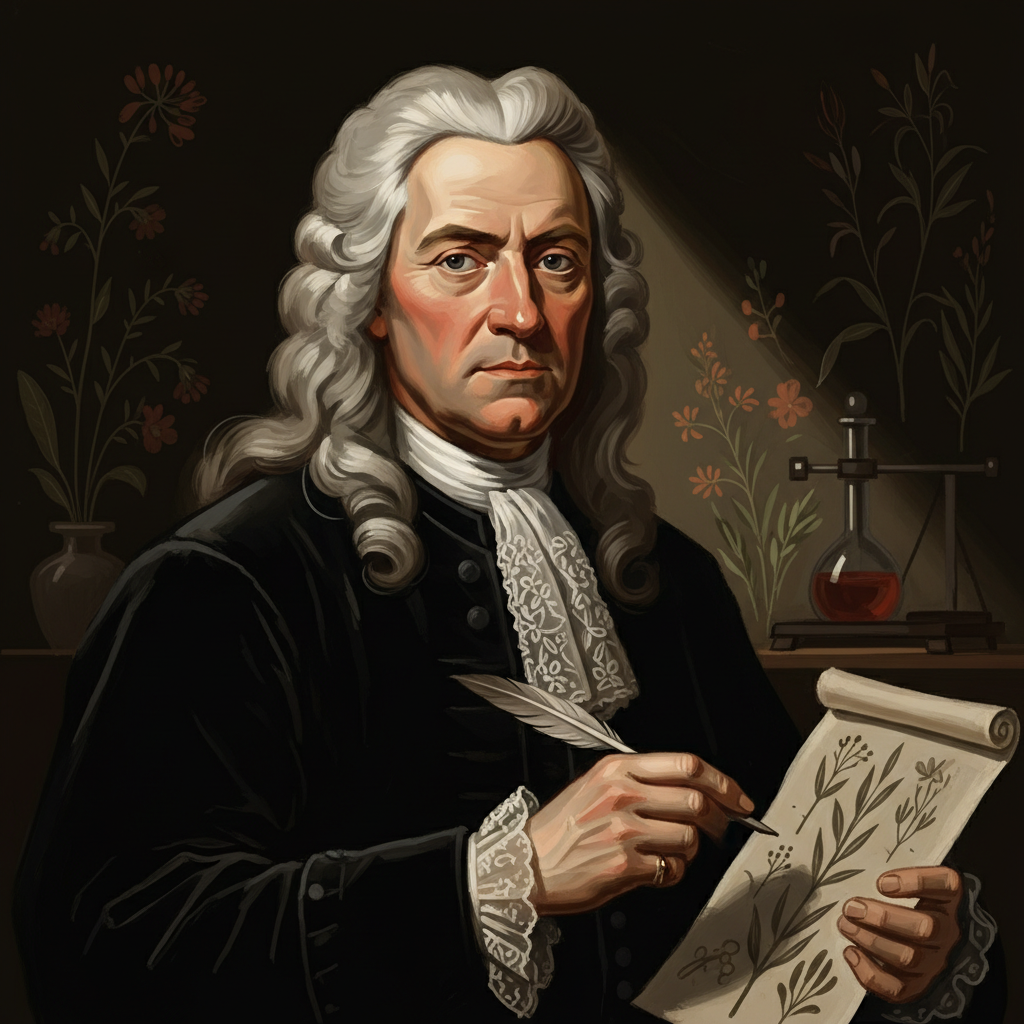
Swedish botanist and the father of modern taxonomy whose Systema Naturae (1735) introduced binomial nomenclature for naming all species. Closely associated with Joseph Banks (British naturalist who carried Linnaean classification on Cook's voyages). For an intellectual contrast, see Comte de Buffon, French naturalist and Histoire Naturelle author (1749-1788) — Buffon explicitly attacked Linnaean fixed-categories taxonomy as artificial and rejected the binomial system; his gradualist, environment-shaped natural history was the explicit alternative. Anticipates the fixed-species-vs-evolution debate Darwin would later resolve.
A critical observation on human impact on the natural world, attributed.
Date: Uncertain (attributed)
Nature & WorldFound in 1 providers: gemini
1 source checked
The natural world is inherently beautiful, abundant, and orderly — a paradise by design. But human greed, warfare, exploitation, and moral failure transform it into suffering and ruin. The quote places blame squarely on humanity: the earth itself is blameless. We inherit something extraordinary and systematically destroy it. It's a call to recognize human responsibility for degrading what should be a shared, thriving home.
Linnaeus spent his career cataloguing nature's extraordinary order, naming over 12,000 species and classifying Homo sapiens within the animal kingdom — a radical act placing humans inside nature, not above it. He revered the natural world as divinely structured and harmonious. Witnessing colonial resource extraction and European deforestation firsthand, he had direct cause to lament humanity's capacity to despoil what he considered creation's masterwork.
Linnaeus worked in the 18th century, when European powers were stripping natural resources from colonized territories across the Americas, Africa, and Asia. Forests across Europe were cleared for agriculture and industry at accelerating rates. The Enlightenment celebrated natural philosophy while enabling extraction at unprecedented scale. Species were disappearing, landscapes transforming irreversibly — making the contrast between nature's inherent richness and human-driven destruction acutely visible to naturalists of his generation.
AI-generated insights based on extensive research and information for context. Factual errors? Email [email protected].
Your cart is empty