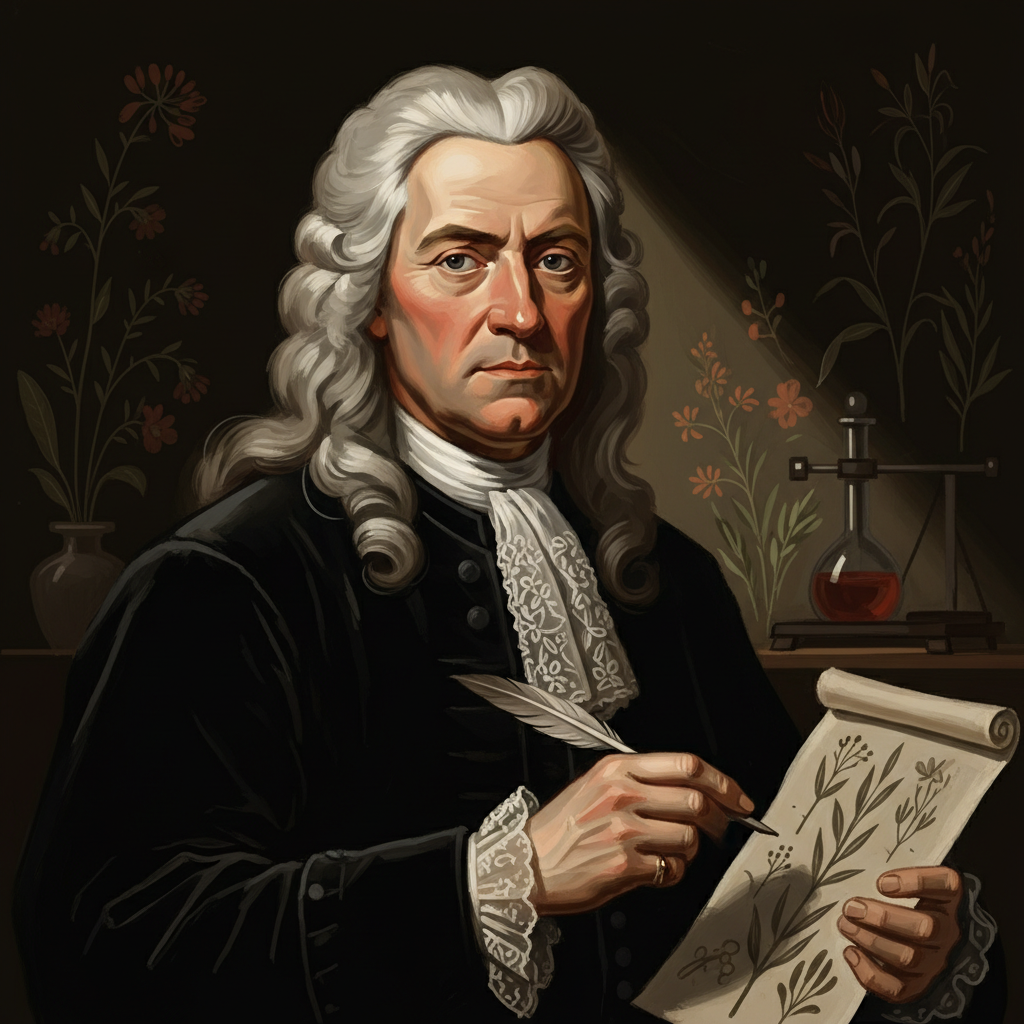
Carl Linnaeus — "The knowledge of plants is a science, but the love of plants is an art."
The knowledge of plants is a science, but the love of plants is an art.
The knowledge of plants is a science, but the love of plants is an art.
Click any product to generate a realistic preview. Up to 3 at a time.
* Initial load can take up to 90 seconds — revising the preview in another color is nearly instant.
"The true botanist is not one who knows many plants, but one who knows how to find them."
"The more hidden the flower, the sweeter the scent."
"The greatest pleasure is to be found in the smallest things."
"The flower's leaves...serve as bridal beds which the Creator has so gloriously prepared, adorned with such noble bed curtains, and perfumed with so many sweet scents to induce the young bridegroom to …"
"If you want to know yourself, study nature."
Swedish botanist and the father of modern taxonomy whose Systema Naturae (1735) introduced binomial nomenclature for naming all species. Closely associated with Joseph Banks (British naturalist who carried Linnaean classification on Cook's voyages). For an intellectual contrast, see Comte de Buffon, French naturalist and Histoire Naturelle author (1749-1788) — Buffon explicitly attacked Linnaean fixed-categories taxonomy as artificial and rejected the binomial system; his gradualist, environment-shaped natural history was the explicit alternative. Anticipates the fixed-species-vs-evolution debate Darwin would later resolve.
Distinguishing between the systematic and aesthetic aspects of botany.
Date: c. 1750s
ShockingFound in 1 providers: grok
1 source checked
Knowing plants means mastering facts — taxonomy, chemistry, ecology. Loving them is something different: a cultivated attentiveness, an aesthetic sensibility, patience grown over time. This quote argues that expertise and passion operate on different registers. You can memorize every species without truly caring about any of them. And you can love a garden without knowing its Latin names. Both matter, but neither automatically produces the other.
Linnaeus spent decades building binomial nomenclature — his Species Plantarum (1753) classified over 7,000 plant species in rigorous Latin pairs. Yet he treated botany as a calling, sending students he called 'apostles' across the globe to collect specimens. He wrote about plants with evident devotion, not clinical detachment. This quote captures his belief that systematic classification and genuine love of nature were equally necessary and fundamentally distinct pursuits.
The Enlightenment prized systematic reason above all — natural philosophy was formalizing into modern science, and Linnaeus's classification projects were celebrated as triumphs of rational order. Simultaneously, botanical gardens became spaces of aristocratic pleasure and plant-collecting fashionable across Europe. This tension between treating nature as an object of rational study versus aesthetic wonder was culturally live, making Linnaeus's distinction between knowledge and love immediately legible to his contemporaries.
AI-generated insights based on extensive research and information for context. Factual errors? Email [email protected].
Your cart is empty