What it means
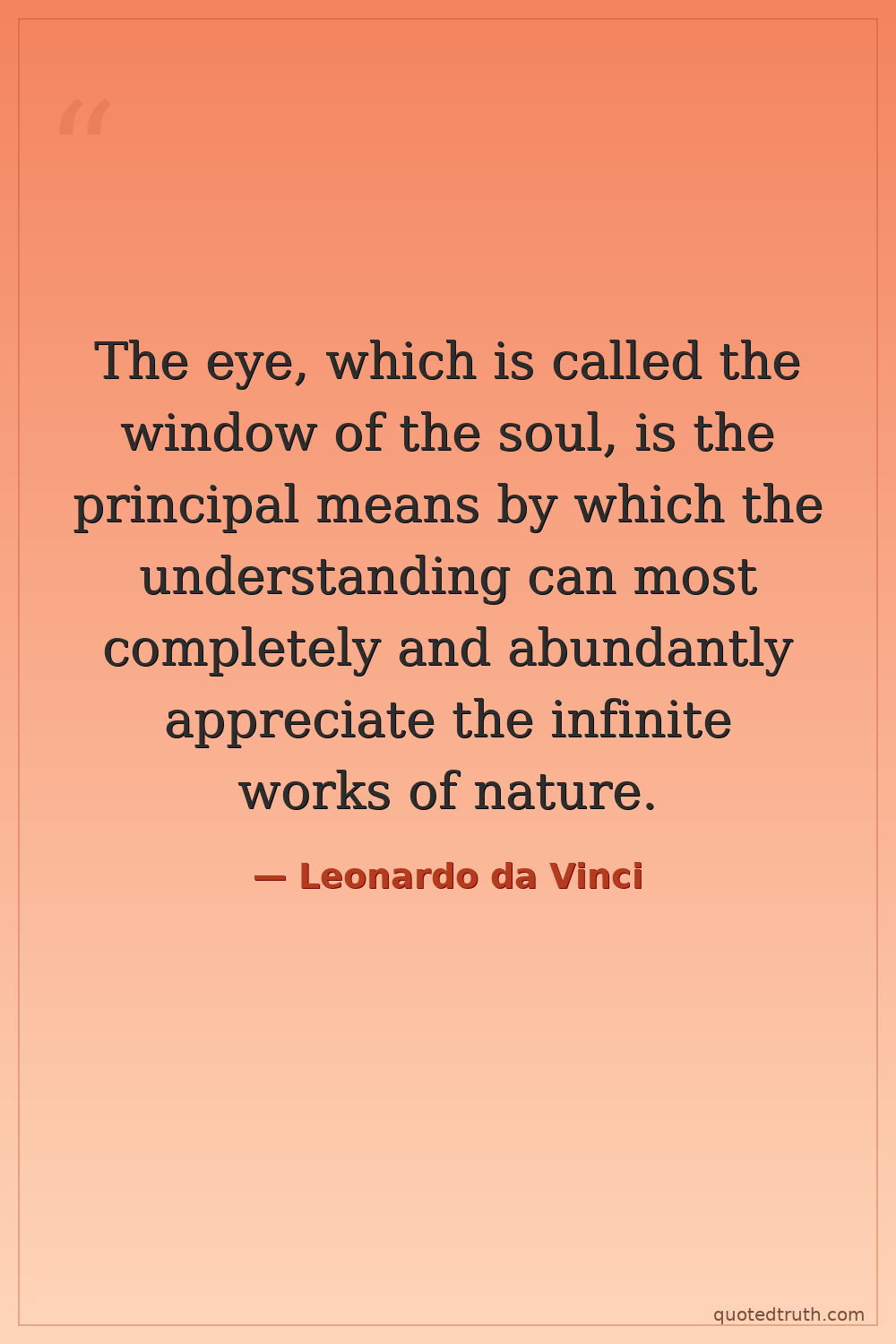
Vision is humanity's most powerful tool for understanding reality. The eye doesn't merely receive images — it enables the mind to grasp the complexity and variety of the natural world. Through careful observation, we access knowledge unreachable by abstract reasoning alone. What we see feeds our intellect directly, making sight the foundation of all genuine understanding of the world around us.
Relevance to Leonardo da Vinci
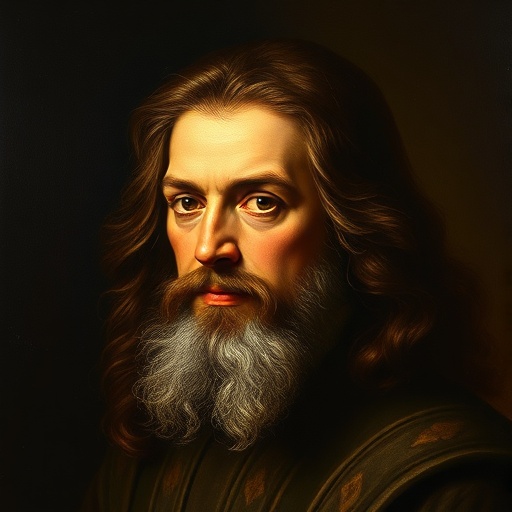
Da Vinci was above all an observer — his notebooks overflow with meticulous drawings of anatomy, water currents, plant structures, and mechanical motion. He believed rigorous visual study surpassed scholastic argument as a path to truth. As a painter, he spent years mastering optics, light, and shadow. His anatomical dissections of the human eye were scientific, not merely artistic. For him, seeing was literally a form of thinking.
The era
Da Vinci lived during the Italian Renaissance (1452–1519), when thinkers were beginning to break from medieval reliance on ancient texts toward direct investigation of nature. Universities still debated Aristotle rather than observing the world firsthand. His insistence on visual empiricism was radical — it prefigured the Scientific Revolution by a century, arriving at a moment when most accepted knowledge still flowed from books, not direct sensory experience.
AI-generated insights based on extensive research and information for context. Factual errors? Email [email protected].