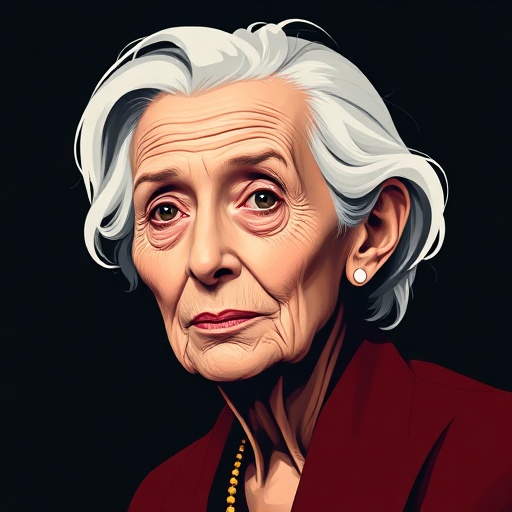
Jane Goodall — "The future depends on what we do in the present."
The future depends on what we do in the present.
The future depends on what we do in the present.
Click any product to generate a realistic preview. Up to 3 at a time.
* Initial load can take up to 90 seconds — revising the preview in another color is nearly instant.
"I'm not an activist, I'm a pragmatist. I just want to save the world."
"My early mentors were animals. They taught me patience, observation, and how to listen."
"The world needs more compassion."
"My work is my passion, and I wouldn't trade it for anything."
"My mission is to create a world where people live in harmony with nature."
British primatologist who in 1960 began the longest-running wild primate study at Gombe Stream, transforming our understanding of chimpanzees. Closely associated with Dian Fossey (mountain-gorilla researcher) and Birutė Galdikas (orangutan researcher; together with Goodall and Fossey one of Louis Leakey's 'Trimates'). For an intellectual contrast, see Walter Palmer, American dentist who killed Cecil the Lion in Zimbabwe in 2015 — Palmer represents the trophy-hunting tradition Goodall's life's work has been organized against — the colonial-era hunter-naturalist worldview that treated primates and big game as specimens or trophies, which Goodall's Roots & Shoots and Jane Goodall Institute exist specifically to displace.
Found in 1 providers: grok
1 source checked
Your actions today have direct consequences on tomorrow. This quote rejects passivity and fatalism — the present moment is the only lever available to shape outcomes. Waiting, assuming someone else will act, or treating the future as fixed is a trap. Every decision, habit, and choice accumulates into the world we either inherit or actively create. Agency lives entirely in the present.
Goodall began as a patient field researcher at Gombe Stream in 1960, documenting chimpanzee behavior over decades. Witnessing habitat destruction firsthand in the 1980s transformed her into a full-time global activist. She founded the Jane Goodall Institute and Roots & Shoots youth program, believing everyday choices — what we consume, how we advocate — collectively determine whether ecosystems survive. Her entire life embodies this conviction.
Goodall shifted from researcher to activist as environmental collapse accelerated: tropical deforestation peaked through the 1980s–90s, climate science gained mainstream consensus, and biodiversity loss became measurably irreversible without intervention. The 1992 Rio Earth Summit established that present policy choices were civilization-defining. Her scientific authority gave the urgency of now a grounded, credible voice at exactly the moment political will lagged dangerously behind public alarm.
AI-generated insights based on extensive research and information for context. Factual errors? Email [email protected].
Your cart is empty