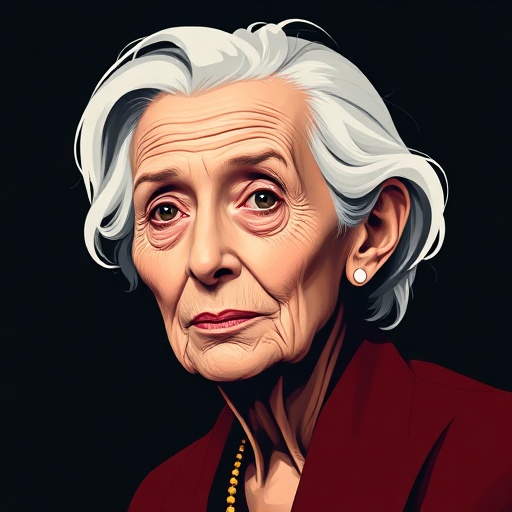
Jane Goodall — "The world needs more compassion."
The world needs more compassion.
The world needs more compassion.
Click any product to generate a realistic preview. Up to 3 at a time.
* Initial load can take up to 90 seconds — revising the preview in another color is nearly instant.
"I don't understand why we have to be so destructive. Why can't we learn to live in harmony with nature?"
"Until we learn to respect and live in harmony with the natural world, we will never truly be at peace."
"I think the biggest problem we face is this disconnect between our clever brains and our loving hearts."
"I often think about what the chimpanzees would say if they could talk. I think they'd tell us to be kinder to each other, and to the planet."
"The only way to make sure that we don't destroy the future is to make sure that our children are educated in a way that they understand the interconnectedness of all life."
British primatologist who in 1960 began the longest-running wild primate study at Gombe Stream, transforming our understanding of chimpanzees. Closely associated with Dian Fossey (mountain-gorilla researcher) and Birutė Galdikas (orangutan researcher; together with Goodall and Fossey one of Louis Leakey's 'Trimates'). For an intellectual contrast, see Walter Palmer, American dentist who killed Cecil the Lion in Zimbabwe in 2015 — Palmer represents the trophy-hunting tradition Goodall's life's work has been organized against — the colonial-era hunter-naturalist worldview that treated primates and big game as specimens or trophies, which Goodall's Roots & Shoots and Jane Goodall Institute exist specifically to displace.
Found in 1 providers: grok
1 source checked
The world suffers from indifference toward other people, animals, and the environment. This statement says that extending genuine empathy and care across those divides is not optional sentiment but a necessary correction. Compassion means actively considering the suffering of others and letting that understanding shape behavior. In an era of ecological collapse, social division, and animal exploitation, it names the missing ingredient that could change how humans treat the rest of life on Earth.
Goodall spent decades living among chimpanzees at Gombe, Tanzania, documenting their grief, tool use, and social bonds, proving animals have rich inner lives. That work converted her from scientist to activist. She founded the Jane Goodall Institute and Roots & Shoots, mobilizing millions around conservation and kindness. Her conviction that compassion for animals and humans is inseparable drives everything from her opposition to bushmeat trading to advocacy for communities living near threatened forests.
Goodall's most active advocacy years coincided with accelerating environmental crises: Congo Basin deforestation, chimpanzee habitat loss, rising factory farming, and climate breakdown. The late 20th and early 21st centuries saw human-caused species extinction reach roughly 1,000 times background rates. Simultaneously, animal rights and environmental justice movements gained global traction, making her call for compassion both a diagnosis of what industrial civilization was destroying and a practical prescription for reversing it.
AI-generated insights based on extensive research and information for context. Factual errors? Email [email protected].
Your cart is empty