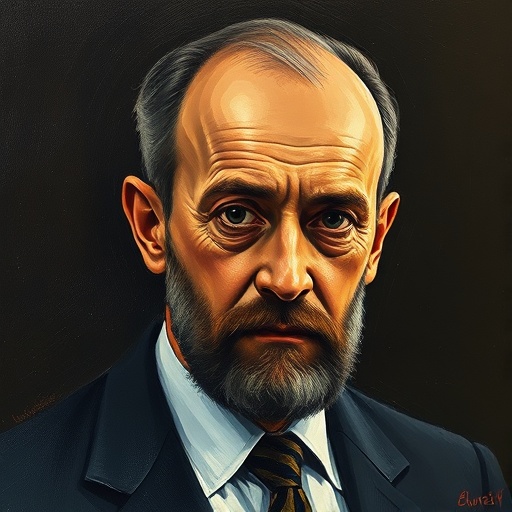
Enrico Fermi — "The future of science depends on the education of young people."
The future of science depends on the education of young people.
The future of science depends on the education of young people.
Click any product to generate a realistic preview. Up to 3 at a time.
* Initial load can take up to 90 seconds — revising the preview in another color is nearly instant.
"Never underestimate the joy of being proved wrong."
"The problem with statistics is that you can prove anything with them."
"Where is everybody? Humans could theoretically colonize the galaxy in a million years or so, and if they could, astronauts from older civilizations could do the same. So why haven't They come to Earth…"
"The best way to understand something is to try to explain it to someone else."
"The most important thing in science is to have a good question."
Found in 1 providers: grok
1 source checked
Scientific progress is not self-sustaining—it depends entirely on each generation transferring knowledge, curiosity, and rigorous thinking to the next. Without deliberate investment in educating young scientists, the chain of discovery breaks. This means funding schools, mentoring students, and making science accessible. A society that neglects its youth's education gambles with its future capacity to solve problems, cure diseases, and understand the natural world.
Fermi was as renowned for teaching as for discovery. At the University of Chicago he mentored a generation of physicists, many of whom became Nobel laureates. He created Fermi problems—estimation exercises still taught today—to sharpen scientific thinking. Having fled fascist Italy in 1938, he understood how political environments suppress education and talent. His Chicago Pile-1 reactor was itself built largely alongside students and young researchers.
Fermi worked through WWII and into the early Cold War, when science shifted from academic pursuit to national security priority. The Manhattan Project demonstrated science's power to reshape civilization. By the late 1940s and early 1950s, the U.S. and Soviet Union were in nuclear competition, making STEM education a strategic concern. The National Science Foundation was founded in 1950 specifically to sustain American scientific capacity through public investment in research and education.
AI-generated insights based on extensive research and information for context. Factual errors? Email [email protected].
Your cart is empty