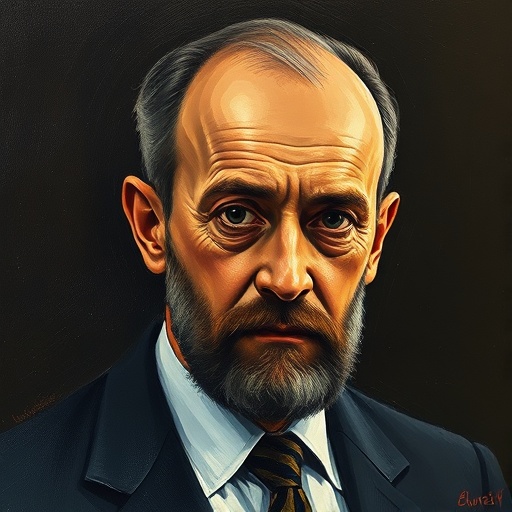
Enrico Fermi — "The most important thing in science is to have a good question."
The most important thing in science is to have a good question.
The most important thing in science is to have a good question.
Click any product to generate a realistic preview. Up to 3 at a time.
* Initial load can take up to 90 seconds — revising the preview in another color is nearly instant.
"Where are they? (Referring to extraterrestrial intelligence)"
"I have never been interested in making money. I have always been interested in doing physics."
"The history of science is full of examples of people who thought they knew everything, and then discovered that they knew very little."
"Before I came here I was not only a little confused about the subject, but also had some doubts about my confusion."
"It is much more important to be able to do something new than to be able to talk about it."
Found in 1 providers: grok
1 source checked
Science's value comes from asking the right questions, not just accumulating answers. A well-framed question directs research, shapes methodology, and determines what counts as a useful result. Without a sharp, meaningful question, experiments lack purpose. Good questions are specific enough to be testable yet broad enough to matter—they define the boundary between productive inquiry and wasted effort.
Fermi embodied this principle through his famous estimation technique—asking questions like 'How many piano tuners are in Chicago?' to reach precise answers from minimal data. His nuclear fission research began with targeted questions about neutron absorption. At Chicago and Los Alamos, his teaching centered on making students frame the right question before touching a calculation.
Fermi worked through the mid-20th century's most consequential scientific moment—quantum mechanics overturning classical physics, nuclear fission discovered in 1938, the Manhattan Project reshaping civilization by 1945. Post-war Big Science created fierce competition for research funding and priorities. In that environment, identifying the right question—not just solving existing ones—separated transformative physics from incremental work.
AI-generated insights based on extensive research and information for context. Factual errors? Email [email protected].
Your cart is empty