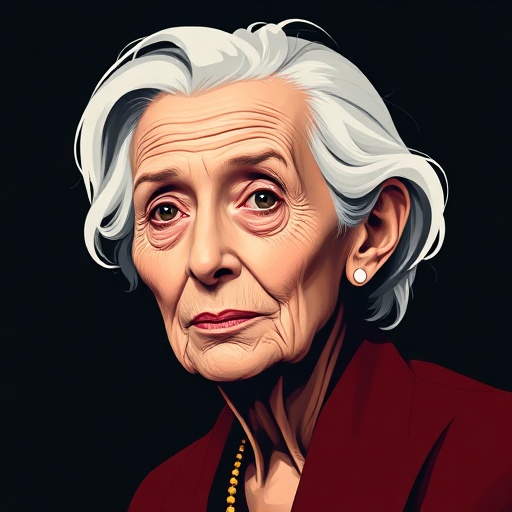
Jane Goodall — "The future of the planet is in our hands."
The future of the planet is in our hands.
The future of the planet is in our hands.
Click any product to generate a realistic preview. Up to 3 at a time.
* Initial load can take up to 90 seconds — revising the preview in another color is nearly instant.
"The greatest hope for the future is the power of individual action."
"I believe that every living creature has a soul, and that we should treat them with respect."
"I believe that we can overcome the challenges we face, if we work together."
"The natural world is our greatest teacher, and we should listen to its lessons."
"The future depends on what we do in the present."
British primatologist who in 1960 began the longest-running wild primate study at Gombe Stream, transforming our understanding of chimpanzees. Closely associated with Dian Fossey (mountain-gorilla researcher) and Birutė Galdikas (orangutan researcher; together with Goodall and Fossey one of Louis Leakey's 'Trimates'). For an intellectual contrast, see Walter Palmer, American dentist who killed Cecil the Lion in Zimbabwe in 2015 — Palmer represents the trophy-hunting tradition Goodall's life's work has been organized against — the colonial-era hunter-naturalist worldview that treated primates and big game as specimens or trophies, which Goodall's Roots & Shoots and Jane Goodall Institute exist specifically to displace.
Found in 1 providers: grok
1 source checked
Every person alive today holds direct responsibility for whether Earth's ecosystems survive or collapse. This isn't abstract—choices about consumption, waste, political engagement, and daily habits aggregate into planetary outcomes. The power to destroy or protect the natural world rests with human decisions collectively and individually, not with fate or distant forces beyond our control.
Goodall spent decades at Gombe watching chimpanzee societies she loved get threatened by deforestation and habitat loss. She transitioned from pure researcher to global activist precisely because she saw that science alone wouldn't save what she studied. Her Roots & Shoots youth program embodies this belief—instilling in children the conviction that their choices genuinely matter to wild places.
Goodall rose to prominence during the late 20th century's accelerating environmental crisis: mass deforestation, species extinction rates spiking, and climate change becoming scientifically undeniable. The 1992 Rio Earth Summit, Kyoto Protocol debates, and growing awareness of human-caused biodiversity collapse gave this statement urgent political weight—a direct challenge to fatalism at a moment when collective action still felt possible.
AI-generated insights based on extensive research and information for context. Factual errors? Email [email protected].
Your cart is empty