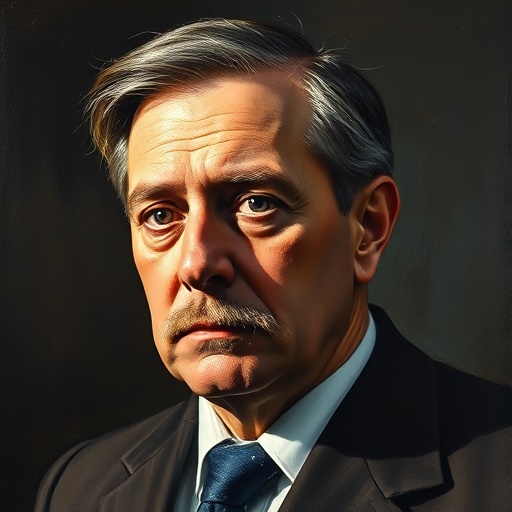
John von Neumann — "The game of life is a game of perfect information."
The game of life is a game of perfect information.
The game of life is a game of perfect information.
Click any product to generate a realistic preview. Up to 3 at a time.
* Initial load can take up to 90 seconds — revising the preview in another color is nearly instant.
"There's no sense in being precise when you don't even know what you're talking about."
"The more abstract a thing is, the more real it is."
"As far as I'm concerned, the two most important things in life are mathematics and sex."
"It is just as important to know what not to do as it is to know what to do."
"It is just as foolish to complain that people are selfish and treacherous as it is to complain that the magnetic field does not increase unless the electric field has a curl. Both are laws of nature."
Found in 1 providers: grok
1 source checked
In game theory, 'perfect information' describes games where every player knows the complete history and current state—nothing is hidden, like chess. Von Neumann suggests life operates this way: its rules and underlying facts are knowable in principle. All relevant information exists; it requires calculation, not luck, to navigate. The statement frames human existence as a structured strategic problem with determinable outcomes, rather than a lottery governed by hidden or unknowable forces.
Von Neumann co-invented modern game theory, formally distinguishing perfect from imperfect information games in his 1944 work with Morgenstern. He possessed near-perfect recall, reportedly memorizing phone books verbatim. His RAND Corporation nuclear strategy work treated Cold War conflict as a calculable strategic game. His entire career reflected the conviction that any complex system—whether economics, warfare, or computing—could be mastered through rigorous mathematical reasoning applied to available information.
Von Neumann worked during WWII and the early Cold War, an era of existential strategic uncertainty and nuclear arms races. Yet RAND Corporation and emerging operations research applied game theory directly to geopolitical deterrence, treating superpower conflict as mathematically solvable. Claude Shannon's 1948 information theory and early computers simultaneously promised that complexity was manageable. The period was defined by an almost utopian faith that rationality and mathematics could decode—and ultimately control—humanity's most dangerous decisions.
AI-generated insights based on extensive research and information for context. Factual errors? Email [email protected].
Your cart is empty