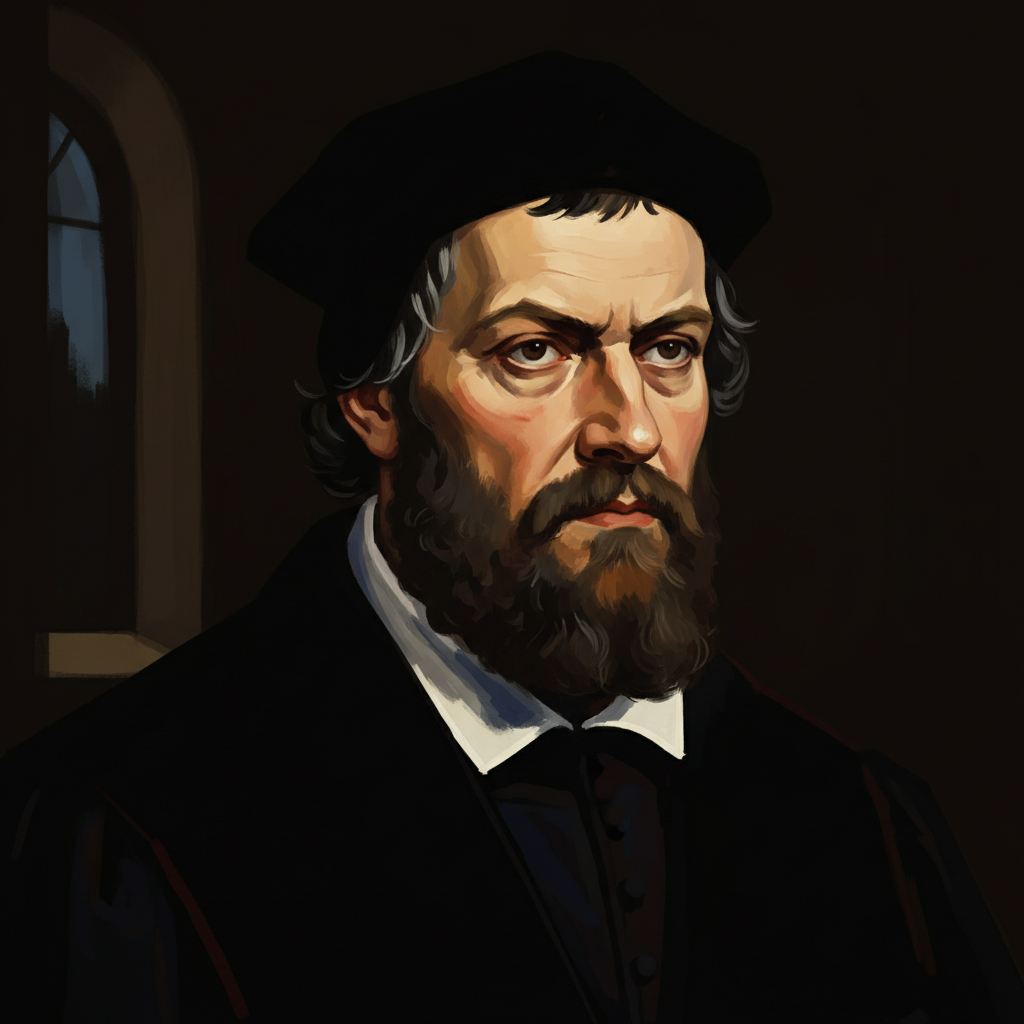
Martin Luther — "The greatest blessing of God is a virtuous and pious wife, who fears God and lov…"
The greatest blessing of God is a virtuous and pious wife, who fears God and loves her husband.
The greatest blessing of God is a virtuous and pious wife, who fears God and loves her husband.
Click any product to generate a realistic preview. Up to 3 at a time.
* Initial load can take up to 90 seconds — revising the preview in another color is nearly instant.
"In lying fashion you ignore what even children know."
"Printing is the ultimate gift of God and the greatest one. Through it, God intends to spread the true knowledge of religion through the whole world."
"The more you read the Bible, the more you will understand it."
"The saints must be good, downright sinners."
"Whoever drinks beer, he is quick to sleep; whoever sleeps long, does not sin; whoever does not sin, enters Heaven! Thus, let us drink beer!"
German theologian whose 95 Theses (1517) launched the Protestant Reformation and broke the Catholic Church's monopoly on Western Christianity. Closely associated with Philipp Melanchthon (Lutheran systematizer) and John Calvin (later Reformer who built on Luther's break). For an intellectual contrast, see Pope Leo X, Renaissance pope (1513-1521) — Leo X's indulgence sales triggered Luther's break and Leo excommunicated him in 1521 — Luther's entire Reformation is structured as a direct answer to the indulgence-funded Vatican Leo represented.
Found in 1 providers: grok
1 source checked
A truly good marriage partner—one who is morally upright, devoted to God, and genuinely loves her spouse—is the most valuable gift anyone can receive. Material wealth, status, or worldly success pale in comparison to sharing life with someone of strong character and sincere affection. The quote elevates domestic companionship and shared faith above all other forms of divine favor a person might hope for.
Luther famously rejected clerical celibacy and married former nun Katharina von Bora in 1525, producing six children. Their household became a model for Protestant family life, and Luther frequently praised Katie as 'my lord Kate,' crediting her with managing their finances and estate. His writings repeatedly exalt marriage as a sacred calling rather than a spiritual compromise, directly overturning centuries of Catholic teaching that prized monastic vows above matrimony.
In early 16th-century Europe, the Catholic Church mandated priestly celibacy and treated monasticism as spiritually superior to marriage. Luther's Reformation dismantled this hierarchy, returning clergy to family life and reframing the household as a holy institution. Amid peasant revolts, plague, and theological upheaval, stable Christian homes were seen as bulwarks of social order. His endorsement of pious wives also shaped emerging Protestant domestic ideals that would dominate Northern European culture for centuries.
AI-generated insights based on extensive research and information for context. Factual errors? Email [email protected].
Your cart is empty