Martin Luther — "In lying fashion you ignore what even children know."
In lying fashion you ignore what even children know.
In lying fashion you ignore what even children know.
Click any product to generate a realistic preview. Up to 3 at a time.
* Initial load can take up to 90 seconds — revising the preview in another color is nearly instant.
"Beer is made by men, wine by God."
"I have held many things in my hands, and I have lost them all; but whatever I have placed in God’s hands, that I still possess."
"The best way to preach is to get down to the level of the people."
"Eating is a serious business. You must eat with delight and not as if you were doing penance."
"You abominable abomination."
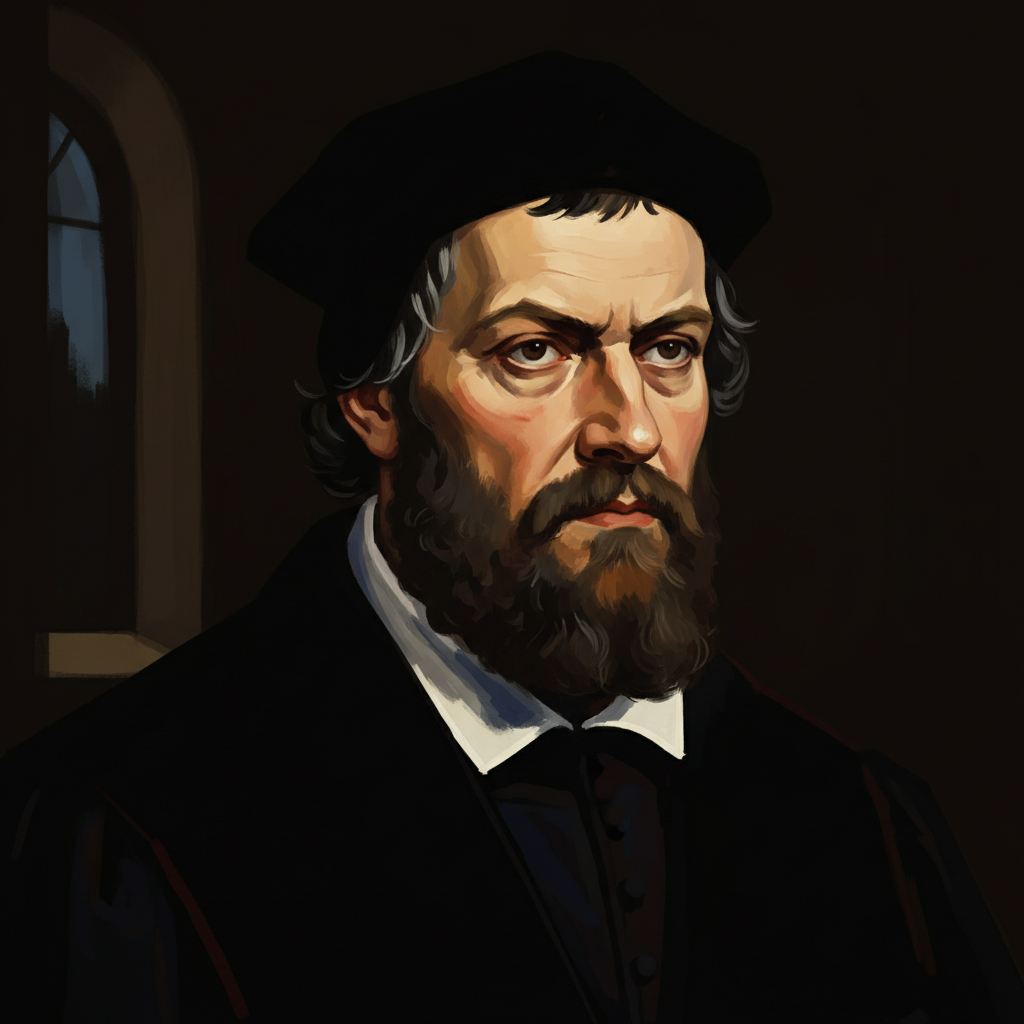
German theologian whose 95 Theses (1517) launched the Protestant Reformation and broke the Catholic Church's monopoly on Western Christianity. Closely associated with Philipp Melanchthon (Lutheran systematizer) and John Calvin (later Reformer who built on Luther's break). For an intellectual contrast, see Pope Leo X, Renaissance pope (1513-1521) — Leo X's indulgence sales triggered Luther's break and Leo excommunicated him in 1521 — Luther's entire Reformation is structured as a direct answer to the indulgence-funded Vatican Leo represented.
Found in 1 providers: gemini
1 source checked
Luther accuses an opponent of deliberately pretending not to understand something so basic that even children grasp it. The charge is not ignorance but dishonesty: the person knows the truth and chooses to misrepresent it. It is a blunt rebuke calling out willful evasion, a refusal to engage with plain facts in order to protect a weak position or mislead listeners.
Luther was a combative theologian whose polemical writings against the papacy, Erasmus, Zwingli, and the peasants brimmed with exactly this kind of biting invective. Trained as a monk and doctor of theology, he believed Scripture was clear enough for a plowboy to read, so opponents who feigned confusion over basics were, in his eyes, liars weaponizing sophistication against obvious gospel truth.
In early sixteenth-century Europe, theological disputes were public spectacles conducted through pamphlets, disputations, and open letters printed on Gutenberg presses. Accusations of dishonesty were standard rhetorical weapons as Reformers and Catholic apologists fought for popular allegiance. Rising literacy, vernacular Bibles, and catechisms meant even children learned doctrine, so charging a learned foe with denying what children knew was a devastating populist jab.
AI-generated insights based on extensive research and information for context. Factual errors? Email [email protected].
Your cart is empty