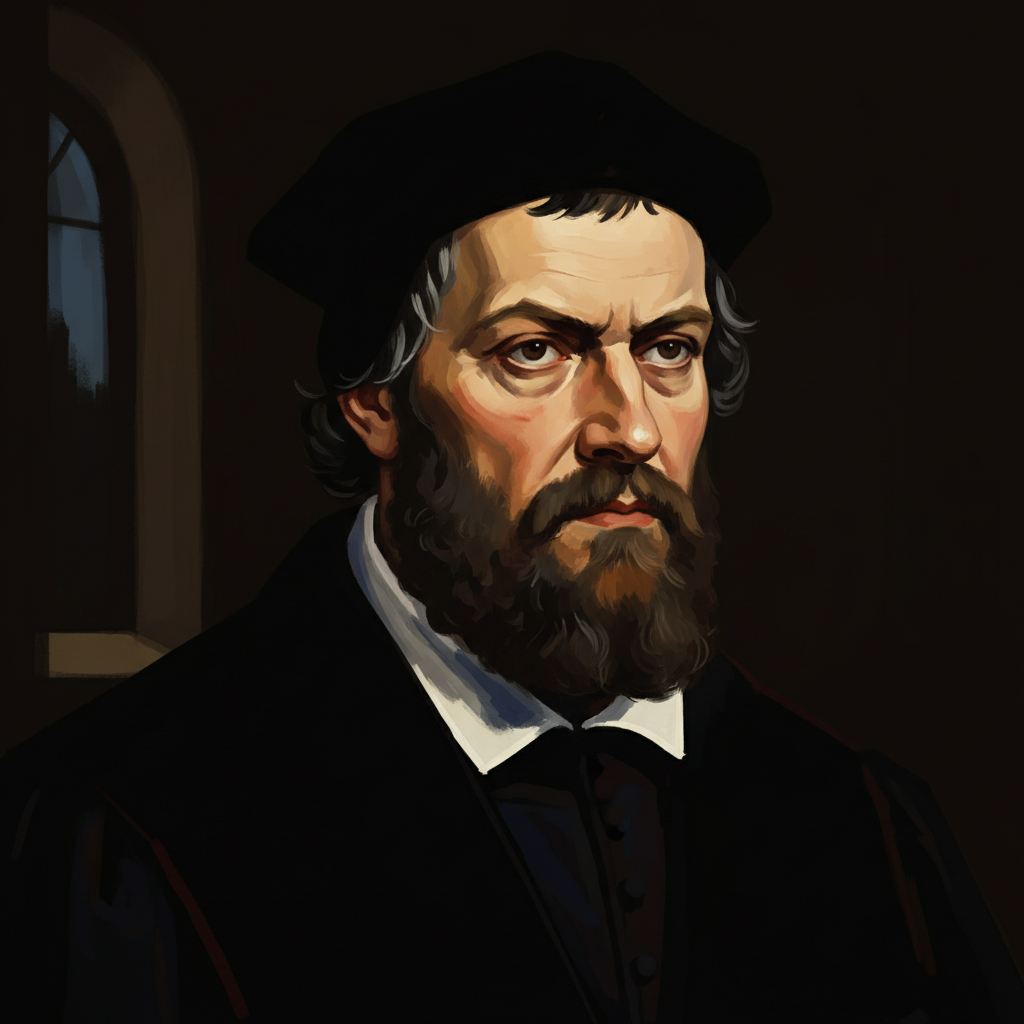
Martin Luther — "The greatest danger to the church is when it is rich."
The greatest danger to the church is when it is rich.
The greatest danger to the church is when it is rich.
Click any product to generate a realistic preview. Up to 3 at a time.
* Initial load can take up to 90 seconds — revising the preview in another color is nearly instant.
"I am rough, boorish, stormy, and warlike. I am born to fight innately with innumerable monsters and devils."
"It does not matter what people DO; it only matters what they BELIEVE."
"Whoever smells it first, out of him it crept."
"The world is a great book, of which they who never stir from home read only one page."
"If I could understand how a good Christian could be a usurer, I would eat him."
German theologian whose 95 Theses (1517) launched the Protestant Reformation and broke the Catholic Church's monopoly on Western Christianity. Closely associated with Philipp Melanchthon (Lutheran systematizer) and John Calvin (later Reformer who built on Luther's break). For an intellectual contrast, see Pope Leo X, Renaissance pope (1513-1521) — Leo X's indulgence sales triggered Luther's break and Leo excommunicated him in 1521 — Luther's entire Reformation is structured as a direct answer to the indulgence-funded Vatican Leo represented.
Found in 1 providers: grok
1 source checked
Wealth poses a greater threat to a religious institution than persecution or external attack. When a church accumulates money, property, and power, it shifts focus from spiritual mission to protecting assets, courting donors, and maintaining status. Comfort breeds corruption, complacency, and compromise. A poor church depends on faith; a rich one depends on its treasury, and that dependence quietly replaces its original purpose with worldly concerns.
Luther launched the Reformation in 1517 largely by attacking the sale of indulgences, a fundraising scheme that enriched Rome while exploiting peasants' fear of purgatory. As an Augustinian monk sworn to poverty, he watched the papacy fund St. Peter's Basilica through spiritual extortion. His Ninety-Five Theses and later writings repeatedly condemned ecclesiastical greed, arguing that material wealth had corrupted doctrine, clergy, and the gospel's accessibility to ordinary believers.
In early-sixteenth-century Europe, the Catholic Church was the continent's largest landowner, collecting tithes, selling offices, and marketing indulgences to finance lavish construction and papal politics. Clerical corruption, absentee bishops, and the Medici popes embodied institutional excess. Printing-press pamphlets spread outrage quickly, and German princes resented wealth flowing to Rome. This economic grievance, as much as theology, fueled the Reformation's explosion and the fracturing of Western Christendom into competing confessions.
AI-generated insights based on extensive research and information for context. Factual errors? Email [email protected].
Your cart is empty