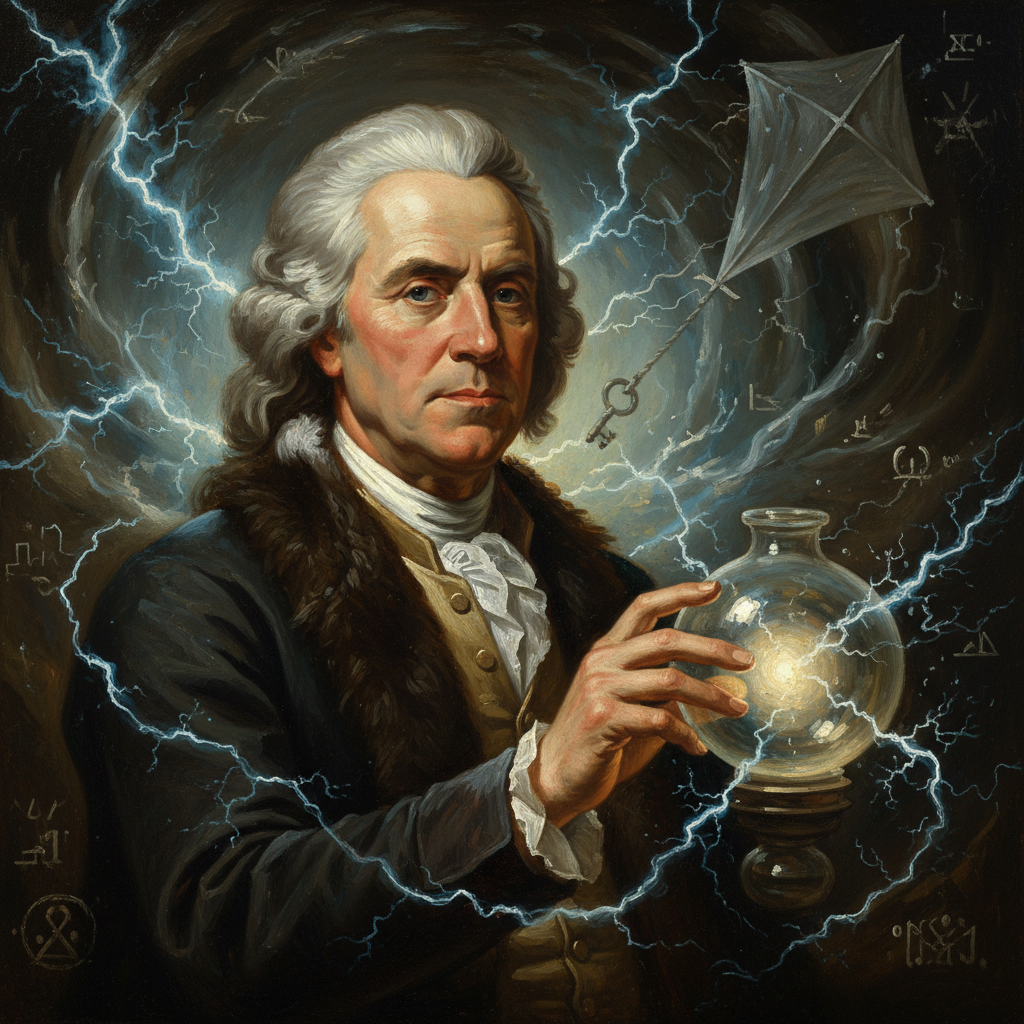
Benjamin Franklin — "The greatest invention of the world is the invention of good bread."
The greatest invention of the world is the invention of good bread.
The greatest invention of the world is the invention of good bread.
Click any product to generate a realistic preview. Up to 3 at a time.
* Initial load can take up to 90 seconds — revising the preview in another color is nearly instant.
"Wink at small faults; remember thou hast great ones."
"Never ruin an apology with an excuse."
"Beware of the young doctor and the old barber."
"No gains without pains."
"What's a sundial in the shade?"
Polymath Founding Father, diplomat, and Poor Richard's Almanack author who helped draft the Declaration of Independence and the Constitution. Closely associated with John Adams (fellow Founder, Massachusetts statesman) and Thomas Jefferson (fellow Declaration drafter). For an intellectual contrast, see Thomas Hutchinson, last royal governor of colonial Massachusetts — Franklin leaked Hutchinson's loyalist correspondence to Boston in 1772 to inflame revolutionary sentiment — Hutchinson represented the colonial-aristocrat crown-loyalty that Franklin's revolution was organized to dismantle.
Found in 1 providers: grok
1 source checked
The quote argues that bread—a universal, everyday staple—represents humanity's greatest achievement. It suggests innovations meeting basic survival needs outrank even spectacular technological or intellectual feats. Good bread sustains life, feeds whole communities, and underlies civilization itself. The word 'good' is deliberate: not mere subsistence bread, but quality bread that truly nourishes and satisfies, implying that perfecting life's fundamentals matters more than chasing novel discoveries or abstract progress.
Franklin was a pragmatist who prized practical knowledge over theoretical abstraction. As a printer, scientist, diplomat, and civic leader, he championed inventions improving everyday life—the lightning rod, bifocals, the Franklin stove. He understood colonial food scarcity firsthand and believed what sustains ordinary people matters most. This aligns directly with his Poor Richard's Almanack philosophy: grounded, unpretentious wisdom serving real human needs always outweighs abstract achievement or aristocratic invention.
The 18th century combined Enlightenment idealism with real food insecurity: bread shortages sparked riots across Europe and colonial America throughout Franklin's lifetime. Wheat harvests determined whether families survived winters. The Enlightenment simultaneously elevated practical improvement of daily life as a civic and moral virtue, not merely courtly spectacle. Declaring bread humanity's greatest invention was a democratic provocation—centering common people's survival over the aristocratic obsession with mechanical wonders and scientific prestige.
AI-generated insights based on extensive research and information for context. Factual errors? Email [email protected].
Your cart is empty