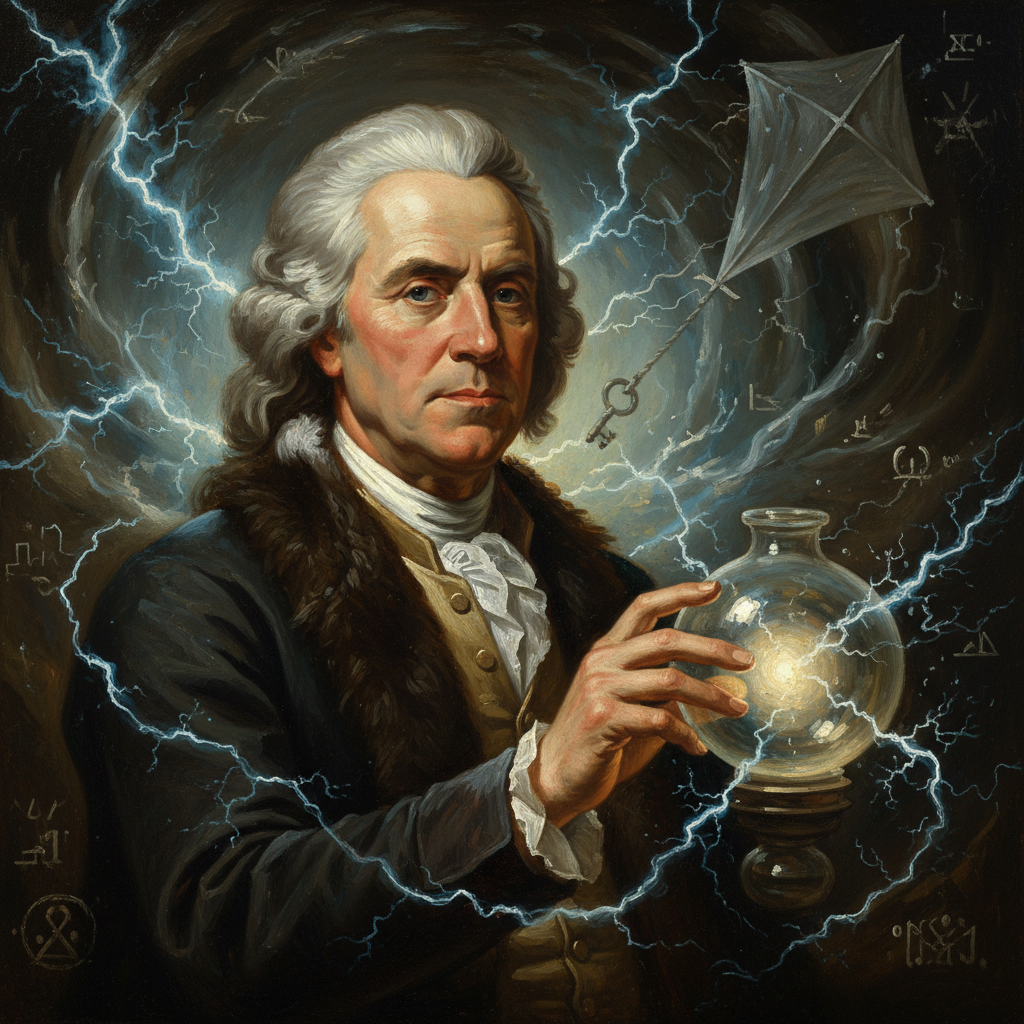
Benjamin Franklin — "Beware of the young doctor and the old barber."
Beware of the young doctor and the old barber.
Beware of the young doctor and the old barber.
Click any product to generate a realistic preview. Up to 3 at a time.
* Initial load can take up to 90 seconds — revising the preview in another color is nearly instant.
"Glass, China, and Reputation, are easily crack'd, and never well mended."
"The worst wheel of the cart makes the most noise."
"The doors of wisdom are never shut."
"To cross the sea takes naught but a pair of legs and the will to swim."
"Discover some Drug wholesome & not disagreeable, to be mix'd with our common Food, or Sauces, that shall render the natural Discharges of Wind from our Bodies, not only inoffensive, but agreable as Pe…"
Polymath Founding Father, diplomat, and Poor Richard's Almanack author who helped draft the Declaration of Independence and the Constitution. Closely associated with John Adams (fellow Founder, Massachusetts statesman) and Thomas Jefferson (fellow Declaration drafter). For an intellectual contrast, see Thomas Hutchinson, last royal governor of colonial Massachusetts — Franklin leaked Hutchinson's loyalist correspondence to Boston in 1772 to inflame revolutionary sentiment — Hutchinson represented the colonial-aristocrat crown-loyalty that Franklin's revolution was organized to dismantle.
Found in 1 providers: grok
1 source checked
This warns against two opposite failure modes of expertise. A young doctor lacks the seasoned judgment to diagnose safely or avoid fatal mistakes under pressure. An old barber — who in Franklin's era also performed surgery and bloodletting — may be too entrenched in outdated methods to adapt. The lesson: competence requires the right balance. Neither raw inexperience nor habit-bound seniority is safe when lives hang on the outcome.
Franklin prized earned, practical skill above mere credentials or seniority. Self-taught as a printer, scientist, and diplomat, he believed mastery came from deliberate practice. He lost his son Francis to smallpox in 1736 and later championed inoculation, making him acutely aware of medical incompetence's fatal cost. His Poor Richard's Almanack aphorisms consistently warned against misplaced trust — reflecting his core empirical conviction: judge people by demonstrated competence, never by assumed authority.
In colonial America and 18th-century Europe, barber-surgeons were commonplace — the man who cut hair also drew blood, pulled teeth, and treated wounds (the red-and-white barber pole still commemorates this). Formal medical licensing barely existed; most physicians learned through loose apprenticeships. Quackery was rampant, and botched treatments routinely killed patients. Franklin's era was transitioning from humoral theory toward empirical medicine, making the question of whom to trust with your body a genuinely life-or-death judgment call.
AI-generated insights based on extensive research and information for context. Factual errors? Email [email protected].
Your cart is empty