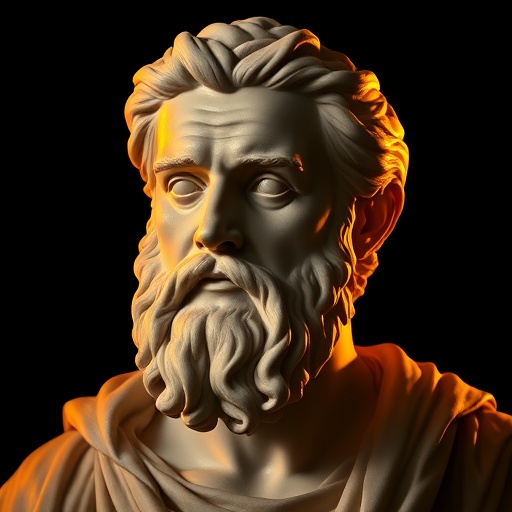
Hippocrates — "The healthy man does not think about his health."
The healthy man does not think about his health.
The healthy man does not think about his health.
Click any product to generate a realistic preview. Up to 3 at a time.
* Initial load can take up to 90 seconds — revising the preview in another color is nearly instant.
"The power of the diet is in the power of the stomach."
"The chief virtue that language can have is clearness, and nothing detracts from it so much as the use of unfamiliar words."
"If we could give every individual the right amount of nourishment and exercise, not too little and not too much, we would have found the safest way to health."
"The flesh of the hedgehog, when eaten, cures incontinence of urine."
"The art of healing comes from nature, not from the physician."
A paradoxical observation on the state of being healthy.
Date: Uncertain (attributed)
WisdomFound in 1 providers: gemini
1 source checked
When you feel fine, your body runs silently in the background — you simply live your life. Only illness forces your attention inward. This quote captures a truth about human psychology: wellness is invisible until it's gone. The moment sickness arrives, health becomes an obsession. It suggests that health is best defined not by active maintenance but by the absence of suffering — the quiet state where the body asks nothing of you.
Hippocrates built medicine on close patient observation — he watched how sick bodies behaved versus healthy ones. This quote reflects his clinical worldview: disease was a disruption of natural balance, and health was the default, unnoticed state. His Hippocratic writings emphasized diet, rest, and environment as ways to preserve that baseline. He treated health as ordinary when present but precious when absent — a distinction only a physician who witnessed suffering daily would articulate.
In ancient Greece during Hippocrates's era (5th–4th century BC), disease was widely attributed to divine punishment or supernatural forces. Temples of Asclepius served as healing sanctuaries where prayer mattered more than treatment. Hippocrates was revolutionary in insisting the body operated by natural laws. In this context, the idea that a healthy person simply lives — unaware of bodily mechanics — was a quiet argument that health belongs to nature, not the gods.
AI-generated insights based on extensive research and information for context. Factual errors? Email [email protected].
Your cart is empty