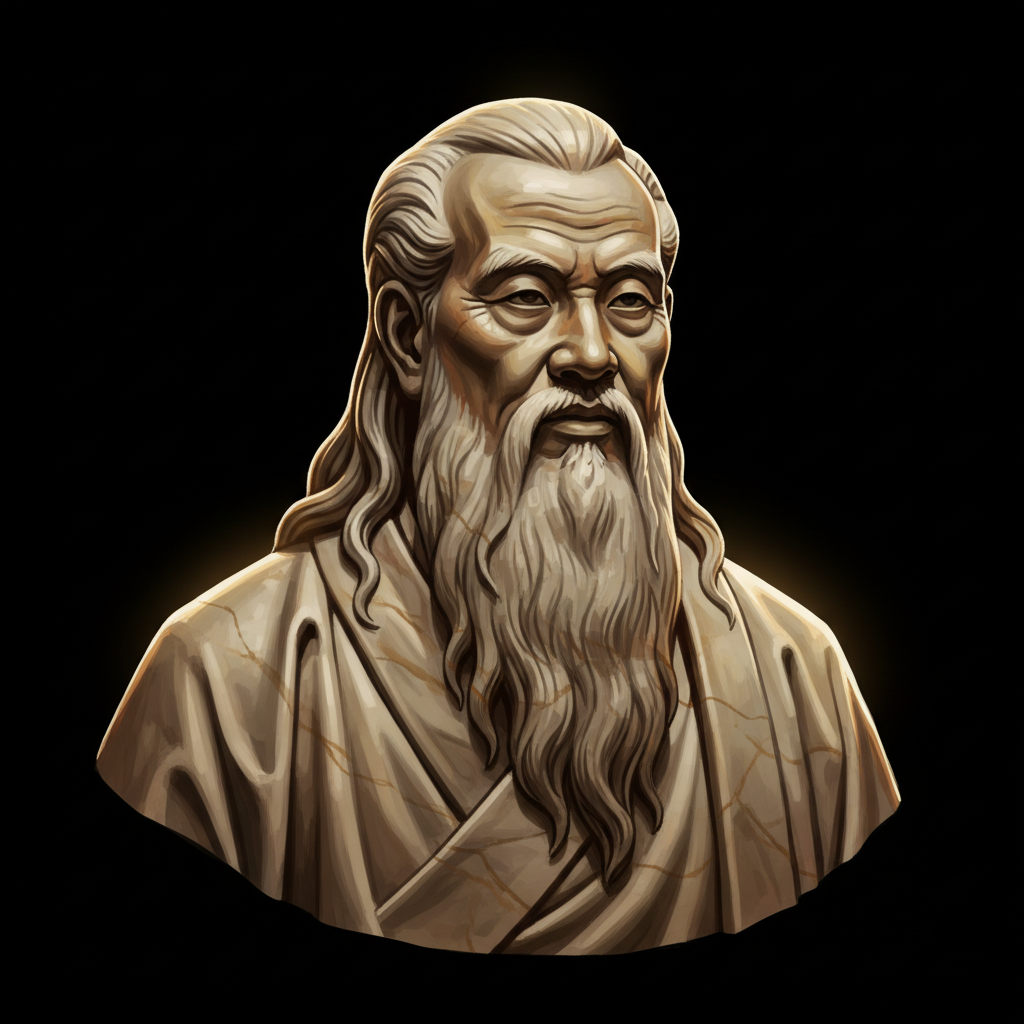
Laozi — "The heaviest thing in the world is a human heart."
The heaviest thing in the world is a human heart.
The heaviest thing in the world is a human heart.
Click any product to generate a realistic preview. Up to 3 at a time.
* Initial load can take up to 90 seconds — revising the preview in another color is nearly instant.
"When people see some things as beautiful, other things become ugly. When people see some things as good, other things become bad."
"He who acts destroys; he who grasps loses."
"Pursue without interfering."
"The sage is always without ambition."
"Governing a large country is like cooking a small fish. You spoil it with too much poking."
Reputed founder of Taoism and author of the Tao Te Ching, whose wu wei (effortless action) shaped East Asian philosophy. Closely associated with Zhuangzi (later Taoist who extended Laozi's framework). For an intellectual contrast, see Confucius, near-contemporary Chinese sage of social ritual and duty — Confucius systematized social order through ritual and hierarchy; Laozi argued that all such systems were the disease, not the cure — the two founding poles of Chinese moral philosophy.
Tao Te Ching (general sentiment related to burdens)
Date: 6th century BCE (approximate)
ShockingFound in 1 providers: grok
1 source checked
Emotional weight surpasses any physical burden. Grief, love, guilt, regret, and longing press down harder than stone or iron. You can set down a sack of rice, but feelings follow you everywhere, shaping your posture, your sleep, your decisions. The claim is that inner life, invisible to others, is the densest material a person carries. Nothing external compares to what the heart holds.
Laozi taught that softness outlasts hardness and that the inner world governs the outer. As a reputed archivist of the Zhou court who withdrew from politics, he watched ambitious men crushed by their own desires and attachments. The Tao Te Ching repeatedly warns that clinging, craving, and unspent emotion weigh a life down, while emptiness and yielding free it. This saying echoes his preference for inward stillness over outward striving.
Laozi lived during the late Zhou dynasty, around the 6th century BCE, as centralized authority crumbled into the warring feudal states that produced constant campaigns, famine, and mass conscription. Ordinary people buried sons, fled armies, and owed tribute to rival lords. Against this backdrop of physical hardship, Chinese sages like Confucius and Laozi turned attention to inner conduct, arguing that the real catastrophe of the age was not broken cities but broken, overburdened human hearts.
AI-generated insights based on extensive research and information for context. Factual errors? Email [email protected].
Your cart is empty