Laozi — "The sage is always without ambition."
The sage is always without ambition.
The sage is always without ambition.
Click any product to generate a realistic preview. Up to 3 at a time.
* Initial load can take up to 90 seconds — revising the preview in another color is nearly instant.
"When the best student hears about the Way, he practices it diligently. When the average student hears about the Way, he is half-hearted. When the worst student hears about the Way, he laughs out loud.…"
"The sage's Way is to act and not to contend."
"When the Master governs, the people are hardly aware that he exists. Next best is a leader who is loved. Next, one who is feared. The worst is one who is despised."
"The sage governs by emptying senses and filling bellies."
"Abandon sageliness and discard wisdom, and the people will benefit a hundredfold. Abandon benevolence and discard righteousness, and the people will return to filial piety and paternal love. Abandon s…"
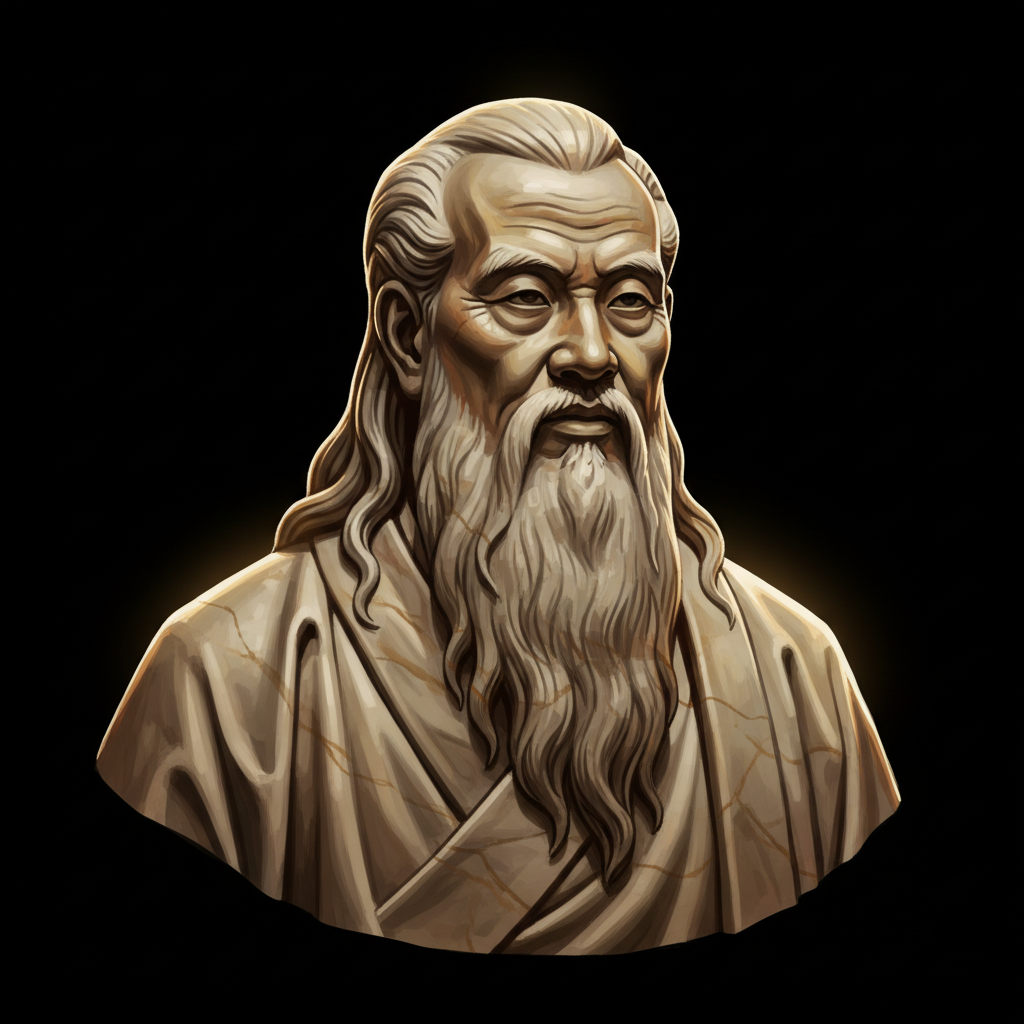
Reputed founder of Taoism and author of the Tao Te Ching, whose wu wei (effortless action) shaped East Asian philosophy. Closely associated with Zhuangzi (later Taoist who extended Laozi's framework). For an intellectual contrast, see Confucius, near-contemporary Chinese sage of social ritual and duty — Confucius systematized social order through ritual and hierarchy; Laozi argued that all such systems were the disease, not the cure — the two founding poles of Chinese moral philosophy.
Found in 1 providers: grok
1 source checked
A wise person does not chase status, wealth, or personal achievement. Instead of pursuing goals driven by ego or desire for recognition, they live without grasping for outcomes. By letting go of ambition, the sage becomes content, free, and effective in ways that striving people cannot match. Acting without selfish motive allows them to respond naturally to situations rather than forcing them.
Laozi reportedly served as a court archivist in the Zhou dynasty before withdrawing from public life, disillusioned with political striving. His teachings center on wu wei, effortless action, and humility over status-seeking. This saying mirrors his own choice to abandon official position and travel west into obscurity rather than pursue influence, embodying the very lack of ambition he praised as the mark of true wisdom.
Laozi lived during the late Zhou dynasty around the 6th century BCE, an age of collapsing feudal order leading toward the Warring States period. Rulers fought for territory while scholars competed aggressively for court appointments and influence. Confucianism championed structured ambition and social duty. Against this backdrop of relentless striving and political maneuvering, Laozi's praise of ambitionless wisdom offered a radical countercultural alternative grounded in withdrawal and natural simplicity.
AI-generated insights based on extensive research and information for context. Factual errors? Email [email protected].
Your cart is empty