What it means
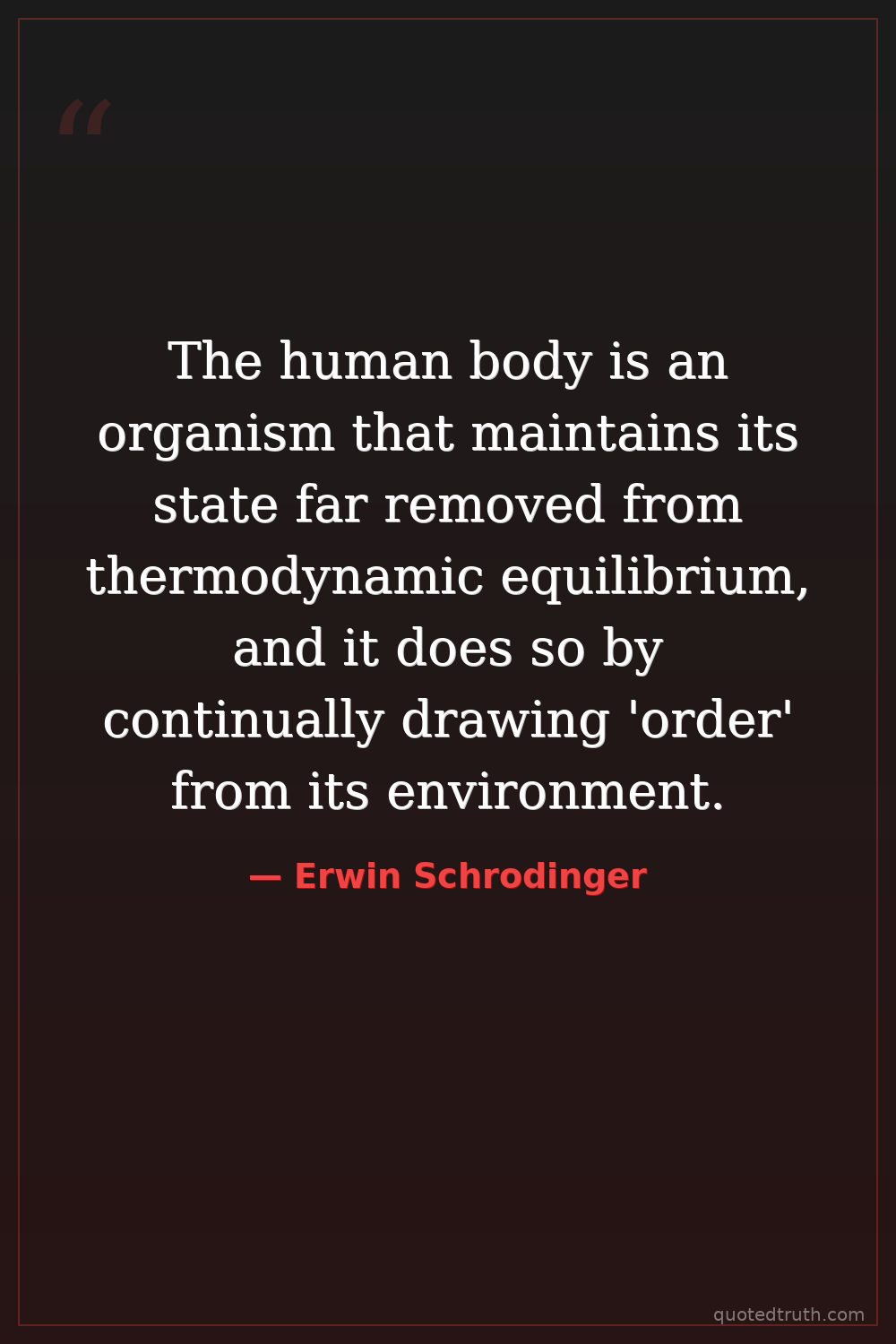
Living organisms defy the thermodynamic tendency toward disorder. Rather than decaying into chaos like non-living matter, the body actively maintains its complex, organized state by consuming structured energy from food and surroundings. Schrödinger called this 'negentropy' — imported order that powers biological processes. Life is essentially a continuous effort to stay organized by harvesting the environment's available structure before releasing waste and heat.
Relevance to Erwin Schrodinger
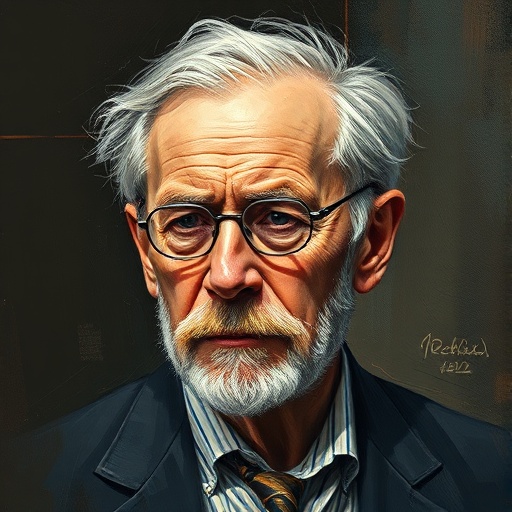
Schrödinger developed the wave equation governing quantum systems in 1926, winning the Nobel Prize in Physics in 1933. In 1944, he wrote 'What is Life?' — this quote's source — applying statistical physics to biology decades before molecular biology existed. His cross-disciplinary ambition defined him: physics as a lens for all natural phenomena. This work directly inspired Watson and Crick to pursue DNA's structure, linking his quantum legacy to biology's greatest discovery.
The era
Written in 1944, during World War II, when physics was transforming warfare through radar and nuclear weapons while biology remained largely descriptive and pre-molecular. Schrödinger's application of thermodynamics to living systems was radical — no framework yet existed for understanding heredity at the molecular level. His ideas helped launch molecular biology as a discipline, and within a decade Watson and Crick's 1953 double-helix discovery validated his insight that life's 'order' had a physical, codable substrate.
AI-generated insights based on extensive research and information for context. Factual errors? Email [email protected].