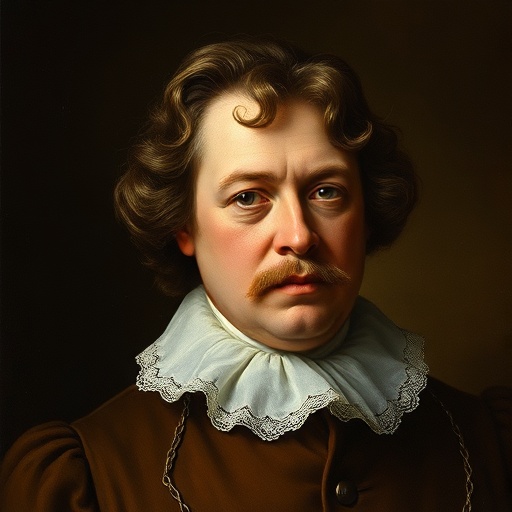
Edward Jenner — "The human mind is a wonderful machine; but it is also a very delicate one."
The human mind is a wonderful machine; but it is also a very delicate one.
The human mind is a wonderful machine; but it is also a very delicate one.
Click any product to generate a realistic preview. Up to 3 at a time.
* Initial load can take up to 90 seconds — revising the preview in another color is nearly instant.
"It is a great satisfaction to me to reflect, that I have been instrumental in saving so many lives."
"Altho' I should be happy to shield it myself from the speckled Monster, yet I would advise you not long to risk my coming to Town. I will just add that I consider the Vaccine Lancet in the hand of [Dr…"
"The cow-pox protects the human constitution from the infection of smallpox."
"Don't think; try."
"The most difficult task is often the most rewarding."
Found in 1 providers: grok
1 source checked
The mind is remarkable in its capacity to reason, learn, and create, functioning like an intricate mechanism with countless moving parts. Yet that same complexity makes it fragile. Stress, illness, fear, or shock can disrupt its workings, and once disturbed it does not always recover easily. Brilliance and vulnerability are bound together, and respecting the mind means recognizing both its power and how easily it can be unsettled.
Jenner was a country physician who watched smallpox terrify communities and saw how panic clouded judgment about his cowpox inoculation. He spent decades observing patients, animals, and natural phenomena with patient curiosity, qualities requiring a steady mind. Yet he also endured ridicule, the death of his son, and bouts of depression. His remark fits a man who trusted reason enough to overturn medicine, while knowing firsthand how grief and hostility could wound even the sharpest intellect.
Jenner worked in late-1700s and early-1800s Britain, when Enlightenment thinkers celebrated reason as humanity's defining gift, yet smallpox killed roughly one in ten people and madhouses were filling with patients treated more as spectacles than sufferers. Phrenology, mesmerism, and early psychiatry were just beginning to frame the mind as a physical organ subject to disease. Calling the mind a delicate machine echoed this mechanical worldview while quietly urging compassion in an age still cruel toward mental illness.
AI-generated insights based on extensive research and information for context. Factual errors? Email [email protected].
Your cart is empty