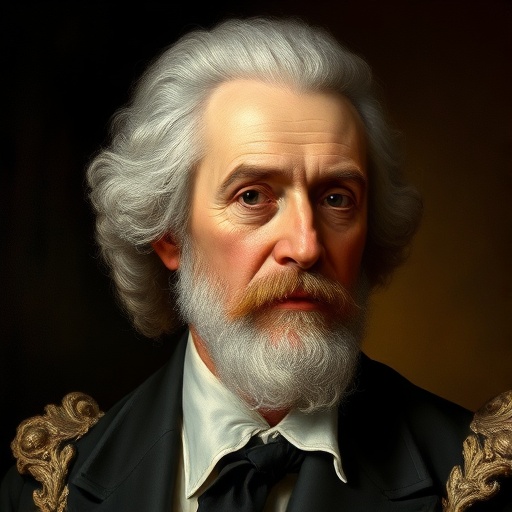
Antoine Lavoisier — "The human mind is always eager for novelty and impatient of repetition."
The human mind is always eager for novelty and impatient of repetition.
The human mind is always eager for novelty and impatient of repetition.
Click any product to generate a realistic preview. Up to 3 at a time.
* Initial load can take up to 90 seconds — revising the preview in another color is nearly instant.
"It is not sufficient to know, one must apply."
"Chemistry is a science of facts and experiments, and not of opinions."
"It is not by chance that I have succeeded, but by hard work and perseverance."
"I am a chemist, not a politician."
"Nothing is lost, nothing is created, everything is transformed."
Found in 1 providers: grok
1 source checked
Humans are naturally drawn to new ideas and experiences — our brains seek novelty and grow restless with repetition. When something is new, it captures attention and sparks curiosity; when repeated, interest fades. This describes a fundamental trait of human cognition: we are wired to explore, discover, and push beyond what is already known, making curiosity and the drive for innovation core engines of how the human mind operates.
Lavoisier embodied this restlessness professionally. He rejected the dominant phlogiston theory — the reigning repetition of his day — and replaced it with oxygen-based combustion, rewriting chemistry's foundations. He invented modern chemical nomenclature, introduced precise quantitative measurement, and transformed a field tangled in alchemical tradition. His entire career was an act of intellectual impatience: refusing to repeat inherited errors and insisting on new, evidence-driven frameworks wherever science had grown stale.
Lavoisier lived during the Enlightenment and the French Revolution (1743–1794), when Europe was radically questioning inherited authority across science, politics, and religion. The Scientific Revolution had established empirical inquiry as legitimate, and intellectuals were actively dismantling centuries of Aristotelian doctrine. The Académie des Sciences rewarded original discovery over tradition, and the printing press accelerated the spread of novel ideas. Novelty wasn't just intellectually fashionable — it was the engine driving an era of foundational transformation.
AI-generated insights based on extensive research and information for context. Factual errors? Email [email protected].
Your cart is empty