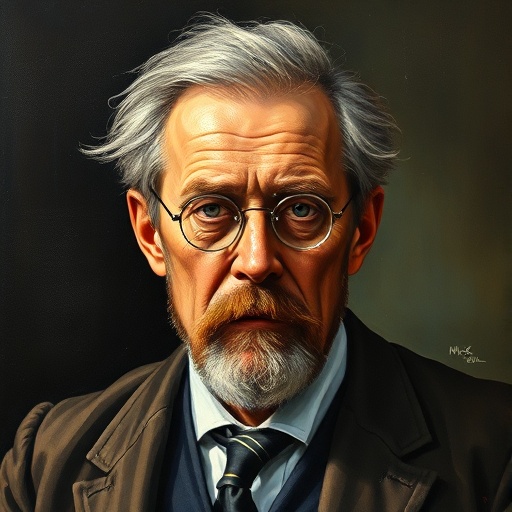
Max Planck — "The human mind is the most complex and mysterious thing in the universe."
The human mind is the most complex and mysterious thing in the universe.
The human mind is the most complex and mysterious thing in the universe.
Click any product to generate a realistic preview. Up to 3 at a time.
* Initial load can take up to 90 seconds — revising the preview in another color is nearly instant.
"The scientist's most important tool is his imagination."
"Mathematics, rightly viewed, possesses not only truth, but supreme beauty — a beauty cold and austere, like that of sculpture, without appeal to any part of our weaker nature, without the gorgeous tra…"
"Science is not only a discipline of reason but also one of romance and passion."
"The true pioneer is a man who, if necessary, is prepared to go into the wilderness alone, without anyone following him."
"The world needs men who can think for themselves, and not just repeat what they have been taught."
Found in 1 providers: grok
1 source checked
The quote asserts that nothing we have discovered in the cosmos rivals the intricacy and strangeness of human consciousness itself. Stars, galaxies, and subatomic particles follow patterns we can eventually model, but thought, self-awareness, memory, and emotion resist full explanation. Planck is saying that the instrument doing the investigating—the mind—remains a deeper puzzle than anything it studies, placing inner experience above external nature in difficulty.
Planck spent his career uncovering the mathematical order of physical reality, founding quantum theory in 1900 by introducing energy quanta. Yet he was a devout thinker who openly believed consciousness was primary and matter derivative, famously saying mind is the matrix of all matter. Coming from the man who cracked atomic radiation, admitting the mind outranks physics in mystery reflects his lifelong fusion of rigorous science with spiritual humility.
Planck worked from the 1890s through the 1940s, an era when physics was shattering classical certainty—relativity, quantum mechanics, and atomic structure overturned Newtonian worldviews. Simultaneously Freud was mapping the unconscious, and Germany endured two world wars, Nazi rule, and the loss of Planck's son to the Gestapo. Amid this collapse of old certainties, reflecting on the mind's depth carried real weight: science was expanding, but human nature stayed unfathomable.
AI-generated insights based on extensive research and information for context. Factual errors? Email [email protected].
Your cart is empty