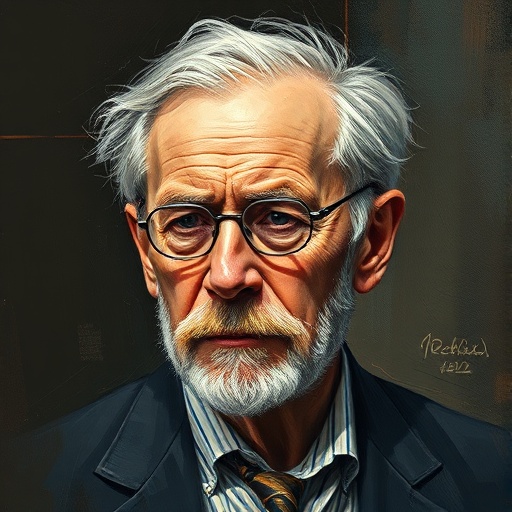
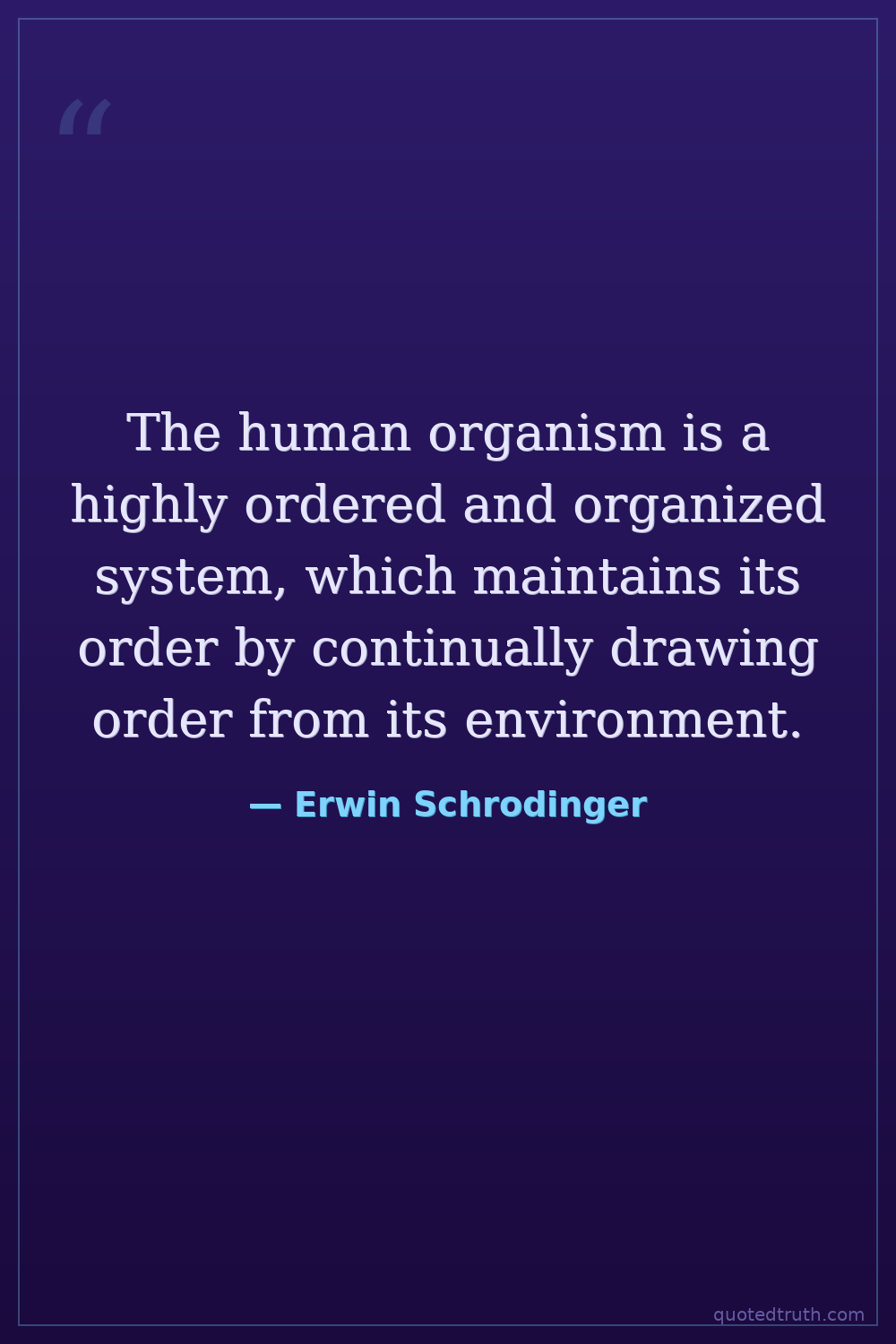
Erwin Schrodinger — "The human organism is a highly ordered and organized system, which maintains its…"
The human organism is a highly ordered and organized system, which maintains its order by continually drawing order from its environment.
The human organism is a highly ordered and organized system, which maintains its order by continually drawing order from its environment.
Click any product to generate a realistic preview. Up to 3 at a time.
* Initial load can take up to 90 seconds — revising the preview in another color is nearly instant.
"I consider the idea of a personal God as being very childish. We must give up this idea."
"The more precisely the position is determined, the less precisely the momentum is known in this instant, and vice versa."
"The only real valuable thing is intuition."
"The ultimate goal of science is to understand the universe and our place in it."
"We are all stardust."
Austrian physicist who shared the 1933 Nobel for the wave equation that bears his name and the famous cat thought-experiment. Closely associated with Werner Heisenberg (matrix-mechanics rival who reached the same physics by different math) and Albert Einstein (his pen-pal on quantum interpretation). For an intellectual contrast, see Niels Bohr, Danish physicist and architect of the Copenhagen interpretation — Schrödinger's cat thought-experiment was specifically designed to ridicule Bohr's 'observer-dependent reality' reading of quantum mechanics — Schrödinger thought the Copenhagen interpretation was absurd; the cat was meant as reductio ad absurdum.
Found in 1 providers: grok
1 source checked
Living organisms are ordered structures that resist the natural tendency toward disorder (entropy). They maintain their internal organization by continuously pulling order from their surroundings—through food, sunlight, and nutrients. Unlike inert matter, which drifts toward chaos, life actively harvests structure from the environment to sustain and replicate itself. This is fundamentally what metabolism accomplishes: importing order to offset the organism's own internal decay.
Schrödinger derived the wave equation foundational to quantum mechanics, but his 1944 book 'What is Life?' extended physics into biology. He coined 'negentropy'—the idea that organisms survive by consuming negative entropy from their environment. This quote distills that thesis. His conviction that physics could fully explain biological self-organization defined his later career and directly inspired Watson and Crick's pursuit of DNA's molecular structure.
Written in 1944 amid WWII, as thermodynamics was being extended into new domains and Shannon's information theory was taking shape. Scientists were urgently asking what physically separated life from non-life. This quote marks the moment physicists formally entered biology, launching a conceptual revolution that culminated in the 1953 discovery of DNA and the founding of molecular biology as a discipline.
AI-generated insights based on extensive research and information for context. Factual errors? Email [email protected].
Your cart is empty