What it means
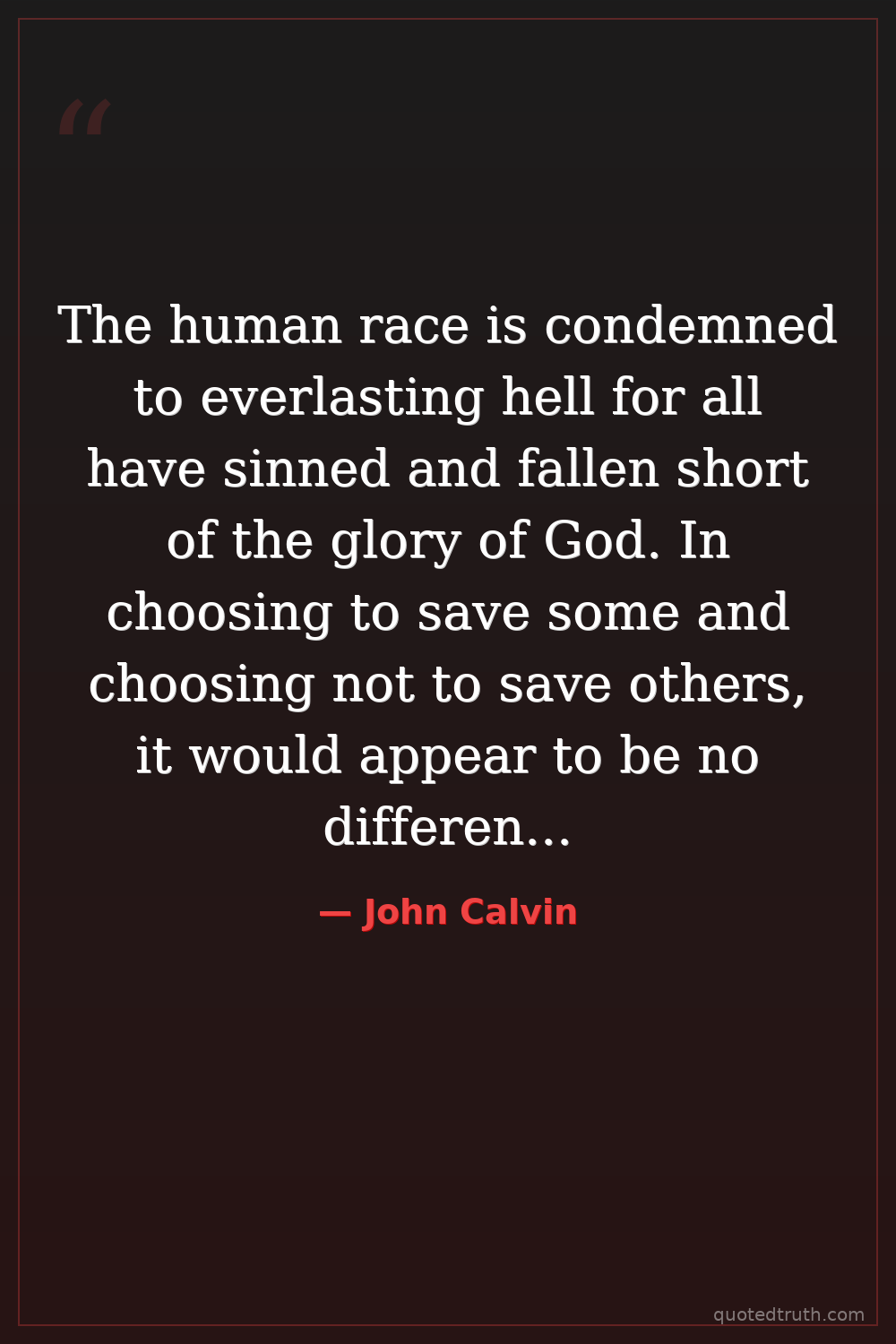
Everyone deserves eternal punishment because everyone sins and falls short of divine perfection. God decides to rescue certain people from this fate while leaving others to face it. The writer argues this amounts to actively sentencing the unsaved to hell, not merely letting them go there. Once God has made this choice about a person, nothing anyone does can reverse it. Their eternal outcome is fixed and unchangeable.
Relevance to John Calvin
Calvin built his entire theological system around God's absolute sovereignty, articulating this doctrine in his Institutes of the Christian Religion (1536). As leader of Geneva's reformed church, he preached human depravity and unconditional election relentlessly. His stark logic here reflects his legal training under French humanists and his willingness to follow biblical premises to uncomfortable conclusions, even defending double predestination against critics like Jerome Bolsec, whom he had banished from Geneva in 1551.
The era
The early modern period was convulsed by the Protestant Reformation, which shattered Catholic unity across Europe after Luther's 1517 theses. Theologians fiercely debated salvation, grace, and free will against Rome's sacramental system. Geneva under Calvin became a refugee haven and training ground for reformers spreading Calvinism to Scotland, the Netherlands, and France. Printing presses spread doctrinal disputes rapidly, while religious wars loomed. Certainty about eternal destiny offered comfort amid plague, persecution, and social upheaval.
AI-generated insights based on extensive research and information for context. Factual errors? Email [email protected].