What it means
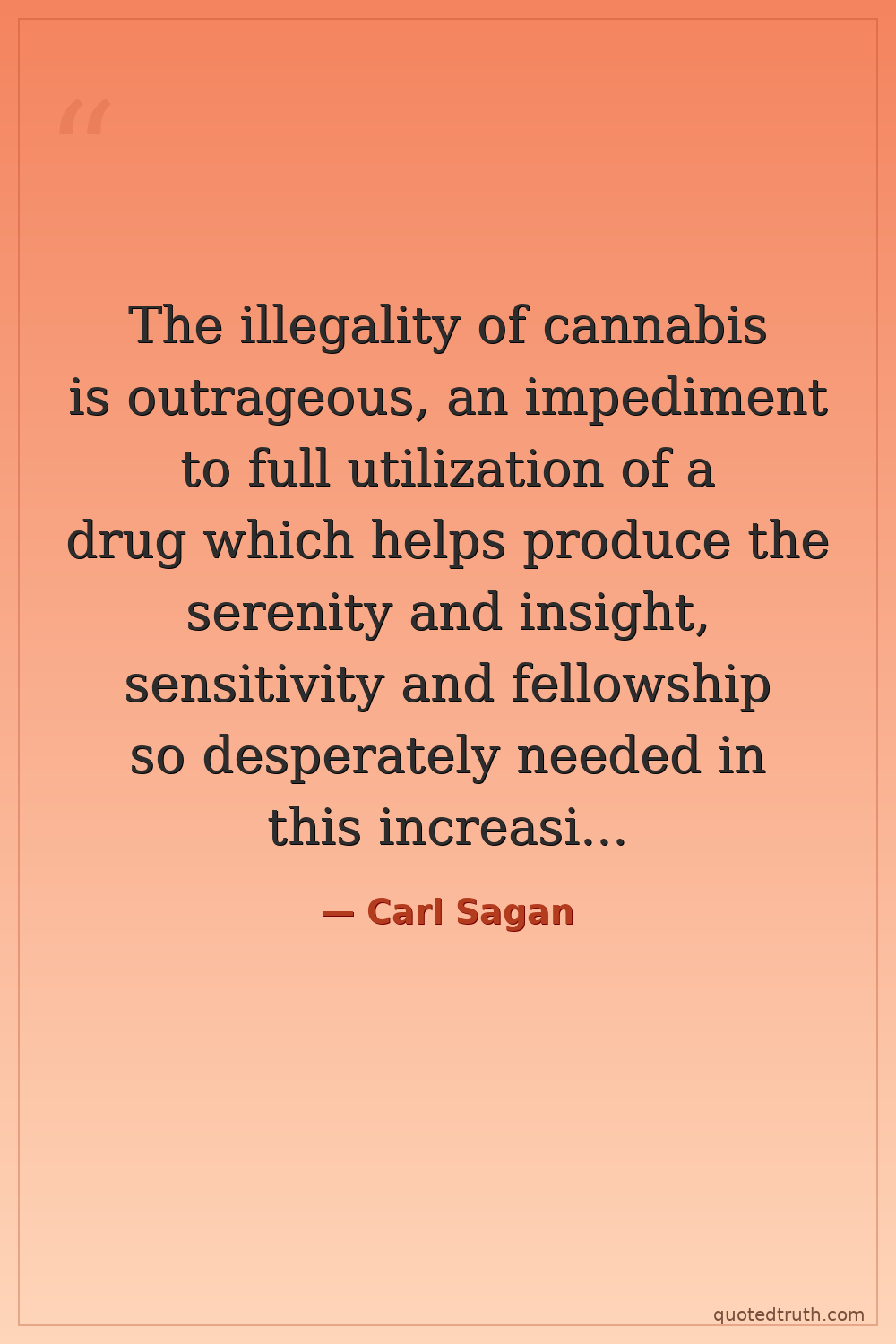
Cannabis prohibition is portrayed as actively harmful to society, not merely unjust to individuals. The drug, the speaker argues, genuinely promotes calm reflection, deeper awareness, empathy, and social bonding — qualities framed as urgent needs in a world growing more chaotic and violent. The argument is utilitarian: society would function better if people had legal access to something that fosters the inner qualities most necessary for human flourishing and cooperation.
Relevance to Carl Sagan
Sagan privately used cannabis for decades and wrote about its effects anonymously as 'Mr. X' in Lester Grinspoon's 1971 book, crediting it with enhancing scientific insight and aesthetic wonder. This aligns with his lifelong mission to foster curiosity and intellectual openness. He feared dogmatism as an existential threat — themes central to 'The Demon-Haunted World' — and viewed cannabis as a tool that could counteract closed-mindedness, consistent with his skeptical, humanist worldview.
The era
Nixon's War on Drugs, launched in 1971, had just escalated federal cannabis prohibition, criminalizing users as a political strategy. The Vietnam War, nuclear arms race, and Watergate were fracturing public trust. The 1960s counterculture had tied cannabis to peace movements. For Sagan — a scientist who spent his career warning about nuclear annihilation and human irrationality — the phrase 'increasingly mad and dangerous world' was grounded in acute, concrete geopolitical terror, not rhetorical flourish.
AI-generated insights based on extensive research and information for context. Factual errors? Email [email protected].