What it means
An inventor refuses to accept the world as given — they see flaws, gaps, and possibilities others overlook. Driven by a persistent, almost obsessive idea, they feel compelled to act. It's not ambition for fame but a genuine urge to make life better. The idea haunts them until it becomes real. Invention is framed less as a choice and more as a calling the inventor cannot ignore.
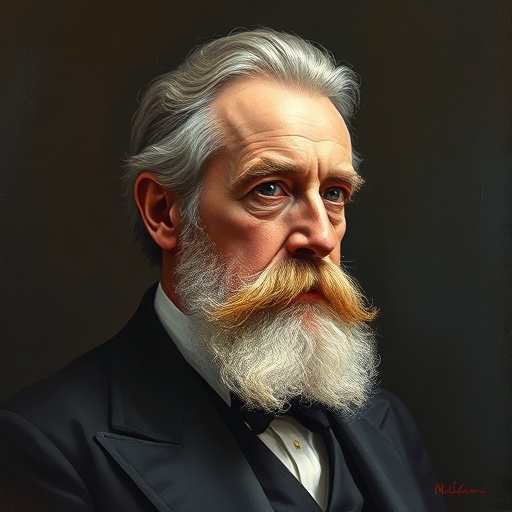
Relevance to Alexander Graham Bell
Bell lived this exactly. Raised by a father who studied human speech, he grew obsessed with transmitting voice electrically — working through poverty, ridicule, and competing patents. The telephone wasn't a single eureka moment but years of haunted persistence. After achieving global fame he kept inventing: the photophone, hydrofoil boats, a metal detector used on President Garfield. Bell's restlessness never settled, confirming his own description of the inventor's compulsion.
The era
Bell's era — the 1870s–1900s — was the Second Industrial Revolution, when steam gave way to electricity and mass production reshaped daily life. Inventors like Edison and Tesla were cultural heroes, their workshops treated as temples of progress. The American patent system was booming; the idea that a single driven person could transform civilization was widely believed and regularly proved true. Bell's quote captures the Gilded Age's foundational faith in restless individual ingenuity.
AI-generated insights based on extensive research and information for context. Factual errors? Email [email protected].