What it means
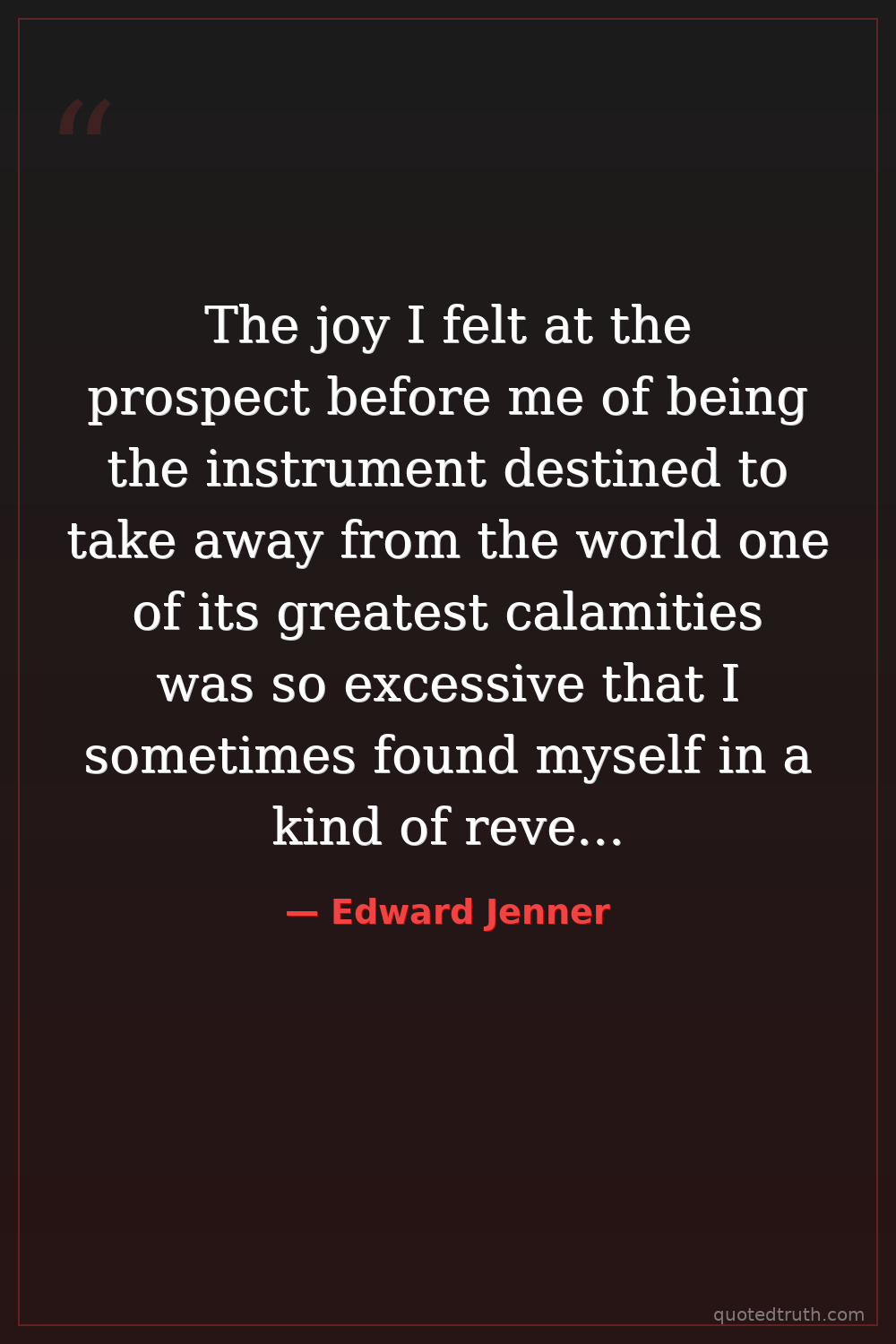
Jenner describes an overwhelming, almost dreamlike happiness at the realization that he might eliminate one of humanity's most devastating diseases. The emotion was so intense it pulled him out of ordinary conscious thought into a trancelike state of wonder. He understood he stood at a historic threshold — not just solving a medical problem, but potentially erasing mass human suffering from the world entirely.
Relevance to Edward Jenner
Jenner spent decades observing that milkmaids who caught cowpox seemed immune to smallpox. His 1796 experiment inoculating James Phipps was the culmination of that obsession. This quote captures his genuine humanitarian drive — he ultimately gave away his vaccine freely rather than profiting, consistent with a man moved by mission rather than ambition.
The era
Smallpox killed roughly 400,000 Europeans annually in the late 18th century and disfigured millions more. No effective treatment existed; variolation carried real death risk. In this context, Jenner's vision of total eradication was almost incomprehensible in its ambition — diseases were accepted as divine or natural inevitabilities, making his conviction that one could be eliminated genuinely revolutionary thinking.
AI-generated insights based on extensive research and information for context. Factual errors? Email [email protected].