William Harvey — "The more accurately and industriously I have examined the matter, the more clear…"
The more accurately and industriously I have examined the matter, the more clearly have I perceived the truth.
The more accurately and industriously I have examined the matter, the more clearly have I perceived the truth.
Click any product to generate a realistic preview. Up to 3 at a time.
* Initial load can take up to 90 seconds — revising the preview in another color is nearly instant.
"The blood is the source of life, and the heart is the fountain thereof."
"It is better to know a little perfectly than to know much imperfectly."
"I have often wondered that the heart, though it be the chief seat of life, yet is not sensible of its own motion."
"The semen is the efficient cause and the egg the material cause of generation."
"Nature is nowhere accustomed more openly to display her secret mysteries than in cases where she shows traces of her workings apart from the beaten path."
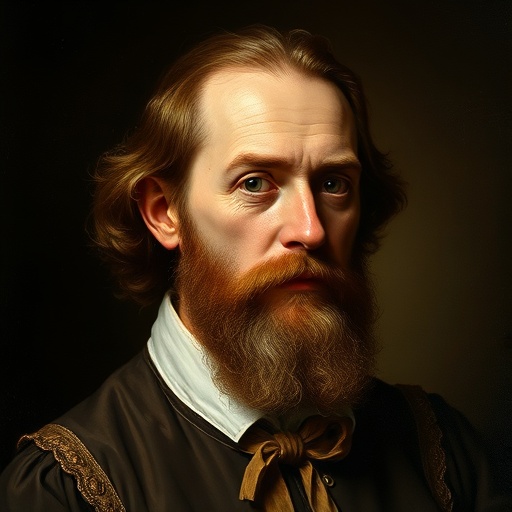
English physician whose On the Motion of the Heart and Blood in Animals (1628) demonstrated blood circulation, overturning 1,400 years of Galenic medicine. Closely associated with Francis Bacon (his contemporary in the new English empiricism). For an intellectual contrast, see Galenic medicine, the 2nd-century Greek medical tradition (humors, blood-as-consumed-fuel) — Harvey calculated that the heart pumps more blood per hour than the body could possibly produce as fuel — a single quantitative observation that demolished the entire Galenic-Aristotelian medical worldview. The cleanest example in medical history of arithmetic disproving 14 centuries of authority.
Found in 1 providers: grok
1 source checked
The deeper and more carefully you investigate something, the clearer the truth becomes. Diligence and precision in examination are not just methods but the very path to understanding. Superficial or hasty inquiry obscures reality, while sustained, rigorous attention progressively reveals what is actually true about the world.
Harvey spent over a decade meticulously dissecting animals and measuring blood flow before publishing his discovery of circulation in 1628. He rejected inherited Galenic dogma not through speculation but through repeated, precise anatomical experiment. This statement captures his empirical discipline: truth emerged from hands-on observation, not from ancient authority or armchair reasoning.
Harvey worked during the Scientific Revolution, when European thinkers were dismantling 1,500-year-old classical medical authority. Galen's humoral theory dominated medicine, and challenging it was professionally risky. The printing press had spread both old errors and new findings rapidly. Harvey's insistence on direct observation over textual authority exemplified the era's emerging empirical method that would define modern science.
AI-generated insights based on extensive research and information for context. Factual errors? Email [email protected].
Your cart is empty