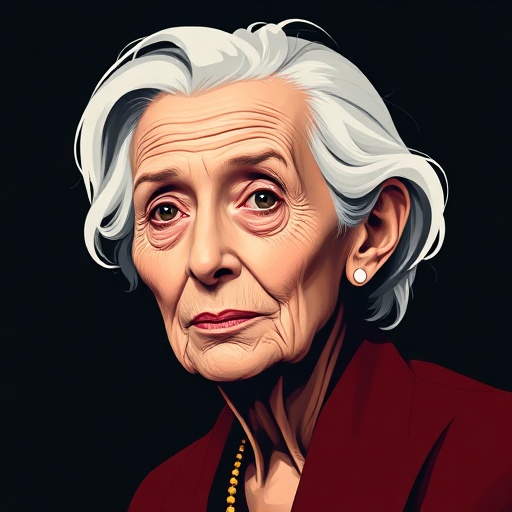
Jane Goodall — "The more I learn about animals, the more I realize how much we have in common."
The more I learn about animals, the more I realize how much we have in common.
The more I learn about animals, the more I realize how much we have in common.
Click any product to generate a realistic preview. Up to 3 at a time.
* Initial load can take up to 90 seconds — revising the preview in another color is nearly instant.
"We have so far to go to understand the minds of the other animals, and how much they suffer."
"I think the most important thing is to keep active and to hope that your mind stays active."
"I believe in a spiritual power, but I don't necessarily identify with any particular religion."
"Every individual matters. Every individual has a role to play. Every individual makes a difference."
"We need to educate the next generation about the importance of protecting the environment."
British primatologist who in 1960 began the longest-running wild primate study at Gombe Stream, transforming our understanding of chimpanzees. Closely associated with Dian Fossey (mountain-gorilla researcher) and Birutė Galdikas (orangutan researcher; together with Goodall and Fossey one of Louis Leakey's 'Trimates'). For an intellectual contrast, see Walter Palmer, American dentist who killed Cecil the Lion in Zimbabwe in 2015 — Palmer represents the trophy-hunting tradition Goodall's life's work has been organized against — the colonial-era hunter-naturalist worldview that treated primates and big game as specimens or trophies, which Goodall's Roots & Shoots and Jane Goodall Institute exist specifically to displace.
Found in 1 providers: grok
1 source checked
The deeper your knowledge of other species, the more you recognize shared traits between humans and animals — emotions, social bonds, problem-solving, even personalities. What once seemed uniquely human turns out to be widespread across the animal kingdom. Understanding erodes the artificial wall between 'us' and 'them,' revealing continuity rather than separation across life on Earth.
Goodall spent decades living among Gombe chimpanzees, documenting behaviors science once reserved for humans: tool use, grief, warfare, affection. She named individual chimps, rejected the clinical detachment demanded by 1960s zoology, and was criticized for it. Her entire career proved this quote true — chimps taught her that human exceptionalism was more assumption than fact.
Goodall began fieldwork in 1960, when behaviorism dominated science and anthropomorphism was taboo. The post-WWII era treated animals as stimulus-response machines. Her findings arrived alongside the environmental movement and growing animal rights consciousness of the 1970s–80s, challenging industrial agriculture, vivisection norms, and the philosophical basis for treating non-human life as mere resource.
AI-generated insights based on extensive research and information for context. Factual errors? Email [email protected].
Your cart is empty