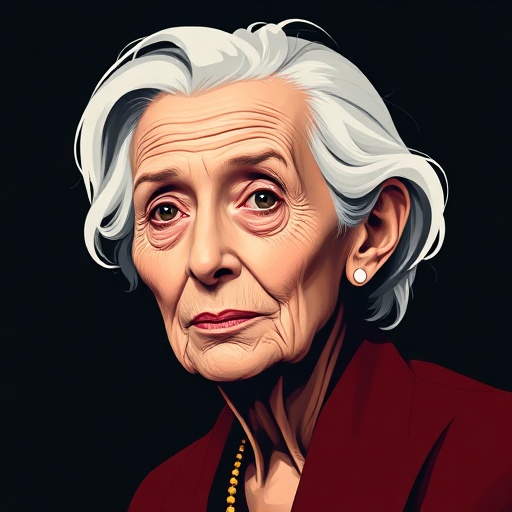
Jane Goodall — "We need to educate the next generation about the importance of protecting the en…"
We need to educate the next generation about the importance of protecting the environment.
We need to educate the next generation about the importance of protecting the environment.
Click any product to generate a realistic preview. Up to 3 at a time.
* Initial load can take up to 90 seconds — revising the preview in another color is nearly instant.
"I still believe in the goodness of humanity."
"I still have a lot of work to do."
"I'm not afraid of getting old. I'm afraid of not having enough time to do all the things I want to do."
"My message is one of hope, but it's also a call to action."
"I believe that love is the most powerful force in the universe."
British primatologist who in 1960 began the longest-running wild primate study at Gombe Stream, transforming our understanding of chimpanzees. Closely associated with Dian Fossey (mountain-gorilla researcher) and Birutė Galdikas (orangutan researcher; together with Goodall and Fossey one of Louis Leakey's 'Trimates'). For an intellectual contrast, see Walter Palmer, American dentist who killed Cecil the Lion in Zimbabwe in 2015 — Palmer represents the trophy-hunting tradition Goodall's life's work has been organized against — the colonial-era hunter-naturalist worldview that treated primates and big game as specimens or trophies, which Goodall's Roots & Shoots and Jane Goodall Institute exist specifically to displace.
Found in 1 providers: grok
1 source checked
Future environmental protection depends on today's children understanding ecological systems, biodiversity, and human impact before those lessons become urgent crises. Simply informing people that nature matters isn't enough — structured education builds genuine understanding, creating adults who vote, consume, and build careers with conservation as a core value. Teaching is framed here as the most powerful and durable conservation tool available, more reliable than policy alone.
Goodall founded Roots & Shoots in 1991, a youth environmental program now active in over 60 countries, making youth education central to her post-Gombe mission. After three decades studying chimpanzees in Tanzania, she shifted to global advocacy, traveling roughly 300 days a year speaking to young audiences. She has repeatedly stated that her greatest hope for the planet rests with young people who haven't yet grown cynical or resigned.
Goodall championed this theme as climate science solidified in the 1990s and 2000s, when deforestation accelerated and extinction rates alarmed biologists. The 1992 UN Earth Summit and Kyoto Protocol debates highlighted how adult policymakers were failing to act decisively. Youth climate movements later validated her premise — Fridays for Future (2018) demonstrated that educated young people could pressure governments more effectively than established environmental organizations had managed for decades.
AI-generated insights based on extensive research and information for context. Factual errors? Email [email protected].
Your cart is empty