What it means
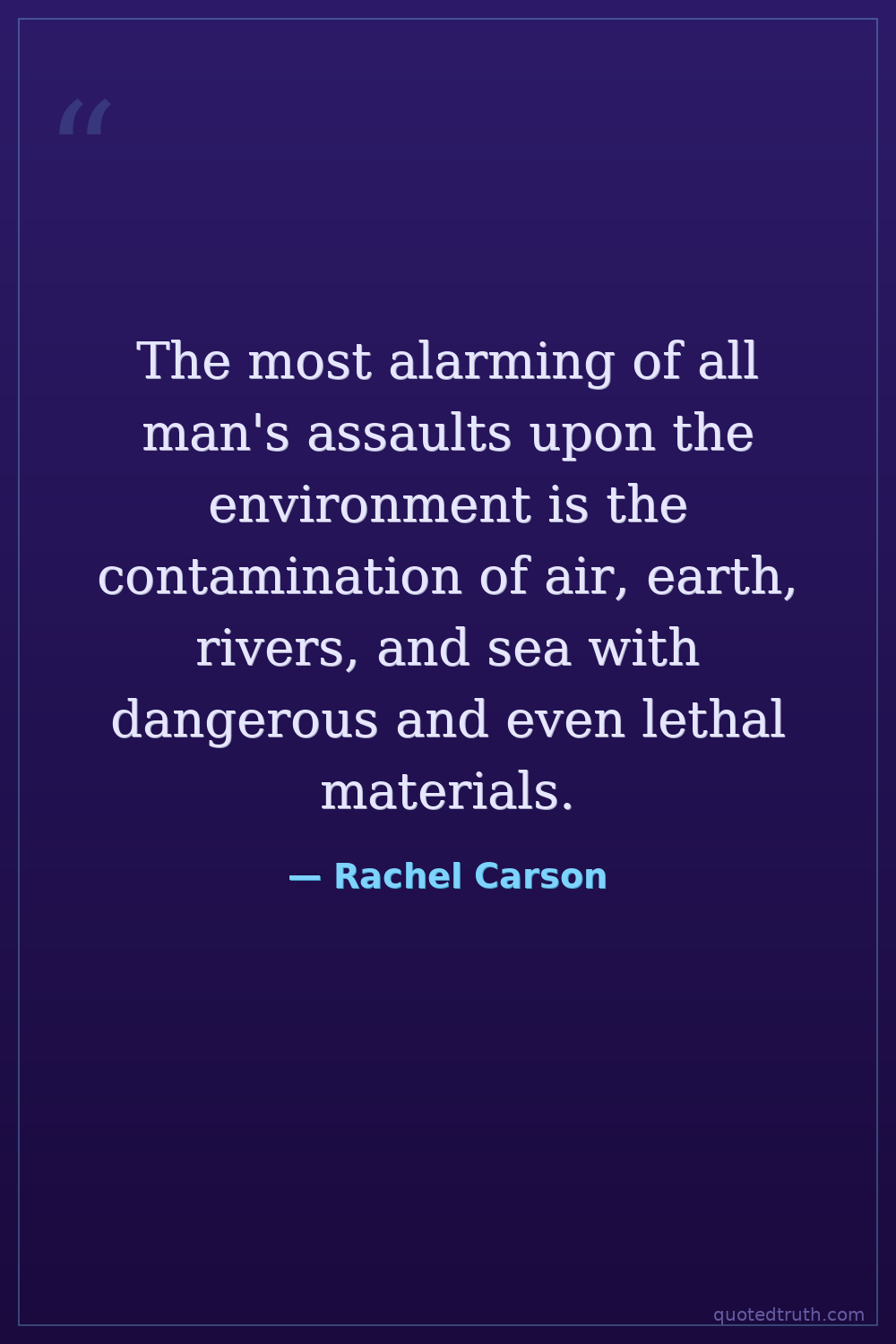
Among all human-caused environmental damage, chemical pollution — toxic substances released into air, soil, rivers, and oceans — poses the gravest threat. Unlike physical destruction that stays localized, contamination spreads invisibly through ecosystems, accumulates in food chains, and reaches humans. Pollution isn't incidental to industrial progress but is its most dangerous byproduct, one that undermines the basic biological conditions all life depends on.
Relevance to Rachel Carson
Carson was a marine biologist at the U.S. Fish and Wildlife Service who spent years documenting how synthetic pesticides — especially DDT — were killing birds, contaminating food chains, and threatening human health. Her 1962 book Silent Spring built the scientific case for exactly this warning. Facing fierce chemical industry attacks, she testified before Congress in 1963. The quote distills her life's central conviction: industrial chemicals were poisoning shared biological systems with consequences science had barely begun to understand.
The era
Silent Spring appeared in 1962 at the peak of post-WWII industrial optimism. DDT had been celebrated as a miracle pesticide; synthetic chemicals were marketed as pure progress. Atmospheric nuclear testing was depositing radioactive fallout globally, and American rivers were so polluted some caught fire. No federal environmental agency existed, and chemical manufacturers operated with minimal oversight. Carson's warning landed before public awareness of systemic pollution had formed, helping spark the movement that produced the EPA and Clean Water Act by 1972.
AI-generated insights based on extensive research and information for context. Factual errors? Email [email protected].