What it means
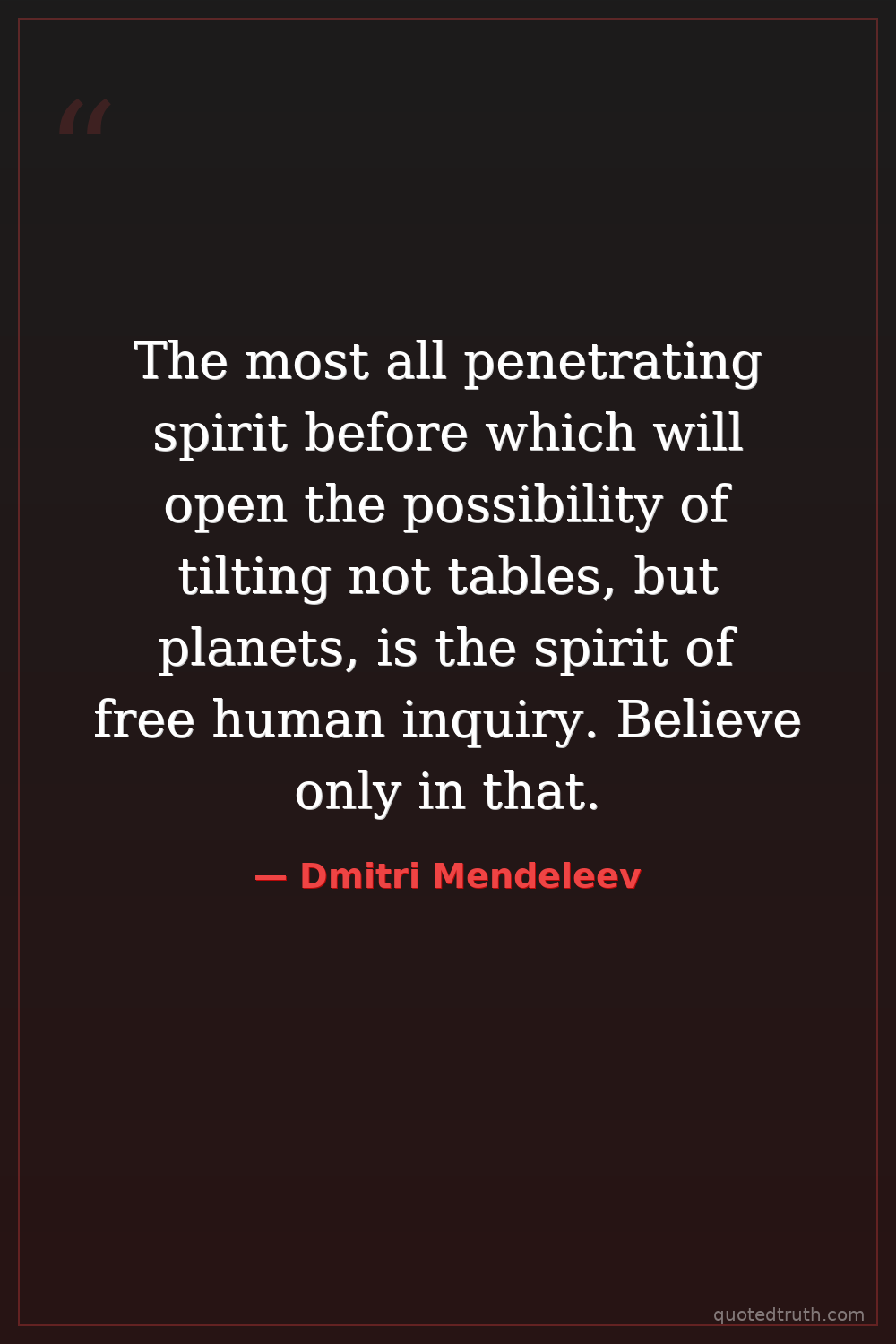
True power to move worlds comes not from mystical tricks or spiritual gimmicks, but from the disciplined, unrestrained mind asking honest questions. Place your trust in rigorous, independent investigation rather than supernatural claims or easy answers. Free inquiry is humanity's strongest force, capable of reshaping reality itself when given room to operate without dogma, superstition, or authority telling it what conclusions it must reach.
Relevance to Dmitri Mendeleev
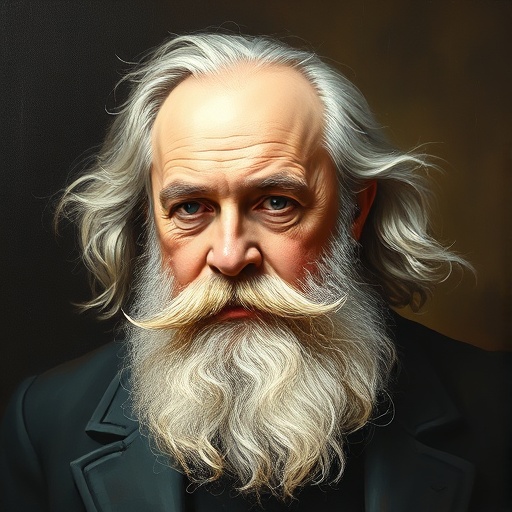
Mendeleev arranged the periodic table in 1869 by trusting patterns his own reasoning uncovered, even leaving gaps for elements nobody had yet found. He publicly mocked spiritualism and seance culture sweeping Russian high society, serving on a commission that debunked table-tilting mediums. His life embodied the conviction that systematic inquiry, not mysticism, reveals nature's hidden order and predicts what experiments will later confirm.
The era
Late 19th-century Russia was swept by spiritualist fashion: seances, table-tilting, and mediums attracted aristocrats and even scientists. Simultaneously, chemistry was exploding with discoveries of new elements and atomic theory. Mendeleev lived at this fault line between superstition and emerging modern science, as Imperial Russia wrestled with modernization, university reform, and whether Western rationalism or Orthodox mysticism should guide the nation's intellectual future.
AI-generated insights based on extensive research and information for context. Factual errors? Email [email protected].