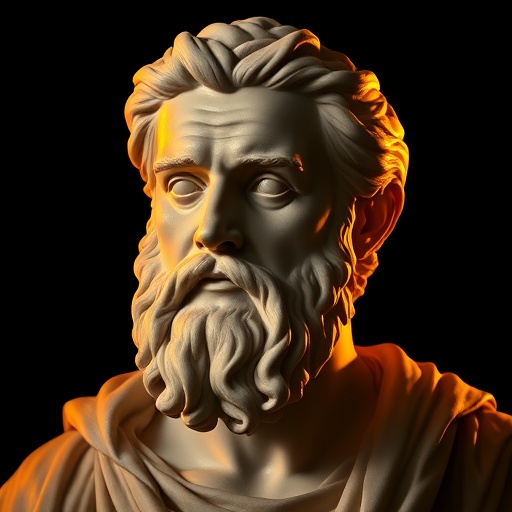
Hippocrates — "The most important organ is the brain."
The most important organ is the brain.
The most important organ is the brain.
Click any product to generate a realistic preview. Up to 3 at a time.
* Initial load can take up to 90 seconds — revising the preview in another color is nearly instant.
"The best thing is to prevent disease."
"For it is not the physician who cures, but nature, who is the physician of diseases."
"To do nothing is sometimes a good remedy."
"The belly is the beginning of all evil."
"The way to health is to have a good digestion, a good appetite, and a good sleep."
A statement on the primacy of the brain, particularly from 'On the Sacred Disease'.
Date: c. 400 BCE
Nature & WorldFound in 1 providers: gemini
1 source checked
The brain is the body's control center — it governs thought, emotion, memory, sensation, and movement. Without it, nothing else functions meaningfully. Unlike other vital organs, the brain is irreplaceable in a deeper sense: you can survive without a limb or kidney, but the brain defines who you are and directs every system in the body. It is not just important — it is foundational to being human.
Hippocrates argued explicitly in 'On the Sacred Disease' that the brain — not the heart — is the seat of intelligence, emotion, and consciousness. As medicine's founding systematist, he grounded this in clinical observation, not philosophy. His naturalistic worldview demanded biological explanations for illness, and placing the brain at the top of the body's hierarchy aligned directly with his lifelong mission to understand the body as a rational, observable system.
In 5th-century BCE Greece, the heart was widely considered the seat of the soul — a view Aristotle would later formalize. Epilepsy and mental illness were attributed to divine punishment or demonic possession. Hippocrates lived during Athens's intellectual peak, when natural philosophy was challenging religious authority. His declaration elevated the brain over centuries of cardiac-centric belief, directly confronting priests who profited from 'sacred' diagnoses and laying groundwork for neuroscience two millennia before the discipline existed.
AI-generated insights based on extensive research and information for context. Factual errors? Email [email protected].
Your cart is empty