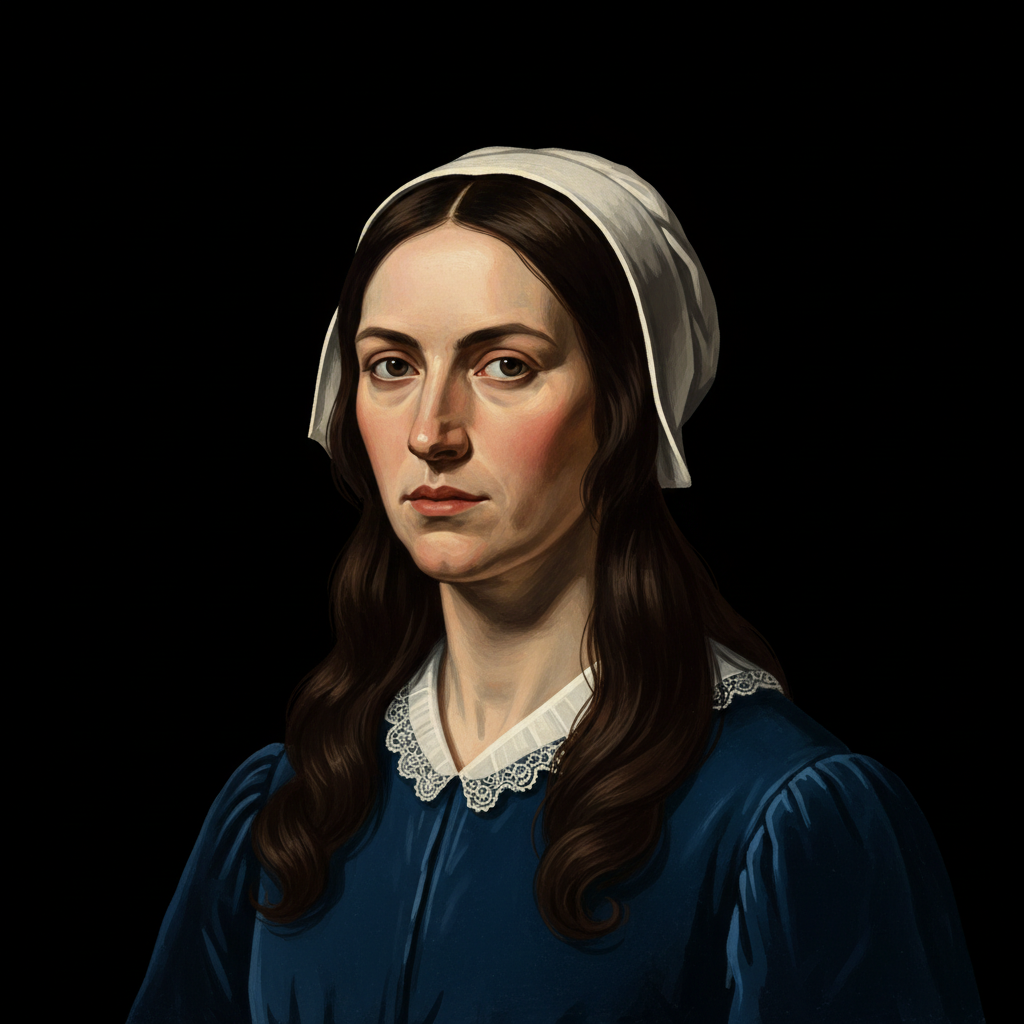
Mary Wollstonecraft — "The most perfect human being is the one who has the most freedom."
The most perfect human being is the one who has the most freedom.
The most perfect human being is the one who has the most freedom.
Click any product to generate a realistic preview. Up to 3 at a time.
* Initial load can take up to 90 seconds — revising the preview in another color is nearly instant.
"I am not a mere woman, but a rational being."
"The divine right of husbands, like the divine right of kings, may, it is to be hoped, in this enlightened age, be contested without danger."
"It is vain to expect virtue from women till they are in some degree independent of men."
"Pleasure is the business of a woman's life, according to the present modification of society."
"Virtue can only flourish amongst equals."
English writer and proto-feminist philosopher whose A Vindication of the Rights of Woman (1792) is the founding text of modern feminist theory. Closely associated with Thomas Paine (Rights of Man co-conspirator and revolutionary contemporary) and William Godwin (her husband and philosopher of anarchism). For an intellectual contrast, see Edmund Burke, Anglo-Irish conservative and parliamentarian — Burke's Reflections on the Revolution in France (1790) was the explicit target of Wollstonecraft's first book — A Vindication of the Rights of Men (1790), written in the weeks after Burke's appeared. She extended the argument to women in her second Vindication two years later. Burke's tradition-and-prescription conservatism is the worldview Wollstonecraft's career was structured against.
Your cart is empty