What it means
Fleming describes noticing a mold contaminating one of his bacterial cultures and, instead of discarding it, deciding to study it. He grew the mold deliberately, tested what it released, and discovered it killed common harmful bacteria like staphylococci, the cause of many infections. In plain terms, he is recounting the moment a lab accident revealed a natural substance capable of destroying dangerous germs, the breakthrough that became penicillin.
Relevance to Alexander Fleming
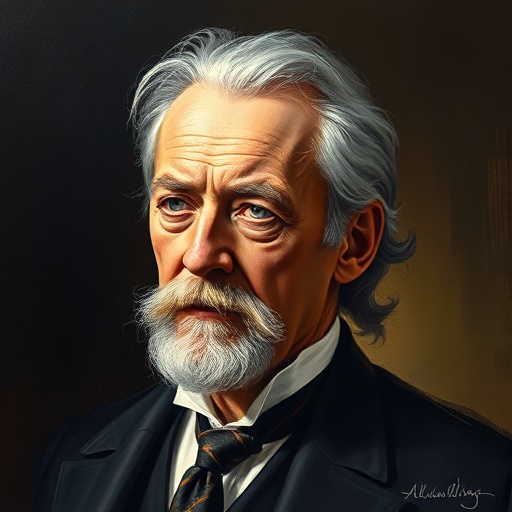
This statement captures Fleming's defining trait: trained observation paired with curiosity. As a Scottish bacteriologist at St. Mary's Hospital in London, he had already discovered lysozyme in 1922 by examining his own nasal mucus on a culture plate. In 1928, returning from vacation, he noticed a Penicillium mold had killed staph colonies on a forgotten dish. Rather than tossing the contaminated plate, he investigated, embodying his belief that chance favors the prepared mind. He won the 1945 Nobel Prize.
The era
Before 1928, bacterial infections were a leading cause of death; pneumonia, sepsis, and battlefield wound infections routinely killed otherwise healthy people. World War I, where Fleming served as an army doctor, exposed the helplessness of medicine against staphylococci and streptococci. The interwar years saw rapid advances in microbiology and immunology. Fleming's discovery, later developed into a mass-producible drug by Florey and Chain during World War II, arrived just in time to save millions of Allied soldiers and launch the antibiotic era.
AI-generated insights based on extensive research and information for context. Factual errors? Email [email protected].